Greater Pinellas Point, St. Petersburg
Updated · 14,737 residents
Greater Pinellas Point is defined by its iconic pink-tinted streets and a quiet, suburban atmosphere along the Tampa Bay waterfront. While the area offers a tranquil residential environment, residents should be aware of limited walkability and higher flood risks compared to other parts of St. Petersburg.
Key Highlights
About Greater Pinellas Point
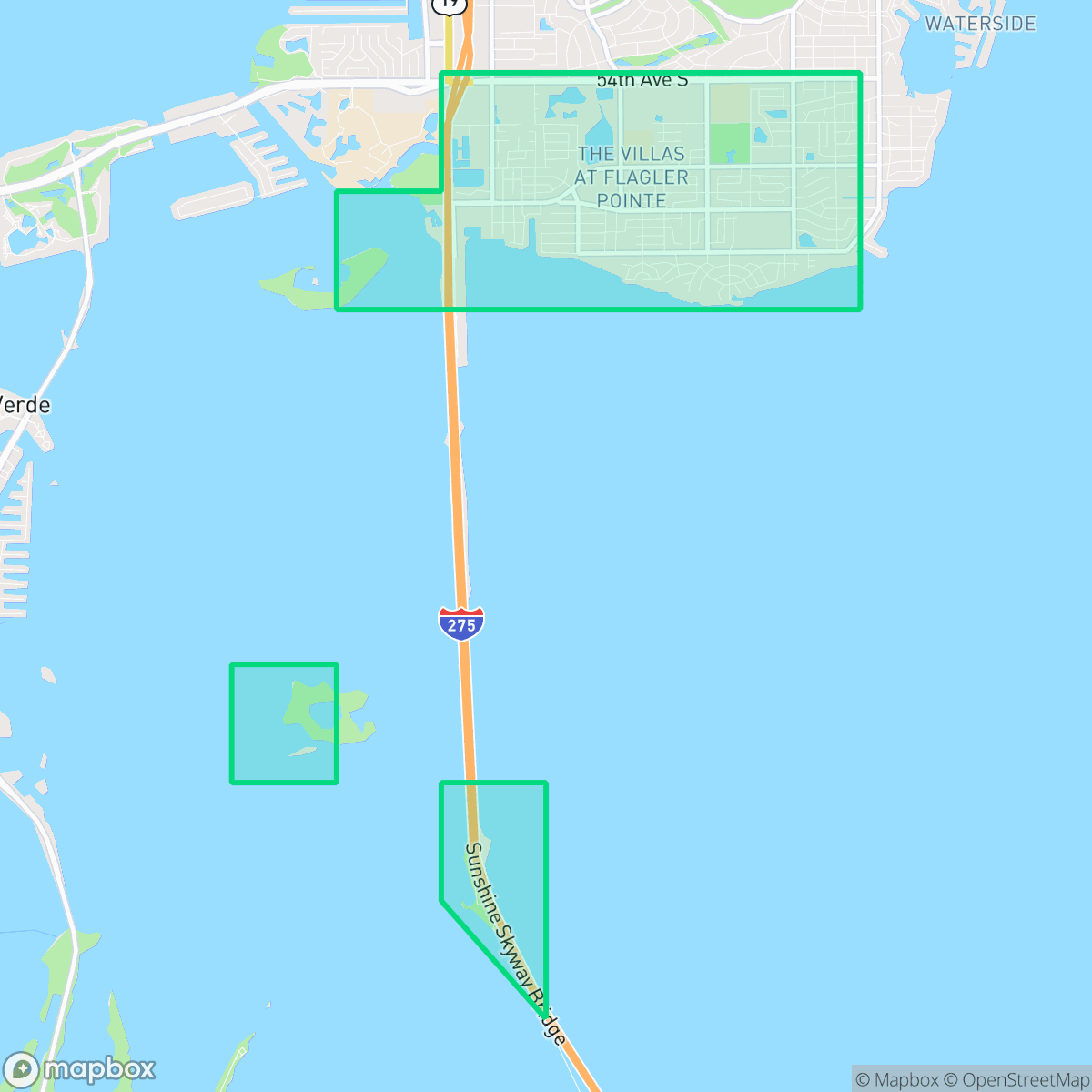
Greater Pinellas Point, situated at the southern tip of St. Petersburg, was developed in the 1920s and is notable for being the first subdivision in Pinellas County paved with concrete. The neighborhood is famous for its "Pink Streets," a series of winding roads dyed pink during original construction. The area features a unique architectural blend, including mid-century "bird cage" homes and Spanish Revival styles. Historically known as "The Jungle" for its lush, untamed landscape, the neighborhood also contains the Pinellas Point Temple Mound, a Tocobaga Indian site donated to the city in 1958 and designated an archaeological landmark in 1993. Following significant post-WWII expansion, the community remains defined by its waterfront access to Tampa Bay and a preserved, tranquil character that emphasizes mature tree canopies and coastal living.
The area maintains a subdued, low-key character that prioritizes privacy and established residential life. The landscape is largely suburban, featuring a mix of detached homes and apartment clusters that create a balanced, if dense, living environment. Local streets are generally quiet, though the absence of extensive sidewalk infrastructure makes the neighborhood better suited for driving than pedestrian travel. Residents enjoy a community that leans toward liberal values and provides a more progressive social environment than many other parts of the city.
Prospective residents should note that the neighborhood faces specific environmental and infrastructure challenges. Much of the area is situated within a designated floodplain, which often necessitates flood insurance, and noise levels can be elevated due to the proximity of transit corridors. While the neighborhood offers a quiet retreat for those who prefer suburban stability over high-energy commercial districts, it is less suited for those seeking high-density urban amenities. Families are supported by the Pinellas County School District, which remains a stable institution despite ongoing enrollment shifts and campus consolidations.
Neighborhood Scores Across 15 Qualities
Housing layouts vary from closely packed apartment clusters to detached homes with private fenced yards. This level of density is slightly higher than the St. Petersburg average, resulting in less spacing between neighbors compared to other parts of the city.
Low-traffic residential streets and cul-de-sacs provide a safe environment for walking, though the lack of sidewalks in many blocks makes it less walkable than much of St. Petersburg.
Residential views primarily consist of standard tract housing and uniform suburban lots, which sits slightly below the St. Petersburg average for visual variety. Some waterfront pockets feature larger estates with manicured lawns and private pools, according to iHuus data.
Walking routes for pets are somewhat restricted due to narrow street verges and a lack of visible public parks, which is below the St. Petersburg average. While some apartment complexes and waterfront areas offer grassy patches, many residential sections rely primarily on private backyards.
Residential streets and green spaces are distributed in nearly equal measure. This area presents a more suburban landscape compared to the more urbanized average of St. Petersburg.
This area maintains a subdued, low-key atmosphere with very sparse commercial activity. Residents will find a tranquil landscape dominated by established housing, which offers significantly less social energy than the St. Petersburg average.
Frequent disturbances from nearby transit corridors and infrastructure are common in this area. According to iHuus data, acoustic comfort levels are lower than the St. Petersburg average.
Frequent unhealthy air quality levels pose a significant risk to sensitive groups. According to iHuus data, the pollution levels in this area are worse than the St. Petersburg average.
Residential life and local services predominate here, with very little heavy industry or hazardous facilities detected. This neighborhood features more industrial activity than the St. Petersburg average, though it remains largely composed of residential, educational, and recreational spaces.
Health insurance coverage rates are below the St. Petersburg average, according to iHuus data. Residents may find fewer local options for accessible healthcare coverage compared to other parts of the city.
Political leanings in this area skew toward liberal values, sitting slightly more progressive than the St. Petersburg average according to iHuus data.
Resident demographics lean toward an older age group, showing less concentration of young adults than the St. Petersburg average according to iHuus data.
Frequent flood risk exists because much of the area sits within a designated floodplain. According to iHuus data, this risk level is notably higher than the St. Petersburg average and often necessitates flood insurance.
Address-Level Insights for Greater Pinellas Point


iHuus Neighborhood Intelligence Insights
Get address-level neighborhood insights for Greater Pinellas Point
- Street-level scores — see how individual blocks compare, not just neighborhood averages
- Micro-zone boundaries — identify quiet pockets, flood boundaries, and walkable clusters before you visit
- 15 dimensions in full — walkability, noise, air quality, school quality, insurance coverage, population age profile, urban/rural index, and more
- Boundary risk alerts — know if your address sits near a block boundary where scores drop, the kind of detail no listing will ever mention
- School insights — individual school ratings and insights, not just district-level data
- Compare before you commit — side-by-side data across neighborhoods, down to block precision
No credit card required
Compare with Any Neighborhood
| Dimension | Greater Pinellas Point | Albert Whitted Airport |
|---|---|---|
| 🚶 Walkabilityavg 6.61 | ||
| 🔊 Acoustic Comfortavg 3.78 | ||
| 🤫 Privacy Indexavg 5.45 | ||
| 🎨 Visual Appealavg 6.33 | ||
| 🐕 Dog Friendlinessavg 5.45 | ||
| 🗺️ Urban-Rural Indexavg 6.19 | ||
| ✨ Neighborhood Vibeavg 3.5 | ||
| 🏥 Health Insurance Coverageavg 6.88 | ||
| 🌿 Air Qualityavg 1.87 | ||
| 🏭 Industrial Proximityavg 7.55 | ||
| 🌊 Flood Safetyavg 4.61 | ||
| 🗳️ Ideological Leanavg 6.01 | ||
| 👥 Population Age Profileavg 5.11 | ||
| 🔥 Fire Safety | ||
| 🏫 School Quality |
Greater Pinellas Point Rankings
School Districts Serving Greater Pinellas Point
School Insights for Greater Pinellas Point
Below average outcomes; significant attendance and academic challenges.
School Insights
See what's really behind every school rating near Greater Pinellas Point
- Individual school ratings — each school's own score with outcome context, not just a district average
- Enrollment & class size data — student-to-teacher ratio and how it compares to the state average
- Full demographics breakdown — ethnicity and gender composition for every school in the enrollment zone
- Every school in the district — all schools within the enrollment boundary ranked by rating, not just the closest one
- Grade levels & benchmarks — elementary through high school, with below/above state-average flags
No credit card required