Caya Costa, St. Petersburg
Updated · 234 residents
Caya Costa is a secluded, gated waterfront community on a peninsula in Riviera Bay, known for its upscale, spacious homes and mature, quiet atmosphere. While the area offers a semi-rural feel with abundant greenery, residents should be aware of potential noise from nearby transit corridors and a higher risk of flooding.
Key Highlights
About Caya Costa
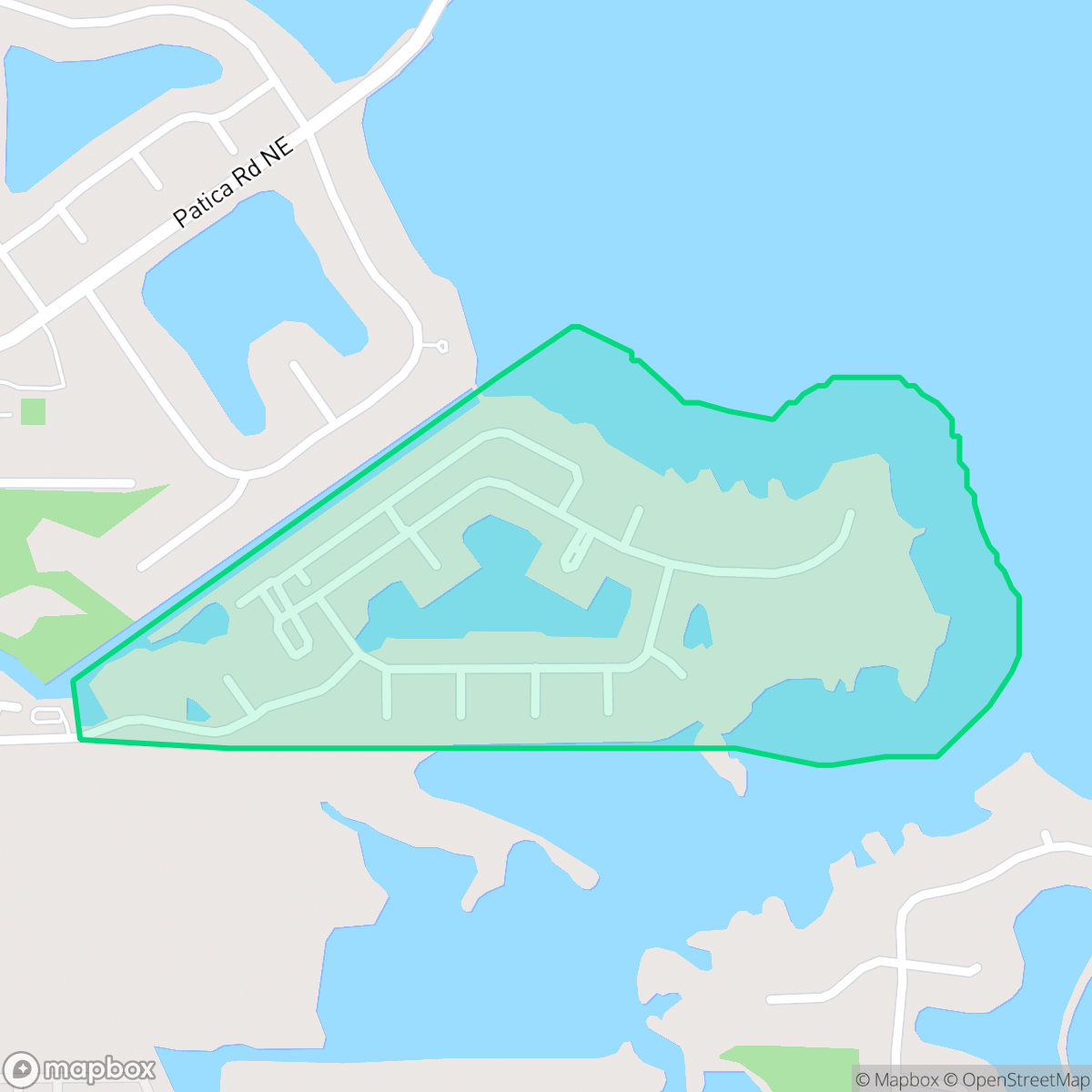
Caya Costa is a secluded, gated waterfront community located on a peninsula extending into Riviera Bay in St. Petersburg, Florida. Developed in the mid-1980s as a joint venture between Bruce Williams and the Pinellas Service Corporation, it stands as one of the city's earliest gated residential developments. The neighborhood comprises approximately 235 residences, featuring a mix of custom single-family homes, townhouses, and villas. Defined by its natural setting of oak trees and palms, the community is characterized by its private, landscaped environment, which includes a community heated pool, tennis courts, and a private boat ramp providing access to Riviera Bay. Governed by a homeowners association, the neighborhood emphasizes a quiet, community-oriented atmosphere that balances privacy with proximity to the broader St. Petersburg area.
The area offers a distinct, semi-rural aesthetic defined by its expansive residential properties and natural landscape. Residents benefit from a high degree of privacy and a lack of industrial activity, creating a tranquil environment that feels removed from the density of central St. Petersburg. The community is well-suited for those who value pet-friendly outdoor spaces and a mature, quiet neighborhood setting.
Prospective residents should weigh the benefits of this exclusive waterfront lifestyle against specific livability trade-offs. The area faces challenges related to air quality and persistent noise from nearby transit routes, which contrast with its otherwise serene atmosphere. Additionally, the location is situated within a floodplain, necessitating careful consideration of insurance requirements. The community remains a strong choice for those prioritizing privacy and a stable, established residential environment over proximity to urban commercial hubs.
Neighborhood Scores Across 15 Qualities
Residential spacing provides a moderate buffer between neighbors, offering slightly more privacy than the St. Petersburg average.
Pedestrian access is supported by sidewalks on one side of the street and safe crossings. According to iHuus data, walking ease in this area is roughly comparable to the St. Petersburg average.
Large residential properties and high-end amenities characterize the local landscape. According to iHuus data, the visual quality of this area sits significantly above the St. Petersburg average.
Accessible green spaces and wide, low-traffic paths make this an ideal area for pet owners. According to iHuus data, the availability of connected outdoor areas is notably higher than the St. Petersburg average.
Open land and scattered homes amid woodlands characterize this area, providing a much more rural landscape than the typical St. Petersburg setting. According to iHuus data, residents will find significantly more unpaved space and natural greenery here compared to the city average.
Minimal commercial activity and very little street life make this area feel significantly more subdued than the St. Petersburg average. Residents can expect a calm, semi-rural atmosphere centered around parks and outdoor spaces, though nearby amenities are sparse.
Frequent noise from nearby transit corridors, such as busy freeways or rail lines, makes this area significantly louder than the St. Petersburg average. Residents may experience persistent acoustic disturbances throughout the day.
Frequent unhealthy air quality levels pose a significant risk to sensitive groups. According to iHuus data, conditions in this area are slightly worse than the St. Petersburg average.
Industrial activity is virtually non-existent here, providing a quiet environment significantly cleaner of warehouses and heavy industry than the St. Petersburg average. According to iHuus data, the area consists of residential streets, parks, and schools without nearby hazard sites or manufacturing facilities.
Health insurance access is exceptionally high among Caya Costa residents, significantly surpassing the St. Petersburg average according to iHuus data.
Political perspectives are split nearly evenly between conservative and liberal leanings, making the area less politically uniform than the St. Petersburg average according to iHuus data.
Older adults comprise the majority of residents in this area, representing a significantly more mature demographic than the average for St. Petersburg. According to iHuus data, there is a modest presence of younger individuals alongside the established older population.
Located within a designated floodplain, this area carries a significantly higher flood risk than the St. Petersburg average. According to iHuus data, properties here are subject to frequent inundation concerns and typically require flood insurance.
Address-Level Insights for Caya Costa


iHuus Neighborhood Intelligence Insights
Get address-level neighborhood insights for Caya Costa
- Street-level scores — see how individual blocks compare, not just neighborhood averages
- Micro-zone boundaries — identify quiet pockets, flood boundaries, and walkable clusters before you visit
- 15 dimensions in full — walkability, noise, air quality, school quality, insurance coverage, population age profile, urban/rural index, and more
- Boundary risk alerts — know if your address sits near a block boundary where scores drop, the kind of detail no listing will ever mention
- School insights — individual school ratings and insights, not just district-level data
- Compare before you commit — side-by-side data across neighborhoods, down to block precision
No credit card required
Compare with Any Neighborhood
| Dimension | Caya Costa | Albert Whitted Airport |
|---|---|---|
| 🚶 Walkabilityavg 6.61 | ||
| 🔊 Acoustic Comfortavg 3.78 | ||
| 🤫 Privacy Indexavg 5.45 | ||
| 🎨 Visual Appealavg 6.33 | ||
| 🐕 Dog Friendlinessavg 5.45 | ||
| 🗺️ Urban-Rural Indexavg 6.19 | ||
| ✨ Neighborhood Vibeavg 3.5 | ||
| 🏥 Health Insurance Coverageavg 6.88 | ||
| 🌿 Air Qualityavg 1.87 | ||
| 🏭 Industrial Proximityavg 7.55 | ||
| 🌊 Flood Safetyavg 4.61 | ||
| 🗳️ Ideological Leanavg 6.01 | ||
| 👥 Population Age Profileavg 5.11 | ||
| 🔥 Fire Safety | ||
| 🏫 School Quality |
Caya Costa Rankings
School Districts Serving Caya Costa
School Insights for Caya Costa
Below average outcomes; significant attendance and academic challenges.
School Insights
See what's really behind every school rating near Caya Costa
- Individual school ratings — each school's own score with outcome context, not just a district average
- Enrollment & class size data — student-to-teacher ratio and how it compares to the state average
- Full demographics breakdown — ethnicity and gender composition for every school in the enrollment zone
- Every school in the district — all schools within the enrollment boundary ranked by rating, not just the closest one
- Grade levels & benchmarks — elementary through high school, with below/above state-average flags
No credit card required