Waterfront, Palmetto
Updated · 218 residents
The Waterfront neighborhood in Palmetto offers a polished, semi-rural environment characterized by upscale aesthetics and a steady rhythm of local dining and commercial services. While residents enjoy exceptionally clean air and a diverse age demographic, the area features limited sidewalk infrastructure and requires careful consideration regarding flood risk and traffic noise.
Key Highlights
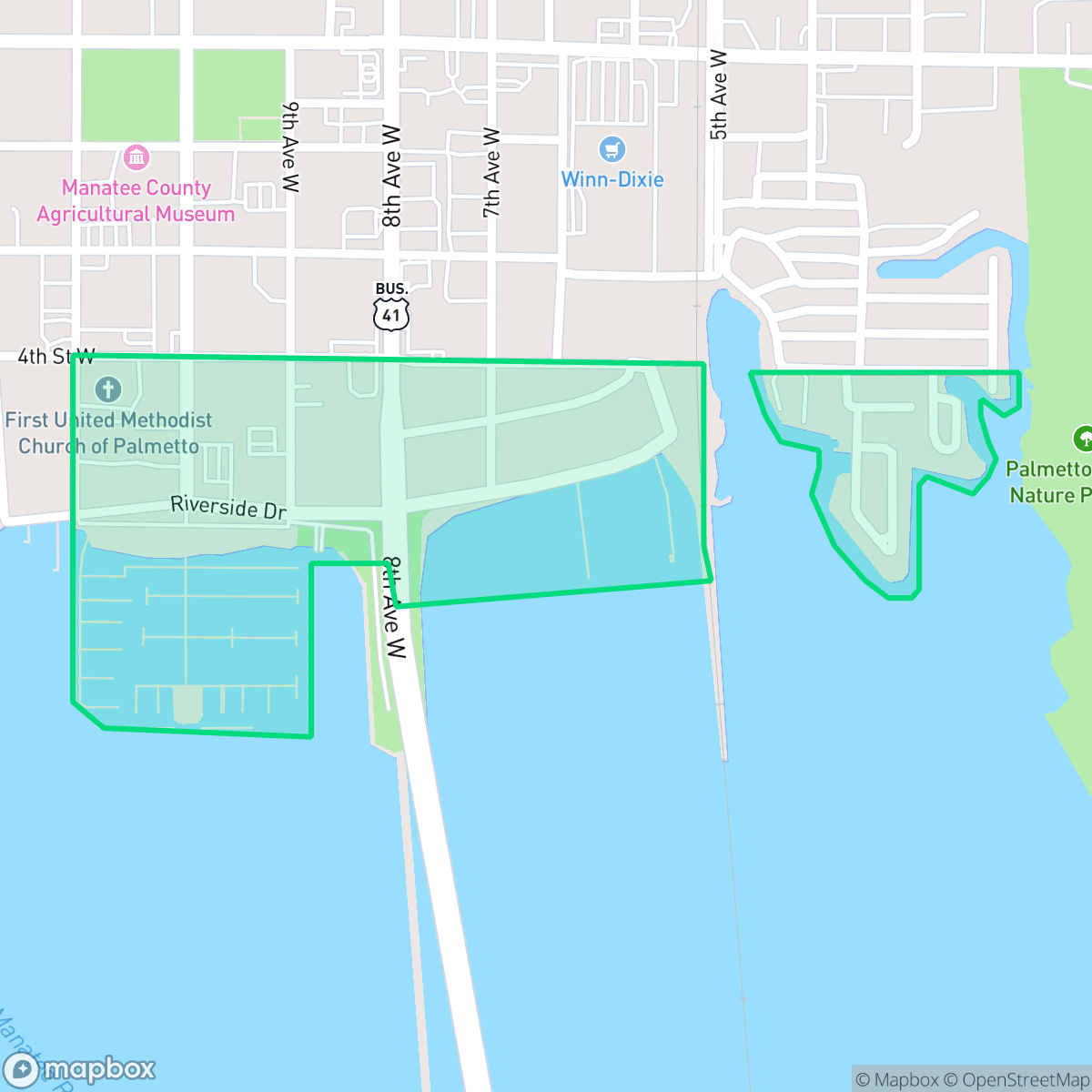
About Waterfront
This coastal area functions as an active local hub, balancing a semi-rural character with convenient access to cafes and essential businesses. The visual aesthetic is notably upscale, featuring well-maintained properties set against a backdrop of open land and woodland. Unlike more dense urban centers, the neighborhood maintains a moderate level of privacy, offering a mix of housing that accommodates a diverse population of families, young adults, and seniors. According to iHuus data, the area provides a more polished visual experience than many other parts of the city.
Prospective residents should note that the area lacks dedicated sidewalks, requiring pedestrians to share the road with vehicles. Additionally, the neighborhood is situated within a floodplain, making flood insurance a practical necessity for many homeowners. While the air quality is pristine, the proximity to transit corridors results in noticeable traffic noise. Families should also be aware that while the local school district is well-funded and undergoing significant expansion, boundary changes and performance disparities are common factors to consider when selecting a home in this region.
Neighborhood Scores Across 15 Qualities
Residential spacing is mixed, providing some buffer between neighbors. This level of privacy is roughly in line with the Palmetto city average.
Low vehicle traffic makes for peaceful walking conditions, though a lack of sidewalks means pedestrians must share the road with cars. This level of walkability is slightly below the Palmetto average according to iHuus data.
Large residential properties and frequent upscale amenities provide a more polished aesthetic than the Palmetto average, according to iHuus data.
Public park access and wide green verges are relatively sparse in this area. According to iHuus data, the availability of dog-friendly infrastructure is below the Palmetto city average.
Open land and scattered homes amid woodland are common here, though the area is slightly more developed than the Palmetto average according to iHuus data.
This coastal area offers a significantly higher level of activity and service variety than the Palmetto average. Residents have access to a steady rhythm of local dining, cafes, and businesses located near transit hubs.
Frequent sounds from nearby transit corridors and heavy infrastructure are common in this area. According to iHuus data, acoustic comfort levels are lower than the Palmetto average.
Air quality remains consistently high with negligible health concerns for residents. This level of purity is slightly above the Palmetto average, according to iHuus data.
Limited heavy industry is present, though some light commercial services like a gas station and printing shop may introduce occasional transit traffic and utility odors. According to iHuus data, the level of industrial presence in Waterfront is roughly comparable to the Palmetto average.
Health insurance access among residents is lower than the Palmetto average, according to iHuus data.
Conservative viewpoints hold a clear majority within the community, representing a more conservative leaning than the average for Palmetto.
Residents live alongside a balanced mix of young adults, families, and seniors. This age distribution is slightly more varied than the average found throughout Palmetto, according to iHuus data.
Located within a known floodplain, this area faces significant flood risks that are higher than the Palmetto average. Residents should prepare for potential flooding and likely requirements for flood insurance, according to iHuus data.
Address-Level Insights for Waterfront


iHuus Neighborhood Intelligence Insights
Get address-level neighborhood insights for Waterfront
- Street-level scores — see how individual blocks compare, not just neighborhood averages
- Micro-zone boundaries — identify quiet pockets, flood boundaries, and walkable clusters before you visit
- 15 dimensions in full — walkability, noise, air quality, school quality, insurance coverage, population age profile, urban/rural index, and more
- Boundary risk alerts — know if your address sits near a block boundary where scores drop, the kind of detail no listing will ever mention
- School insights — individual school ratings and insights, not just district-level data
- Compare before you commit — side-by-side data across neighborhoods, down to block precision
No credit card required
Compare with Any Neighborhood
| Dimension | Waterfront | Midtown |
|---|---|---|
| 🚶 Walkabilityavg 5.58 | ||
| 🔊 Acoustic Comfortavg 3.79 | ||
| 🤫 Privacy Indexavg 5.21 | ||
| 🎨 Visual Appealavg 6.11 | ||
| 🐕 Dog Friendlinessavg 5.32 | ||
| 🗺️ Urban-Rural Indexavg 6.84 | ||
| ✨ Neighborhood Vibeavg 2.69 | ||
| 🏥 Health Insurance Coverageavg 6.47 | ||
| 🌿 Air Qualityavg 9.74 | ||
| 🏭 Industrial Proximityavg 6.63 | ||
| 🌊 Flood Safetyavg 4.27 | ||
| 🗳️ Ideological Leanavg 2.54 | ||
| 👥 Population Age Profileavg 5.47 | ||
| 🔥 Fire Safety | ||
| 🏫 School Quality |
Waterfront Rankings
School Districts Serving Waterfront
School Insights for Waterfront
Below average outcomes; significant attendance and academic challenges.
School Insights
See what's really behind every school rating near Waterfront
- Individual school ratings — each school's own score with outcome context, not just a district average
- Enrollment & class size data — student-to-teacher ratio and how it compares to the state average
- Full demographics breakdown — ethnicity and gender composition for every school in the enrollment zone
- Every school in the district — all schools within the enrollment boundary ranked by rating, not just the closest one
- Grade levels & benchmarks — elementary through high school, with below/above state-average flags
No credit card required