Stonebridge Lakes, Orlando
Updated · 1,643 residents
Stonebridge Lakes is a suburban Orlando neighborhood defined by its scenic lakeside views and well-developed internal walking paths. The area offers a diverse community atmosphere and convenient access to local dining, though residents should prepare for significant aircraft noise and moderate flood risk.
Key Highlights
About Stonebridge Lakes
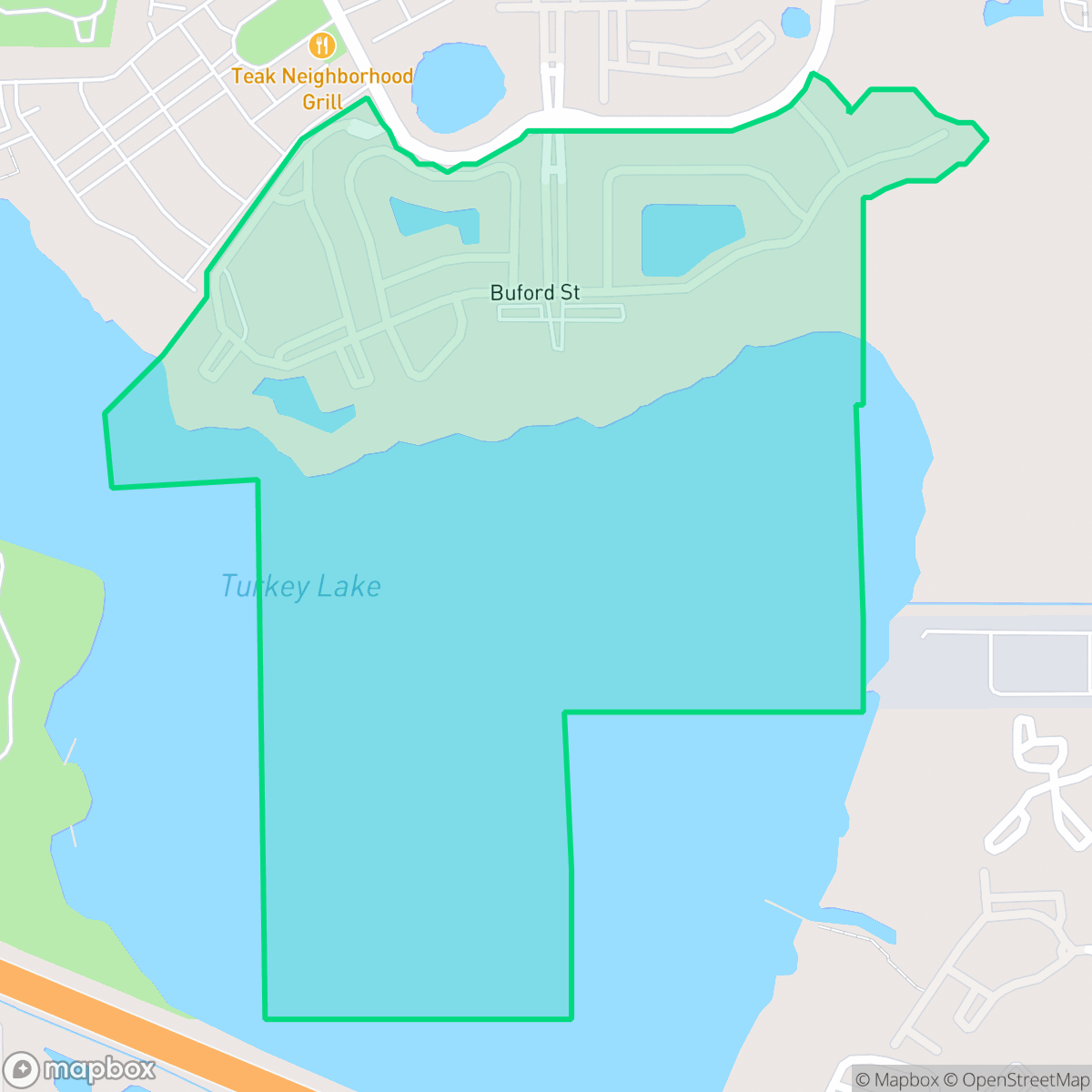
Stonebridge Lakes presents a suburban landscape characterized by a mix of single-family homes and multi-family complexes. The area is defined by its lakeside scenery and robust pedestrian infrastructure, which allows for easy movement along internal paths and through residential subdivisions. With a diverse age demographic, the community maintains a balanced level of activity that supports both quiet residential living and convenient access to local restaurants and fitness services. The neighborhood maintains a largely liberal political leaning and benefits from clean air and a lack of heavy industrial presence.
Potential residents should consider the acoustic environment, as the area experiences frequent noise from nearby airport flight paths. While the neighborhood boasts strong internal walkability, it also faces challenges regarding health insurance coverage and moderate flood risk. Families in the area are served by the Orange County School District, which provides stable leadership and significant capital investment despite ongoing efforts to manage enrollment shifts and school consolidation. The area is best suited for those who value suburban variety and pedestrian-friendly streets but can accommodate the trade-offs of a high-noise environment.
Neighborhood Scores Across 15 Qualities
Residential spacing varies between closely clustered multi-family units and single-family homes with landscaped buffers. This level of privacy is slightly higher than the Orlando average according to iHuus data.
Pedestrian infrastructure is well-developed along internal residential paths and within complexes, making it significantly more walkable than the Orlando average. While sidewalks are consistent throughout most subdivisions, large parking lots and high-traffic perimeter roads can interrupt continuous walking routes.
Scenic lakeside views and larger homes with private pools are balanced by standard apartment complexes and uniform tract housing. This mix of residential styles offers more visual diversity than the typical Orlando neighborhood, according to iHuus data.
Lakeside paths and continuous green buffers provide ample space for pets, making this area significantly more dog friendly than the Orlando average. While internal walking routes are extensive, some segments near major arterial roads lack the same level of safety from traffic.
Open land and scattered woodland are more prevalent here than in the typical Orlando urban core. According to iHuus data, the area presents a semi-rural character defined by a mix of multi-family complexes and larger commercial strips.
Local activity levels are notably higher than the Orlando average, offering a balanced mix of residential quiet and accessible dining. While some pockets remain low-key and suburban, other areas provide a lively atmosphere with various restaurants and fitness services within walking distance.
Frequent aircraft noise from a nearby airport runway significantly impacts the quietness of this area. According to iHuus data, acoustic comfort is much lower than the Orlando average.
Air quality remains consistently clear with rare instances of elevated readings, representing a significantly cleaner environment than the Orlando average according to iHuus data.
Primarily residential in nature, this area lacks heavy industry and is significantly cleaner than the Orlando average. Minor noise from a nearby highway and an electrical substation exists, but light commercial and retail uses remain the only neighbors.
Health insurance access among residents is lower than the Orlando average, according to iHuus data.
Political leanings in this area are notably more liberal than the Orlando average. Residents will find a community with a clear progressive majority and a modest opposing presence, according to iHuus data.
Residents live alongside a varied mix of young adults, families, and seniors. This demographic variety in Stonebridge Lakes is more balanced than the typical age distribution seen across Orlando.
Flood safety in this area is slightly above the Orlando average, though a detailed FEMA study has not yet been finalized for this specific location. Residents should remain aware of moderate risk levels according to iHuus data.
Address-Level Insights for Stonebridge Lakes


iHuus Neighborhood Intelligence Insights
Get address-level neighborhood insights for Stonebridge Lakes
- Street-level scores — see how individual blocks compare, not just neighborhood averages
- Micro-zone boundaries — identify quiet pockets, flood boundaries, and walkable clusters before you visit
- 15 dimensions in full — walkability, noise, air quality, school quality, insurance coverage, population age profile, urban/rural index, and more
- Boundary risk alerts — know if your address sits near a block boundary where scores drop, the kind of detail no listing will ever mention
- School insights — individual school ratings and insights, not just district-level data
- Compare before you commit — side-by-side data across neighborhoods, down to block precision
No credit card required
Compare with Any Neighborhood
| Dimension | Stonebridge Lakes | 33rd St. Industrial |
|---|---|---|
| 🚶 Walkabilityavg 5.62 | ||
| 🔊 Acoustic Comfortavg 3.33 | ||
| 🤫 Privacy Indexavg 4.6 | ||
| 🎨 Visual Appealavg 5.36 | ||
| 🐕 Dog Friendlinessavg 5.01 | ||
| 🗺️ Urban-Rural Indexavg 5.48 | ||
| ✨ Neighborhood Vibeavg 2.98 | ||
| 🏥 Health Insurance Coverageavg 5.11 | ||
| 🌿 Air Qualityavg 5.87 | ||
| 🏭 Industrial Proximityavg 5.75 | ||
| 🌊 Flood Safetyavg 4.98 | ||
| 🗳️ Ideological Leanavg 5.62 | ||
| 👥 Population Age Profileavg 3.78 | ||
| 🔥 Fire Safety | ||
| 🏫 School Quality |
Stonebridge Lakes Rankings
School Districts Serving Stonebridge Lakes
School Insights for Stonebridge Lakes
Below average outcomes; significant attendance and academic challenges.
School Insights
See what's really behind every school rating near Stonebridge Lakes
- Individual school ratings — each school's own score with outcome context, not just a district average
- Enrollment & class size data — student-to-teacher ratio and how it compares to the state average
- Full demographics breakdown — ethnicity and gender composition for every school in the enrollment zone
- Every school in the district — all schools within the enrollment boundary ranked by rating, not just the closest one
- Grade levels & benchmarks — elementary through high school, with below/above state-average flags
No credit card required