Southern Oaks, Orlando
Updated · 964 residents
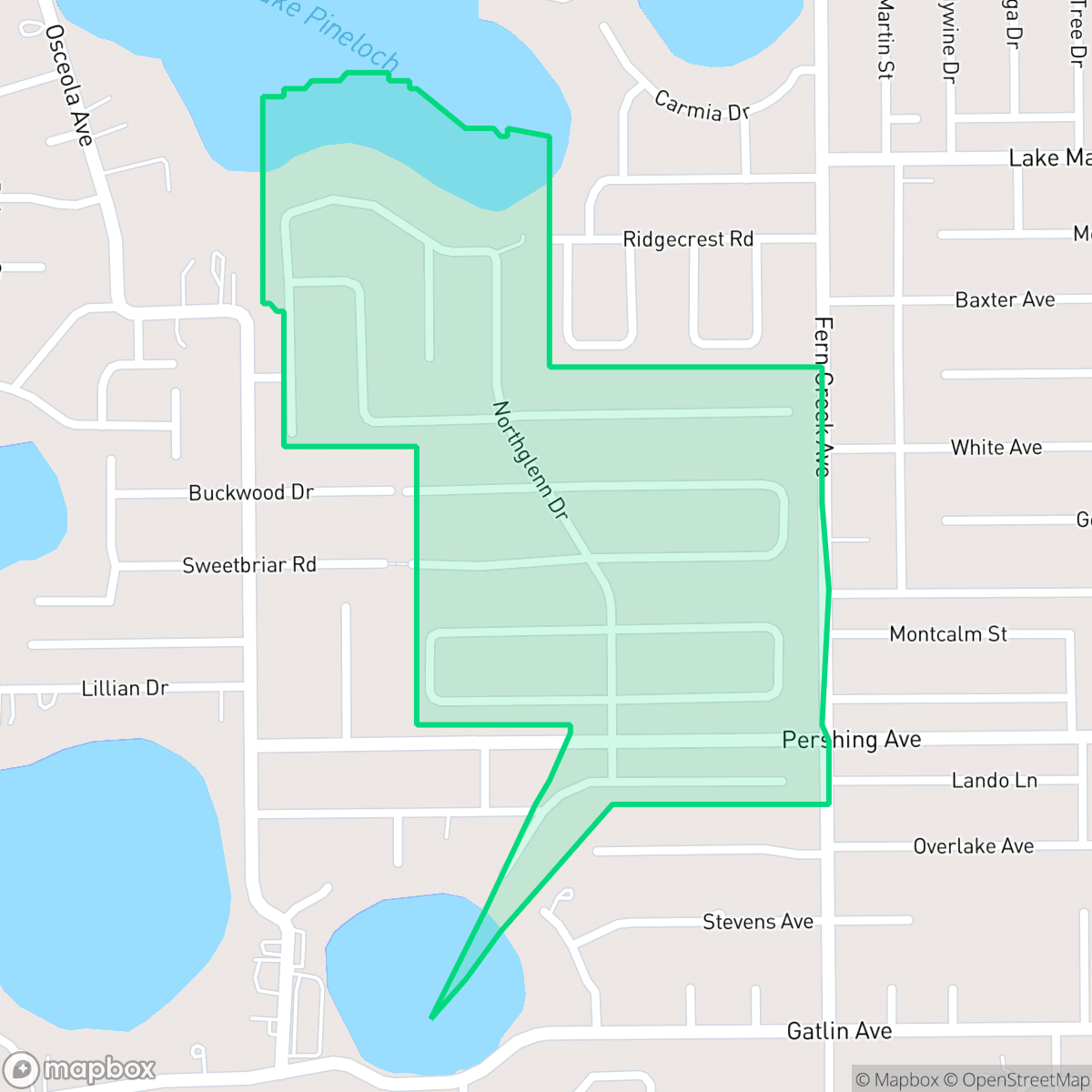
Southern Oaks is a quiet, residential enclave known for its mature landscaping, ranch-style architecture, and well-maintained properties near Lake Pineloch. The area offers a tranquil, semi-rural atmosphere with low traffic volumes and a high degree of privacy for its residents.
Key Highlights
About Southern Oaks
Southern Oaks is a residential neighborhood in Orlando, Florida, situated south of the downtown area near Lake Pineloch. The land was historically assembled by Robert Campbell Anderson through various parcel acquisitions beginning in 1913. The subdivision was formally established in the late 1960s, with restrictive covenants recorded in 1968 and 1969. The community, which consists of approximately 236 single-family homes, is defined by its quiet, walled-enclave layout and mature landscaping. The first residence was constructed in 1969 at 1201 Montcalm Street. The neighborhood is noted for its ranch-style architecture and its resilience, having undergone significant recovery efforts following the 2004 hurricane season, which caused extensive tree and property damage throughout the area.
This neighborhood provides a polished, upscale environment characterized by spacious lots and significant lake coverage. Because it lacks industrial activity and commercial density, the area maintains a peaceful, purely residential character that appeals to a diverse demographic of families, young adults, and seniors. While the location benefits from a quiet street grid that supports leisurely walking, residents should anticipate moderate noise levels from nearby thoroughfares. According to iHuus data, the area maintains a notably tranquil atmosphere compared to the broader Orlando metropolitan region. Prospective residents will find a community with high rates of health insurance coverage and a stable, balanced social environment. While the neighborhood falls within a floodplain, it maintains a higher level of safety than many surrounding areas. It is well-suited for those prioritizing a manicured, private setting over the vibrancy of an urban core, though families should consider the broader operational shifts and consolidation efforts currently occurring within the local Orange County School District.
Neighborhood Scores Across 15 Qualities
Residential spacing provides a fair amount of buffer between neighbors, which is higher than the average density found throughout Orlando. Most homes are separated by moderate distances with fenced backyards, though some central apartment clusters offer less seclusion.
Low traffic volumes and a residential street grid provide safe conditions for walking, performing slightly better than the Orlando average. While some sidewalks are obscured by tree canopy, many streets feature continuous pedestrian paths.
Large homes, private pools, and well-maintained lakefront properties contribute to a landscape that is significantly more visually polished than the Orlando average. According to iHuus data, the area features frequent upscale amenities and spacious lot designs.
Green verges along residential streets and nearby school fields provide decent opportunities for walking pets. This level of accessibility is consistent with the Orlando average.
Open land and woodland areas provide a more spread out environment than the typical Orlando urban core. According to iHuus data, the neighborhood features significant lake coverage and a lower density of development compared to the city average.
Primarily composed of established single-family homes and school facilities, this area offers a calm atmosphere with very limited commercial activity. According to iHuus data, the level of local vibrancy sits slightly below the Orlando average.
Steady sounds from nearby busy streets are present, though acoustic levels remain significantly more tranquil than the Orlando average according to iHuus data.
Air quality in this area fluctuates between acceptable and unhealthy levels, which may cause occasional concern for sensitive groups. This level of-air quality is roughly consistent with the average found throughout Orlando.
Industrial activity and warehouse facilities are absent from this area, which offers a much cleaner landscape than the Orlando average. Residents can expect a setting composed entirely of residential streets, green spaces, and local institutions according to iHuus data.
Health insurance enrollment among residents is significantly higher than the Orlando average, according to iHuus data.
Political leanings in this area are split relatively evenly between conservative and liberal perspectives. This balance is slightly less pronounced than the average seen across Orlando, according to iHuus data.
Residents live alongside a balanced blend of young adults, families, and seniors. This demographic variety is more evenly distributed than the typical age profile found across Orlando.
Residual flood risk exists due to the area being within a 500-year floodplain; however, safety levels remain notably higher than the Orlando average according to iHuus data.
Address-Level Insights for Southern Oaks


iHuus Neighborhood Intelligence Insights
Get address-level neighborhood insights for Southern Oaks
- Street-level scores — see how individual blocks compare, not just neighborhood averages
- Micro-zone boundaries — identify quiet pockets, flood boundaries, and walkable clusters before you visit
- 15 dimensions in full — walkability, noise, air quality, school quality, insurance coverage, population age profile, urban/rural index, and more
- Boundary risk alerts — know if your address sits near a block boundary where scores drop, the kind of detail no listing will ever mention
- School insights — individual school ratings and insights, not just district-level data
- Compare before you commit — side-by-side data across neighborhoods, down to block precision
No credit card required
Compare with Any Neighborhood
| Dimension | Southern Oaks | 33rd St. Industrial |
|---|---|---|
| 🚶 Walkabilityavg 5.62 | ||
| 🔊 Acoustic Comfortavg 3.33 | ||
| 🤫 Privacy Indexavg 4.6 | ||
| 🎨 Visual Appealavg 5.36 | ||
| 🐕 Dog Friendlinessavg 5.01 | ||
| 🗺️ Urban-Rural Indexavg 5.48 | ||
| ✨ Neighborhood Vibeavg 2.98 | ||
| 🏥 Health Insurance Coverageavg 5.11 | ||
| 🌿 Air Qualityavg 5.87 | ||
| 🏭 Industrial Proximityavg 5.75 | ||
| 🌊 Flood Safetyavg 4.98 | ||
| 🗳️ Ideological Leanavg 5.62 | ||
| 👥 Population Age Profileavg 3.78 | ||
| 🔥 Fire Safety | ||
| 🏫 School Quality |
Southern Oaks Rankings
School Districts Serving Southern Oaks
School Insights for Southern Oaks
Below average outcomes; significant attendance and academic challenges.
School Insights
See what's really behind every school rating near Southern Oaks
- Individual school ratings — each school's own score with outcome context, not just a district average
- Enrollment & class size data — student-to-teacher ratio and how it compares to the state average
- Full demographics breakdown — ethnicity and gender composition for every school in the enrollment zone
- Every school in the district — all schools within the enrollment boundary ranked by rating, not just the closest one
- Grade levels & benchmarks — elementary through high school, with below/above state-average flags
No credit card required