South Division, Orlando
Updated · 1,040 residents
South Division is a central Orlando area defined by a mix of light industrial activity and residential pockets. While it offers a varied local vibe with access to diverse amenities, residents should anticipate high noise levels from nearby transit corridors and a reliance on personal vehicles for daily commuting.
Key Highlights
About South Division
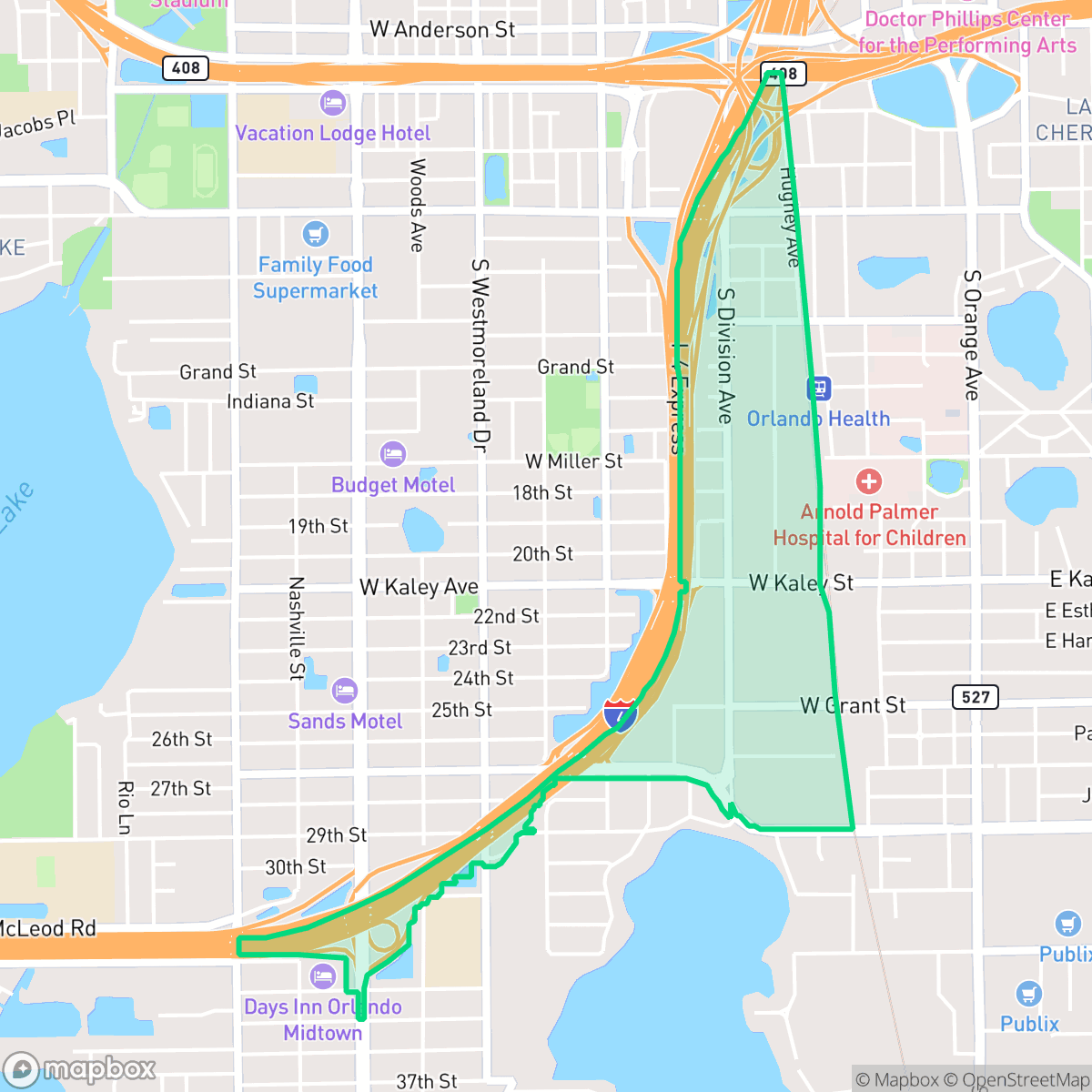
South Division in Orlando is primarily recognized as a significant geographic and historical boundary rather than a standalone neighborhood. Historically, South Division Avenue served as the dividing line for racial segregation in the city, relegating African American residents to the area west of downtown. This corridor forms the eastern boundary of the Holden-Parramore Historic District, which was developed in the early 20th century. The area remains culturally significant for its association with the African American community, preserving historic resources like the Wells'Built Museum of African American History and Culture. While real estate listings may identify the area as South Division, its historical character is inextricably linked to the broader development and social history of the Parramore neighborhood, which remains a focal point for preserving Orlando's black heritage and architectural legacy.
The area functions as a blend of urban infrastructure and residential space, characterized by a mix of warehouses, commercial services, and housing. The landscape features a suburban-urban hybrid where light industrial activity sits adjacent to homes. Residents benefit from a diverse age demographic and a notably liberal political environment, which contributes to the area's distinct local identity and engagement according to iHuus data. Living here requires navigating specific trade-offs, particularly regarding acoustic comfort and walkability. Due to the presence of major highway interchanges, noise levels are elevated, and the lack of comprehensive sidewalk infrastructure makes the neighborhood car-dependent. While the area provides moderate privacy and a varied selection of local services, it is best suited for those who prioritize proximity to central Orlando over a quiet, pedestrian-focused environment.
Neighborhood Scores Across 15 Qualities
Residential spacing offers a modest buffer between neighbors, providing more privacy than the typical Orlando density. According to iHuus data, structures are situated with moderate separation, though some areas feature closely packed housing.
Pedestrian movement is difficult due to high speed highways and a lack of sidewalks, making this area slightly less walkable than the Orlando average. While some streets are quiet enough for walking, large interchanges create significant barriers for those traveling on foot.
Visual variety consists of a mix of dense commercial zones and multi-unit housing, offering slightly more visual interest than the Orlando average. Residential lots feature simple roof geometries and modest yards according to iHuus data.
Extensive highway interchanges and concrete infrastructure limit access to greenery, making the area less dog friendly than much of Orlando. While a central park with ball fields provides some grassy space, safe navigation for pets is constrained by heavy traffic corridors.
A combination of single-family residential areas and industrial corridors creates a landscape of streets and green space in near equal measure. This balance of density is slightly higher than the Orlando average, according to iHuus data.
Activity levels fluctuate between quiet suburban pockets and bustling commercial hubs featuring diverse dining, wellness services, and retail. This area offers a notably higher level of engagement and amenity access than the typical Orlando neighborhood, according to iHuus data.
Frequent acoustic disturbances from nearby major freeways and transit corridors are common here. According to iHuus data, noise levels in this area are significantly higher than the Orlando city average.
Air quality levels in this area fluctuate between acceptable and unhealthy, posing occasional concerns for sensitive groups. According to iHuus data, the local air quality is roughly comparable to the Orlando average.
Light industrial and commercial activities, such as warehouses and printing services, are integrated alongside residential areas. According to iHuus data, the level of industrial proximity is consistent with the city average.
Health insurance enrollment in South Division is slightly higher than the Orlando average, according to iHuus data. This moderate level of coverage suggests a varied landscape of insured and uninsured residents within the community.
Political leanings in this area are notably more liberal than the Orlando average, according to iHuus data.
Residents live alongside a balanced mix of young adults, families, and older individuals. According to iHuus data, this demographic variety is significantly more widespread than the city average.
Flood risk in this area is slightly higher than the Orlando average. According to iHuus data, FEMA has not yet completed a detailed flood study for this specific location.
Address-Level Insights for South Division


iHuus Neighborhood Intelligence Insights
Get address-level neighborhood insights for South Division
- Street-level scores — see how individual blocks compare, not just neighborhood averages
- Micro-zone boundaries — identify quiet pockets, flood boundaries, and walkable clusters before you visit
- 15 dimensions in full — walkability, noise, air quality, school quality, insurance coverage, population age profile, urban/rural index, and more
- Boundary risk alerts — know if your address sits near a block boundary where scores drop, the kind of detail no listing will ever mention
- School insights — individual school ratings and insights, not just district-level data
- Compare before you commit — side-by-side data across neighborhoods, down to block precision
No credit card required
Compare with Any Neighborhood
| Dimension | South Division | 33rd St. Industrial |
|---|---|---|
| 🚶 Walkabilityavg 5.62 | ||
| 🔊 Acoustic Comfortavg 3.33 | ||
| 🤫 Privacy Indexavg 4.6 | ||
| 🎨 Visual Appealavg 5.36 | ||
| 🐕 Dog Friendlinessavg 5.01 | ||
| 🗺️ Urban-Rural Indexavg 5.48 | ||
| ✨ Neighborhood Vibeavg 2.98 | ||
| 🏥 Health Insurance Coverageavg 5.11 | ||
| 🌿 Air Qualityavg 5.87 | ||
| 🏭 Industrial Proximityavg 5.75 | ||
| 🌊 Flood Safetyavg 4.98 | ||
| 🗳️ Ideological Leanavg 5.62 | ||
| 👥 Population Age Profileavg 3.78 | ||
| 🔥 Fire Safety | ||
| 🏫 School Quality |
South Division Rankings
School Districts Serving South Division
School Insights for South Division
Below average outcomes; significant attendance and academic challenges.
School Insights
See what's really behind every school rating near South Division
- Individual school ratings — each school's own score with outcome context, not just a district average
- Enrollment & class size data — student-to-teacher ratio and how it compares to the state average
- Full demographics breakdown — ethnicity and gender composition for every school in the enrollment zone
- Every school in the district — all schools within the enrollment boundary ranked by rating, not just the closest one
- Grade levels & benchmarks — elementary through high school, with below/above state-average flags
No credit card required