Pineloch, Orlando
Updated · 1,290 residents
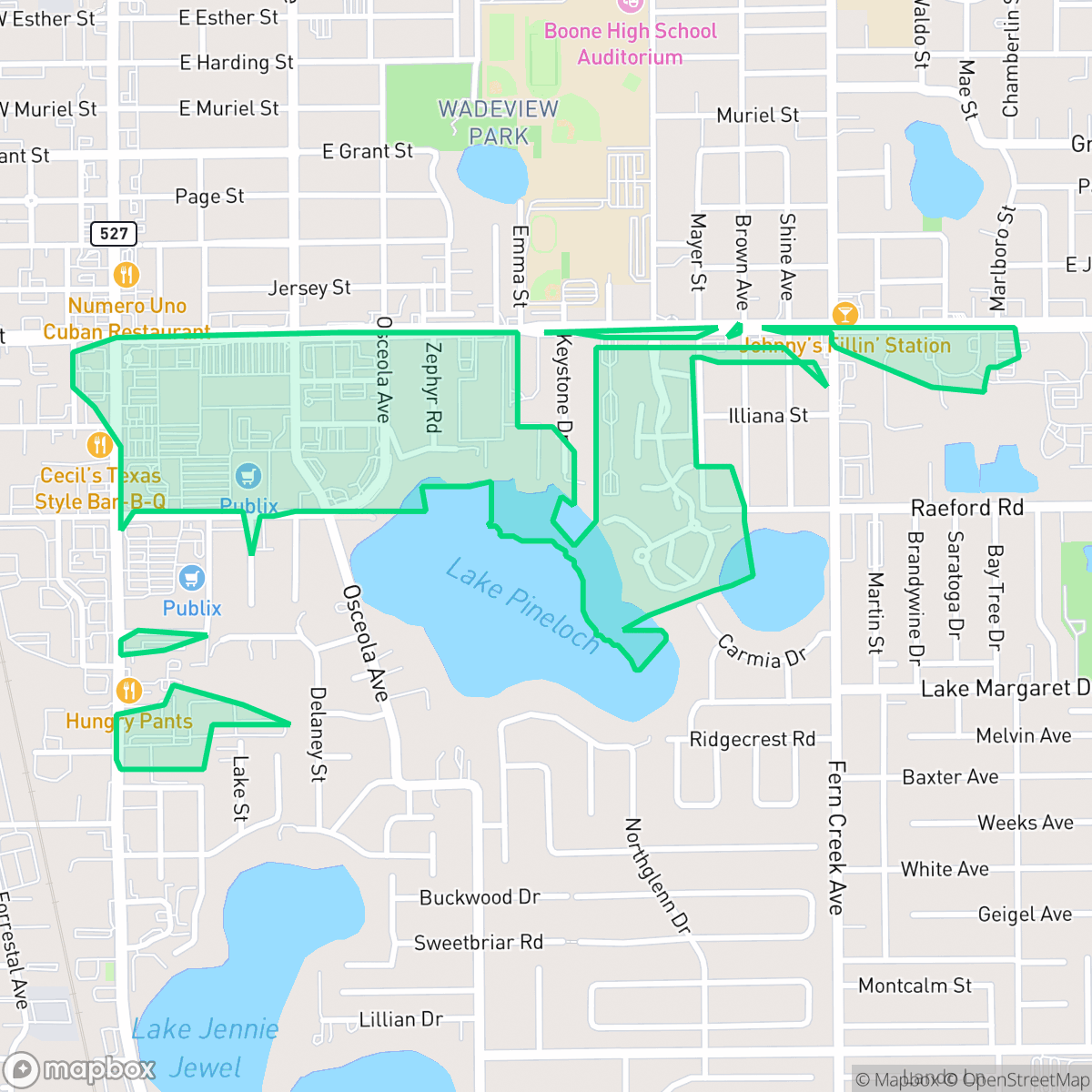
Pineloch is a visually polished, semi-rural enclave centered around Lake Pineloch that offers residents a blend of upscale lakefront living and high walkability. The area functions as a vibrant suburban hub with convenient access to local dining and fitness amenities while maintaining a private residential atmosphere.
Key Highlights
About Pineloch
The Pineloch neighborhood, situated around Lake Pineloch in Orlando, possesses a deep connection to 19th-century pioneer history. In 1871, Francis W. Eppes, a grandson of President Thomas Jefferson, built a notable home on the lake's western shore, which became a landmark in the region. The area was historically defined by its proximity to an ancient Indian trail and the legendary 'Council Oak,' a massive live-oak tree once considered the largest in central Florida, which served as a meeting place for early settlers and indigenous peoples. Over the following century, the landscape transitioned from primitive wilderness and citrus groves—managed by families attracted to the area's potential—into the residential community known today. This evolution reflects the broader shift of the Orlando region from agricultural roots to modern suburban development.
The neighborhood is defined by its manicured residential character and significant greenery, which creates a distinct semi-rural feel despite its proximity to urban amenities. Residents benefit from a high level of privacy due to mature tree canopies and generous spacing between homes. The area functions as an active suburban hub, featuring a diverse range of local businesses, cafes, and fitness centers that contribute to a lively atmosphere. Because of the consistent pedestrian infrastructure and low traffic volumes on residential streets, the area is notably more walkable than the typical Orlando landscape. For those considering the area, it offers a balanced, multigenerational community with high rates of health insurance coverage. While the neighborhood is highly accessible, residents should be aware of moderate traffic noise originating from nearby busy streets. The area maintains a liberal political lean and a generally clean environment with minimal industrial presence, making it a stable choice for families and professionals seeking a polished, well-connected living space.
Neighborhood Scores Across 15 Qualities
Residential structures feature standard suburban spacing with moderate buffering provided by mature tree canopies. According to iHuus data, the level of separation between neighbors is notably higher than the Orlando average.
Pedestrian infrastructure is notably more complete than the Orlando average, featuring consistent sidewalks and clear crosswalks. Low traffic volumes on residential streets further enhance safety for those walking through the area.
Large homes, private pools, and well-maintained lakefront properties create a landscape that is notably more visually polished than the Orlando average. According to iHuus data, the area features significant greenery and substantial institutional investment in its residential fabric.
Green verges and surrounding lakeside paths provide decent walking opportunities for pets. According to iHuus data, the area offers slightly better access to grassy spaces than the Orlando average.
Frequent open land and scattered homes among woodlands provide a more semi-rural atmosphere than the typical Orlando landscape. Residents can expect significant lake coverage and a lower density of development compared to the city average, according to iHuus data.
High business density and a diverse selection of dining, fitness centers, and cafes create a much more energetic atmosphere than the Orlando average. This area functions as a lively local hub where walkable streets meet various suburban amenities.
Steady traffic hum originates from a nearby busy street, though acoustic comfort remains higher than the Orlando average according to iHuus data.
Air quality levels are generally acceptable but include days that may pose a concern for sensitive groups. This neighborhood maintains an air quality profile very similar to the Orlando average, according to iHuus data.
Industrial activity remains low throughout the area, providing a predominantly residential atmosphere that is significantly cleaner than the Orlando average. While occasional light commercial facilities and utility substations exist, residents will find no heavy industrial zones or significant manufacturing plants nearby.
Health insurance access among residents is notably higher than the Orlando average, according to iHuus data.
Political leanings in this area trend more liberal than the Orlando average. According to iHuus data, the neighborhood maintains a liberal majority with a modest opposing presence.
A balanced variety of age groups exists here, including young adults, families, and older residents. According to iHuus data, this demographic spread is more diverse than the typical profile found across Orlando.
Residual flood risk exists within this area due to its location in a 500-year floodplain, though safety levels remain higher than the Orlando average according to iHuus data.
Address-Level Insights for Pineloch


iHuus Neighborhood Intelligence Insights
Get address-level neighborhood insights for Pineloch
- Street-level scores — see how individual blocks compare, not just neighborhood averages
- Micro-zone boundaries — identify quiet pockets, flood boundaries, and walkable clusters before you visit
- 15 dimensions in full — walkability, noise, air quality, school quality, insurance coverage, population age profile, urban/rural index, and more
- Boundary risk alerts — know if your address sits near a block boundary where scores drop, the kind of detail no listing will ever mention
- School insights — individual school ratings and insights, not just district-level data
- Compare before you commit — side-by-side data across neighborhoods, down to block precision
No credit card required
Compare with Any Neighborhood
| Dimension | Pineloch | 33rd St. Industrial |
|---|---|---|
| 🚶 Walkabilityavg 5.62 | ||
| 🔊 Acoustic Comfortavg 3.33 | ||
| 🤫 Privacy Indexavg 4.6 | ||
| 🎨 Visual Appealavg 5.36 | ||
| 🐕 Dog Friendlinessavg 5.01 | ||
| 🗺️ Urban-Rural Indexavg 5.48 | ||
| ✨ Neighborhood Vibeavg 2.98 | ||
| 🏥 Health Insurance Coverageavg 5.11 | ||
| 🌿 Air Qualityavg 5.87 | ||
| 🏭 Industrial Proximityavg 5.75 | ||
| 🌊 Flood Safetyavg 4.98 | ||
| 🗳️ Ideological Leanavg 5.62 | ||
| 👥 Population Age Profileavg 3.78 | ||
| 🔥 Fire Safety | ||
| 🏫 School Quality |
Pineloch Rankings
School Districts Serving Pineloch
School Insights for Pineloch
Below average outcomes; significant attendance and academic challenges.
School Insights
See what's really behind every school rating near Pineloch
- Individual school ratings — each school's own score with outcome context, not just a district average
- Enrollment & class size data — student-to-teacher ratio and how it compares to the state average
- Full demographics breakdown — ethnicity and gender composition for every school in the enrollment zone
- Every school in the district — all schools within the enrollment boundary ranked by rating, not just the closest one
- Grade levels & benchmarks — elementary through high school, with below/above state-average flags
No credit card required