Palomar, Orlando
Updated · 1,042 residents
Palomar offers a semi-rural atmosphere characterized by spacious, upscale homes and a quiet, functional suburban environment. Residents benefit from clean air quality and a diverse age demographic, though the area experiences some traffic noise and proximity to industrial activity.
Key Highlights
About Palomar
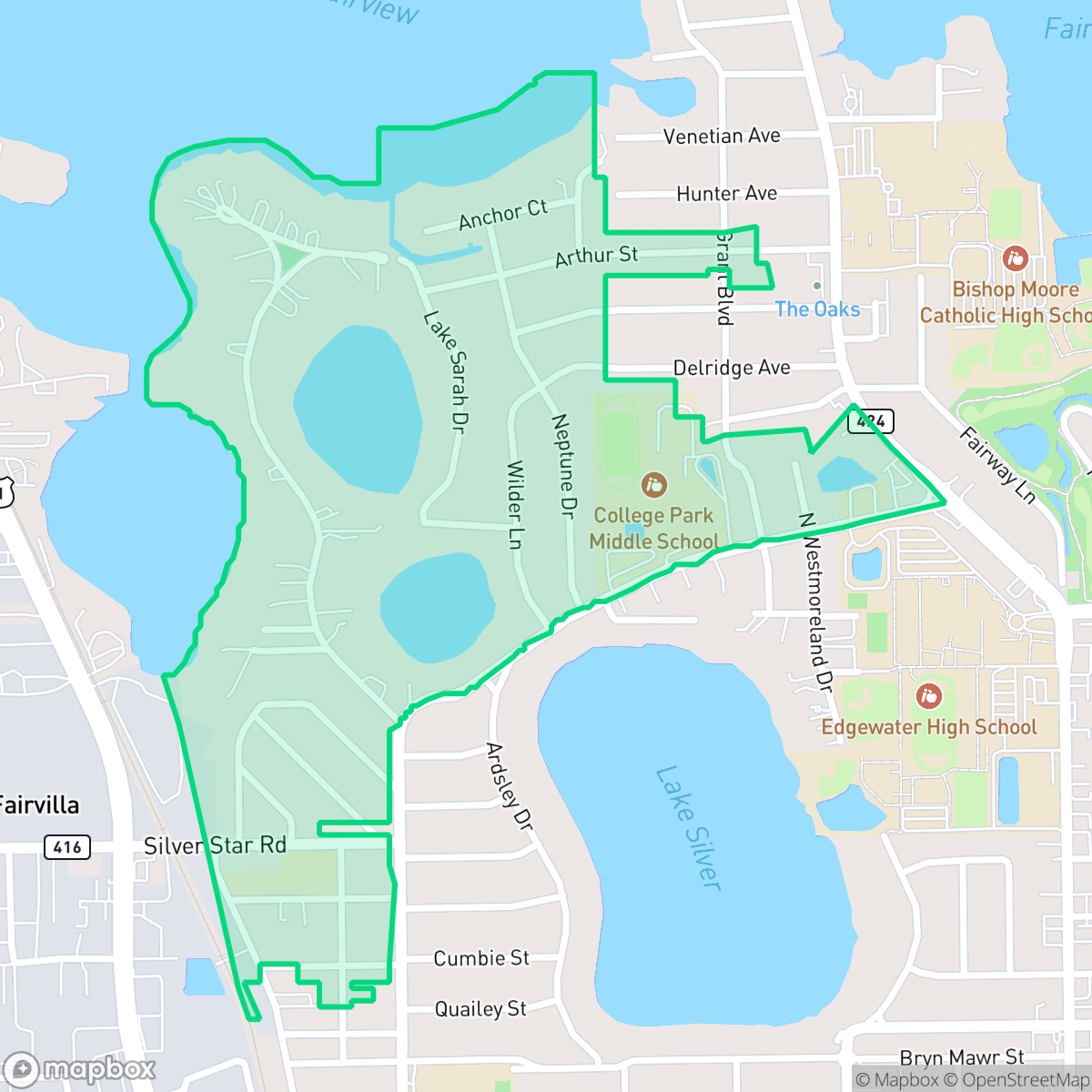
Developed in the 1960s by Abe and Zelig Wise of Wise Brothers Real Estate, the Palomar neighborhood in Orlando was established on former citrus groves along the shores of Lake Fairview. Originally serving as a prominent Jewish enclave, the community earned the nickname 'The Golden Ghetto' as it attracted many families who had historical ties to the early 20th-century Pittsburgh migration of citrus growers that helped shape the region's agrarian economy. Architecturally, the neighborhood is distinguished by its collection of vintage midcentury modern ranch-style homes situated on spacious, tree-lined lots. While historically distinct from the adjacent College Park area, Palomar retains its 'Old Florida' character, defined by its lakeside setting and its enduring legacy as a focal point for the local Jewish community's mid-century development.
The area provides a unique blend of semi-rural seclusion and suburban utility, featuring expansive lots and a landscape defined by woodlands. While the neighborhood maintains a calm, quiet atmosphere, it remains moderately walkable with safe pedestrian crossings that support short trips to nearby local amenities. Residents enjoy a high level of health insurance coverage, and the community benefits from an age distribution that spans young professionals, families, and seniors.
Prospective residents should note that the neighborhood experiences a steady hum of local traffic and is located near industrial sites, including an area with documented environmental oversight. While the setting is visually appealing and offers more privacy than many parts of the city, those considering a move should weigh the benefits of its spacious, tree-lined character against the presence of nearby freight activity and the potential for future school district adjustments as the local educational system navigates shifting enrollment patterns.
Neighborhood Scores Across 15 Qualities
Residential spacing in Palomar provides a balanced level of seclusion with some buffers between neighbors. According to iHuus data, this degree of separation is higher than the Orlando city average.
Pedestrian movement is supported by safe crossings and sidewalks on one side of the street, making it slightly more walkable than most areas in Orlando. According to iHuus data, many short trips can be completed on foot despite some stretches lacking continuous pavement.
Large homes, expansive driveways, and frequent upscale amenities define the local landscape. This area features significantly higher levels of visual appeal than the Orlando average, according to iHuus data.
Access to public parks and green verges for walking dogs is consistent with the city average. According to iHuus data, pet owners will find standard levels of amenities for outdoor exercise.
Frequent open land and scattered homes amid woodlands characterize this area. According to iHuus data, the landscape is more rural than much of the Orlando metro area.
Activity levels are slightly higher than the Orlando average, ranging from subdued residential streets to pockets of notable local interest near nearby universities and small shops. While much of the area is characterized by a calm, functional atmosphere, certain blocks serve as localized hubs for fitness and dining.
A steady hum of local traffic from a nearby busy street characterizes the area. According to iHuus data, acoustic levels are slightly higher than the Orlando average.
Air quality remains mostly clean with infrequent periods of elevated readings. According to iHuus data, these levels are notably better than the Orlando city average.
Heavy freight traffic and loading dock activity are present near local storage facilities. According to iHuus data, the area also contains an EPA Superfund site with potential soil and groundwater contamination risks, making industrial proximity significantly higher than the Orlando average.
Health insurance enrollment among residents is significantly higher than the Orlando average, according to iHuus data.
Political viewpoints in Palomar are evenly split between conservative and liberal leanings, appearing very similar to the broader Orlando area according to iHuus data.
Residents live alongside a varied demographic of young professionals, families, and seniors. This age distribution is more diverse than the typical profile found across Orlando.
Residual flood risks exist within this area as it falls inside a 500-year floodplain; however, the safety level remains notably higher than the Orlando city average according to iHuus data.
Address-Level Insights for Palomar


iHuus Neighborhood Intelligence Insights
Get address-level neighborhood insights for Palomar
- Street-level scores — see how individual blocks compare, not just neighborhood averages
- Micro-zone boundaries — identify quiet pockets, flood boundaries, and walkable clusters before you visit
- 15 dimensions in full — walkability, noise, air quality, school quality, insurance coverage, population age profile, urban/rural index, and more
- Boundary risk alerts — know if your address sits near a block boundary where scores drop, the kind of detail no listing will ever mention
- School insights — individual school ratings and insights, not just district-level data
- Compare before you commit — side-by-side data across neighborhoods, down to block precision
No credit card required
Compare with Any Neighborhood
| Dimension | Palomar | 33rd St. Industrial |
|---|---|---|
| 🚶 Walkabilityavg 5.62 | ||
| 🔊 Acoustic Comfortavg 3.33 | ||
| 🤫 Privacy Indexavg 4.6 | ||
| 🎨 Visual Appealavg 5.36 | ||
| 🐕 Dog Friendlinessavg 5.01 | ||
| 🗺️ Urban-Rural Indexavg 5.48 | ||
| ✨ Neighborhood Vibeavg 2.98 | ||
| 🏥 Health Insurance Coverageavg 5.11 | ||
| 🌿 Air Qualityavg 5.87 | ||
| 🏭 Industrial Proximityavg 5.75 | ||
| 🌊 Flood Safetyavg 4.98 | ||
| 🗳️ Ideological Leanavg 5.62 | ||
| 👥 Population Age Profileavg 3.78 | ||
| 🔥 Fire Safety | ||
| 🏫 School Quality |
Palomar Rankings
School Districts Serving Palomar
School Insights for Palomar
Below average outcomes; significant attendance and academic challenges.
School Insights
See what's really behind every school rating near Palomar
- Individual school ratings — each school's own score with outcome context, not just a district average
- Enrollment & class size data — student-to-teacher ratio and how it compares to the state average
- Full demographics breakdown — ethnicity and gender composition for every school in the enrollment zone
- Every school in the district — all schools within the enrollment boundary ranked by rating, not just the closest one
- Grade levels & benchmarks — elementary through high school, with below/above state-average flags
No credit card required