Orwin Manor, Orlando
Updated · 908 residents
Orwin Manor is a distinct residential enclave known for its premium, upscale aesthetic and diverse architectural styles. The area offers a semi-rural atmosphere with clean air and high levels of resident health insurance coverage, providing a quiet, pet-friendly environment located conveniently between Orlando and Winter Park.
Key Highlights
About Orwin Manor
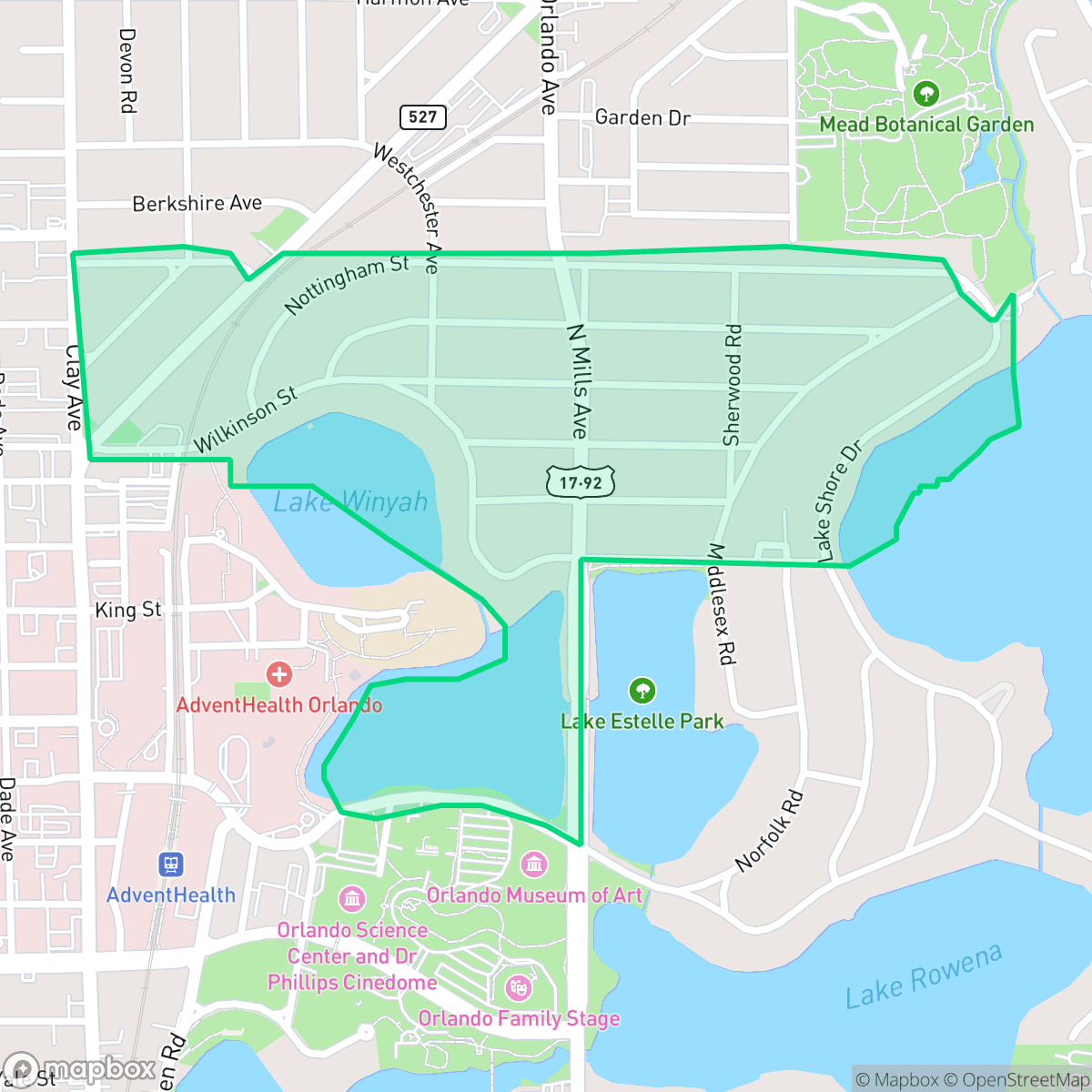
Orwin Manor, established in 1924 by Walter W. Rose’s Central Florida Development Company, derives its name from a blend of Orlando and Winter Park. It stands as a significant example of 1920s Florida Land Boom development, notable for being the first local neighborhood to incorporate modern infrastructure such as sidewalks, streetlamps, and a sewer system. The area is defined by its diverse architectural stock, which includes Mediterranean Revival, Colonial Revival, and Mission-style homes. A defining landmark of the neighborhood is the set of historic stuccoed gates at the intersection of Orange, Clay, and Wilkinson streets, which earned designation as an Orlando historic landmark in 1990. Today, the community remains a distinct residential enclave, preserving its historical character while serving as a bridge between the urban centers of Orlando and Winter Park.
The neighborhood maintains a steady, suburban rhythm characterized by an upscale visual appeal and a notable lack of industrial presence. Residents benefit from a semi-rural atmosphere that features more open land and greenery than the average Orlando community, contributing to a sense of privacy and tranquility. The area is particularly well-suited for those who prioritize community stability and health, as evidenced by high rates of insurance coverage and a demographic mix that spans from young professionals to long-term residents. With its well-maintained green verges and accessible paths, the community remains a popular choice for pet owners seeking a walkable, refined living environment.
While the area offers a high quality of life, prospective residents should consider the local infrastructure trade-offs. The neighborhood experiences moderate traffic noise from nearby busy streets, and while it is generally walkable, major multi-lane highway corridors can create detours for pedestrians. Families will find themselves within the Orange County School District, which is currently navigating enrollment shifts while maintaining strong institutional support and funding for facilities. Although the area carries a moderate risk for flooding, its combination of historical character, high air quality, and central location continues to make it a desirable destination for those seeking a balanced, established community.
Neighborhood Scores Across 15 Qualities
Residential structures offer a degree of separation through mixed spacing and consistent buffers between neighbors. This level of privacy is higher than the typical density found across Orlando.
Sidewalks are available along many streets and crossings are generally safe, though a major multi-lane highway corridor creates significant detours for pedestrians. This level of accessibility sits above the Orlando average according to iHuus data.
Large homes and frequent private pools create an aesthetic that is noticeably more premium than the Orlando average. While many properties feature spacious driveways, some areas consist of closely packed suburban housing with smaller yards.
Green verges and small parks provide safe, connected spaces for walking pets. According to iHuus data, these accessible routes offer significantly more ease for dog owners than the Orlando average.
Open land and scattered greenery provide a more spacious, semi-rural atmosphere than the denser urban fabric typically found in Orlando. According to iHuus data, residents will find more frequent pockets of woodland and fields compared to the city average.
Local activity levels are notably higher than the Orlando average, offering a varied mix of wellness services, dining, and park access. While some pockets remain quiet and residential, certain areas provide a lively atmosphere with increased walkability near civic institutions and gardens.
Steady traffic sounds from nearby busy streets are present, though the level of acoustic disturbance remains slightly lower than the Orlando average according to iHuus data.
Air quality remains consistently high and clear, significantly surpassing the Orlando average according to iHuus data.
Residential tranquility is a key feature of this area, as it lacks heavy industry and remains significantly clearer of industrial zones than the Orlando average. Local surroundings are primarily composed of quiet streets, parks, and light commercial services like coffee shops and gyms.
Health insurance access among Orwin Manor residents is significantly higher than the Orlando average. According to iHuus data, nearly all households in this area maintain coverage.
Political leanings in this area are more liberal than the Orlando average. This tendency is reflected in local community engagement and voting patterns according to iHuus data.
Residents live alongside a varied mix of young adults, families, and older populations. This demographic distribution is more balanced than the typical age profile seen across Orlando.
Flood risk in this area is higher than the Orlando average, though current FEMA assessments for Orwin Manor remain undetermined. Residents should exercise caution as detailed flood studies for this specific location have not yet been completed.
Address-Level Insights for Orwin Manor


iHuus Neighborhood Intelligence Insights
Get address-level neighborhood insights for Orwin Manor
- Street-level scores — see how individual blocks compare, not just neighborhood averages
- Micro-zone boundaries — identify quiet pockets, flood boundaries, and walkable clusters before you visit
- 15 dimensions in full — walkability, noise, air quality, school quality, insurance coverage, population age profile, urban/rural index, and more
- Boundary risk alerts — know if your address sits near a block boundary where scores drop, the kind of detail no listing will ever mention
- School insights — individual school ratings and insights, not just district-level data
- Compare before you commit — side-by-side data across neighborhoods, down to block precision
No credit card required
Compare with Any Neighborhood
| Dimension | Orwin Manor | 33rd St. Industrial |
|---|---|---|
| 🚶 Walkabilityavg 5.62 | ||
| 🔊 Acoustic Comfortavg 3.33 | ||
| 🤫 Privacy Indexavg 4.6 | ||
| 🎨 Visual Appealavg 5.36 | ||
| 🐕 Dog Friendlinessavg 5.01 | ||
| 🗺️ Urban-Rural Indexavg 5.48 | ||
| ✨ Neighborhood Vibeavg 2.98 | ||
| 🏥 Health Insurance Coverageavg 5.11 | ||
| 🌿 Air Qualityavg 5.87 | ||
| 🏭 Industrial Proximityavg 5.75 | ||
| 🌊 Flood Safetyavg 4.98 | ||
| 🗳️ Ideological Leanavg 5.62 | ||
| 👥 Population Age Profileavg 3.78 | ||
| 🔥 Fire Safety | ||
| 🏫 School Quality |
Orwin Manor Rankings
School Districts Serving Orwin Manor
School Insights for Orwin Manor
Below average outcomes; significant attendance and academic challenges.
School Insights
See what's really behind every school rating near Orwin Manor
- Individual school ratings — each school's own score with outcome context, not just a district average
- Enrollment & class size data — student-to-teacher ratio and how it compares to the state average
- Full demographics breakdown — ethnicity and gender composition for every school in the enrollment zone
- Every school in the district — all schools within the enrollment boundary ranked by rating, not just the closest one
- Grade levels & benchmarks — elementary through high school, with below/above state-average flags
No credit card required