Northlake Park at Lake Nona, Orlando
Updated · 1,708 residents
Northlake Park at Lake Nona is a well-established community known for its mature oak canopy and highly walkable, pedestrian-friendly streets. Residents enjoy a tranquil, semi-rural atmosphere with clean air and an upscale, manicured environment that remains distinct from the typical urban landscape of Orlando.
Key Highlights
About Northlake Park at Lake Nona
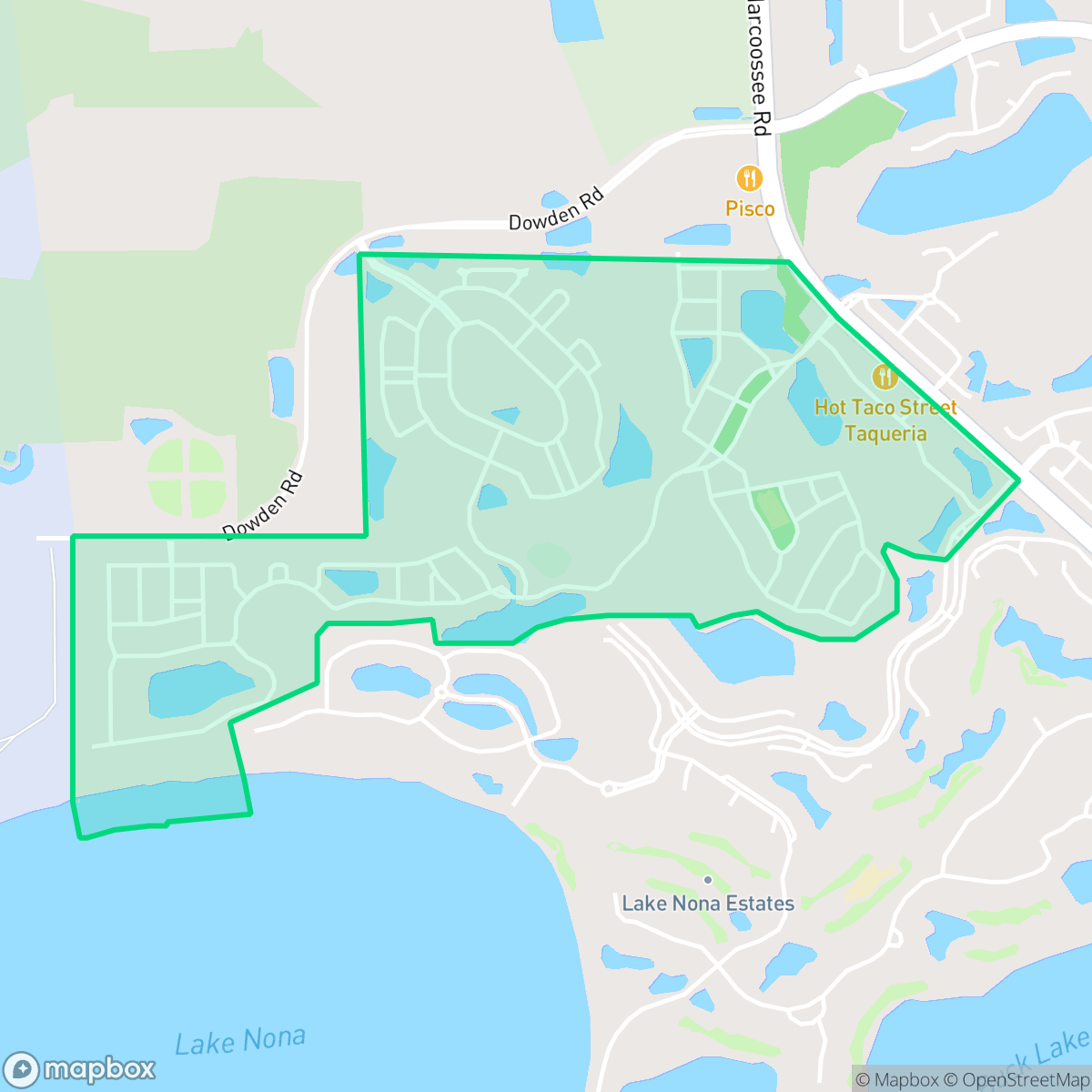
Northlake Park at Lake Nona, developed in the early 2000s, stands as the inaugural residential neighborhood of the broader Lake Nona master-planned community. Situated on 500 acres at the community’s northernmost point, it was the first project developed by the Tavistock Group outside of the Lake Nona Golf and Country Club. A defining cultural landmark is the Northlake Park Community School, which, established in 1999, remains notable for its unique partnership with the YMCA; the two organizations share a facility, creating a central hub for local recreation and education. Characterized by its mature oak tree canopy and integrated green spaces, the neighborhood serves as the foundational cornerstone for the subsequent rapid growth of the Lake Nona area, transitioning from its historical roots in central Florida ranching into a modern, amenity-focused residential enclave.
The neighborhood offers a polished, suburban environment characterized by spacious landscapes and a high level of walkability. Its design prioritizes pedestrian access, allowing residents to navigate the area safely via extensive sidewalks and connected green spaces. The atmosphere is notably quiet, with minimal industrial presence and a semi-rural feel that provides a peaceful buffer from the busier urban parts of the city. According to data, the area maintains a high standard of visual appeal, with well-maintained properties and ample greenery contributing to its aesthetic consistency.
While the area provides a calm setting, residents may notice a steady hum of traffic from nearby thoroughfares. The community appeals to a diverse range of ages, from young families to older individuals, all of whom benefit from high levels of health insurance coverage and a stable, well-maintained environment. Although the neighborhood maintains a subdued pace with limited commercial activity, its integration of nature and community-focused infrastructure makes it a reliable choice for those seeking a balance between accessibility and residential peace.
Neighborhood Scores Across 15 Qualities
Housing density remains moderate with varying distances between properties. Residents experience more buffer space between neighbors than is typical for the Orlando area, according to iHuus data.
Pedestrian infrastructure is well-developed with sidewalks and safe crossings available. This level of accessibility significantly exceeds the Orlando average, according to iHuus data.
Large homes and frequent upscale amenities create a highly polished environment that is notably more visually appealing than the Orlando average. According to iHuus data, the presence of spacious driveways and manicured landscapes contributes to an aesthetically premium setting.
Wide paths and connected green spaces provide an ideal setting for pet owners. According to iHuus data, this area offers significantly more opportunities for safe, traffic-free walks than the Orlando average.
Frequent open land and scattered homes amid woodland provide a more tranquil setting than the typical Orlando urban landscape. According to iHuus data, this area offers significantly more space and greenery compared to the city average.
Residential streets offer a calm, subdued atmosphere with very little commercial activity or street life. While some pockets near Lake Nona Preserve provide access to dining and parks, the overall level of activity is slightly lower than the Orlando average.
A steady hum of local traffic is present due to proximity to a busy street, though acoustic comfort remains notably higher than the Orlando average according to iHuus data.
Air remains consistently clear with very few instances of pollutants, significantly outperforming the Orlando average according to iHuus data.
Industrial activity is notably low in this area, which consists primarily of residential streets and local services like coffee shops and parks. According to iHuus data, the neighborhood lacks heavy industry and remains much quieter than the Orlando average.
Health insurance enrollment among residents is significantly higher than the Orlando average, according to iHuus data.
Political leanings in this area are roughly split between conservative and liberal views. This distribution is slightly more moderate than the Orlando city average, according to iHuus data.
Residents live among a balanced blend of young adults, families, and older populations. This age distribution is more varied than the average seen across Orlando.
Residual flood risk exists within a defined floodplain, though safety levels are notably higher than the Orlando city average according to iHuus data.
Address-Level Insights for Northlake Park at Lake Nona


iHuus Neighborhood Intelligence Insights
Get address-level neighborhood insights for Northlake Park at Lake Nona
- Street-level scores — see how individual blocks compare, not just neighborhood averages
- Micro-zone boundaries — identify quiet pockets, flood boundaries, and walkable clusters before you visit
- 15 dimensions in full — walkability, noise, air quality, school quality, insurance coverage, population age profile, urban/rural index, and more
- Boundary risk alerts — know if your address sits near a block boundary where scores drop, the kind of detail no listing will ever mention
- School insights — individual school ratings and insights, not just district-level data
- Compare before you commit — side-by-side data across neighborhoods, down to block precision
No credit card required
Compare with Any Neighborhood
| Dimension | Northlake Park at Lake Nona | 33rd St. Industrial |
|---|---|---|
| 🚶 Walkabilityavg 5.62 | ||
| 🔊 Acoustic Comfortavg 3.33 | ||
| 🤫 Privacy Indexavg 4.6 | ||
| 🎨 Visual Appealavg 5.36 | ||
| 🐕 Dog Friendlinessavg 5.01 | ||
| 🗺️ Urban-Rural Indexavg 5.48 | ||
| ✨ Neighborhood Vibeavg 2.98 | ||
| 🏥 Health Insurance Coverageavg 5.11 | ||
| 🌿 Air Qualityavg 5.87 | ||
| 🏭 Industrial Proximityavg 5.75 | ||
| 🌊 Flood Safetyavg 4.98 | ||
| 🗳️ Ideological Leanavg 5.62 | ||
| 👥 Population Age Profileavg 3.78 | ||
| 🔥 Fire Safety | ||
| 🏫 School Quality |
Northlake Park at Lake Nona Rankings
School Districts Serving Northlake Park at Lake Nona
School Insights for Northlake Park at Lake Nona
Below average outcomes; significant attendance and academic challenges.
School Insights
See what's really behind every school rating near Northlake Park at Lake Nona
- Individual school ratings — each school's own score with outcome context, not just a district average
- Enrollment & class size data — student-to-teacher ratio and how it compares to the state average
- Full demographics breakdown — ethnicity and gender composition for every school in the enrollment zone
- Every school in the district — all schools within the enrollment boundary ranked by rating, not just the closest one
- Grade levels & benchmarks — elementary through high school, with below/above state-average flags
No credit card required