North Orange, Orlando
Updated · 1,252 residents
North Orange is a highly walkable community known for its manicured landscapes and a diverse mix of upscale residential styles. While the area offers a vibrant atmosphere with local cafes and breweries, residents should be prepared for noticeable noise levels from nearby rail and highway corridors.
Key Highlights
About North Orange
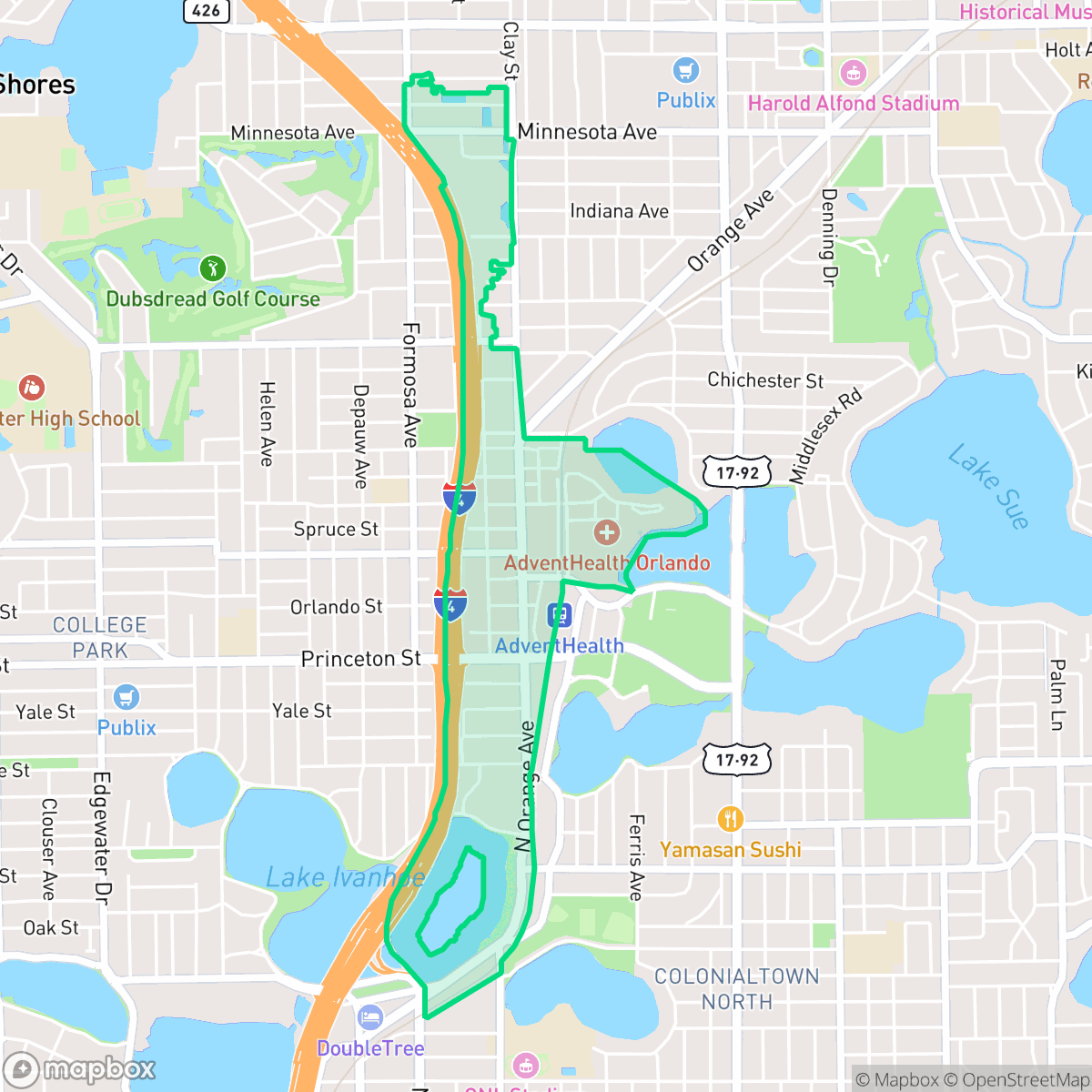
The North Orange neighborhood in Orlando is historically significant for its deep-rooted connections to the College Park and Ivanhoe Village districts. A notable portion of the area includes the Rosemere Historic District, which was placed on the National Register of Historic Places in 2009. Developed starting in 1921 by Walter Washington Rose, this area served as the origin for the 'College Park' name, as developers utilized college-themed street names to boost property appeal. The neighborhood features a diverse array of architectural styles, including Bungalow, American Foursquare, Colonial Revival, and Tudor Revival. In 1965, the construction of Interstate 4 bisected the community, physically separating parts of the original Rosemere and College Park subdivisions while preserving its identity as a historic residential enclave.
North Orange offers a distinct semi-rural character within the city, defined by expansive woodland, open land, and a mix of housing that ranges from dense apartments to spacious lakeside estates. The area maintains a vibrant social pulse, supported by a variety of local breweries, retail shops, and dining options that encourage an active lifestyle. According to iHuus data, residents benefit from high levels of health insurance coverage and clean air, contributing to a stable environment that appeals to a diverse demographic of young adults, families, and seniors.
Living here involves balancing the benefits of high walkability and well-maintained green spaces against the reality of frequent noise from the adjacent railroad and interstate. While the neighborhood provides a strong sense of community and progressive values, prospective residents should consider the local school district's current transition, which involves ongoing efforts to balance facility capacity and enrollment. It remains an ideal choice for those who prioritize neighborhood character and pedestrian accessibility over absolute quiet.
Neighborhood Scores Across 15 Qualities
Housing density varies between dense apartment blocks and detached homes with moderate yard spacing. According to iHuus data, the neighborhood offers more spatial buffer between neighbors than the Orlando average.
Extensive sidewalk networks and marked crosswalks make much of the area accessible on foot, significantly surpassing the Orlando average. While many residential streets feature continuous paths on both sides, large highway and railway corridors can occasionally require long detours.
Large homes with private pools and well-maintained landscapes characterize much of this area, making its visual appeal notably higher than the Orlando average. According to iHuus data, some pockets feature spacious lakeside properties, while other sections consist of more densely packed suburban housing.
Residential streets feature consistent grass verges and mature tree cover that are well-suited for walking dogs. According to iHuus data, these green spaces and sidewalk buffers provide more favorable conditions for pet owners than the Orlando city average.
Frequent open land and scattered homes amid woodland provide a more open landscape than the typical Orlando urban density. According to iHuus data, this area maintains a higher proportion of undeveloped space compared to the city average.
A diverse mix of dining, nightlife, and wellness services creates a much more active atmosphere than the typical Orlando neighborhood. Highly walkable pockets near the Rosemere Historic District provide steady energy through a variety of local cafes, breweries, and retail shops.
Frequent noise from nearby railroad tracks and heavy freeway traffic characterizes the area. This level of acoustic disturbance is notably higher than the Orlando city average, according to iHuus data.
Air quality in this area remains mostly clean with rare instances of elevated readings. According to iHuus data, the air quality here is notably better than the Orlando city average.
Primarily residential in character, this area features very little heavy industry compared to the Orlando average. While some light commercial activity and transit-related noise from nearby railways are present, the neighborhood lacks significant manufacturing facilities.
Health insurance accessibility in North Orange is significantly higher than the Orlando average. This reflects a strong level of coverage among the local resident population according to iHuus data.
Political leanings in North Orange are predominantly liberal, representing a significantly more progressive tilt than the Orlando average according to iHuus data.
A balanced range of age groups resides here, including young adults, families, and seniors. According to iHuus data, this demographic spread is more varied than the average seen across Orlando.
Residual flood risks exist within the area, though overall safety levels are higher than the Orlando average according to iHuus data.
Address-Level Insights for North Orange


iHuus Neighborhood Intelligence Insights
Get address-level neighborhood insights for North Orange
- Street-level scores — see how individual blocks compare, not just neighborhood averages
- Micro-zone boundaries — identify quiet pockets, flood boundaries, and walkable clusters before you visit
- 15 dimensions in full — walkability, noise, air quality, school quality, insurance coverage, population age profile, urban/rural index, and more
- Boundary risk alerts — know if your address sits near a block boundary where scores drop, the kind of detail no listing will ever mention
- School insights — individual school ratings and insights, not just district-level data
- Compare before you commit — side-by-side data across neighborhoods, down to block precision
No credit card required
Compare with Any Neighborhood
| Dimension | North Orange | 33rd St. Industrial |
|---|---|---|
| 🚶 Walkabilityavg 5.62 | ||
| 🔊 Acoustic Comfortavg 3.33 | ||
| 🤫 Privacy Indexavg 4.6 | ||
| 🎨 Visual Appealavg 5.36 | ||
| 🐕 Dog Friendlinessavg 5.01 | ||
| 🗺️ Urban-Rural Indexavg 5.48 | ||
| ✨ Neighborhood Vibeavg 2.98 | ||
| 🏥 Health Insurance Coverageavg 5.11 | ||
| 🌿 Air Qualityavg 5.87 | ||
| 🏭 Industrial Proximityavg 5.75 | ||
| 🌊 Flood Safetyavg 4.98 | ||
| 🗳️ Ideological Leanavg 5.62 | ||
| 👥 Population Age Profileavg 3.78 | ||
| 🔥 Fire Safety | ||
| 🏫 School Quality |
North Orange Rankings
School Districts Serving North Orange
School Insights for North Orange
Below average outcomes; significant attendance and academic challenges.
School Insights
See what's really behind every school rating near North Orange
- Individual school ratings — each school's own score with outcome context, not just a district average
- Enrollment & class size data — student-to-teacher ratio and how it compares to the state average
- Full demographics breakdown — ethnicity and gender composition for every school in the enrollment zone
- Every school in the district — all schools within the enrollment boundary ranked by rating, not just the closest one
- Grade levels & benchmarks — elementary through high school, with below/above state-average flags
No credit card required