Mariners Village, Orlando
Updated · 2,599 residents
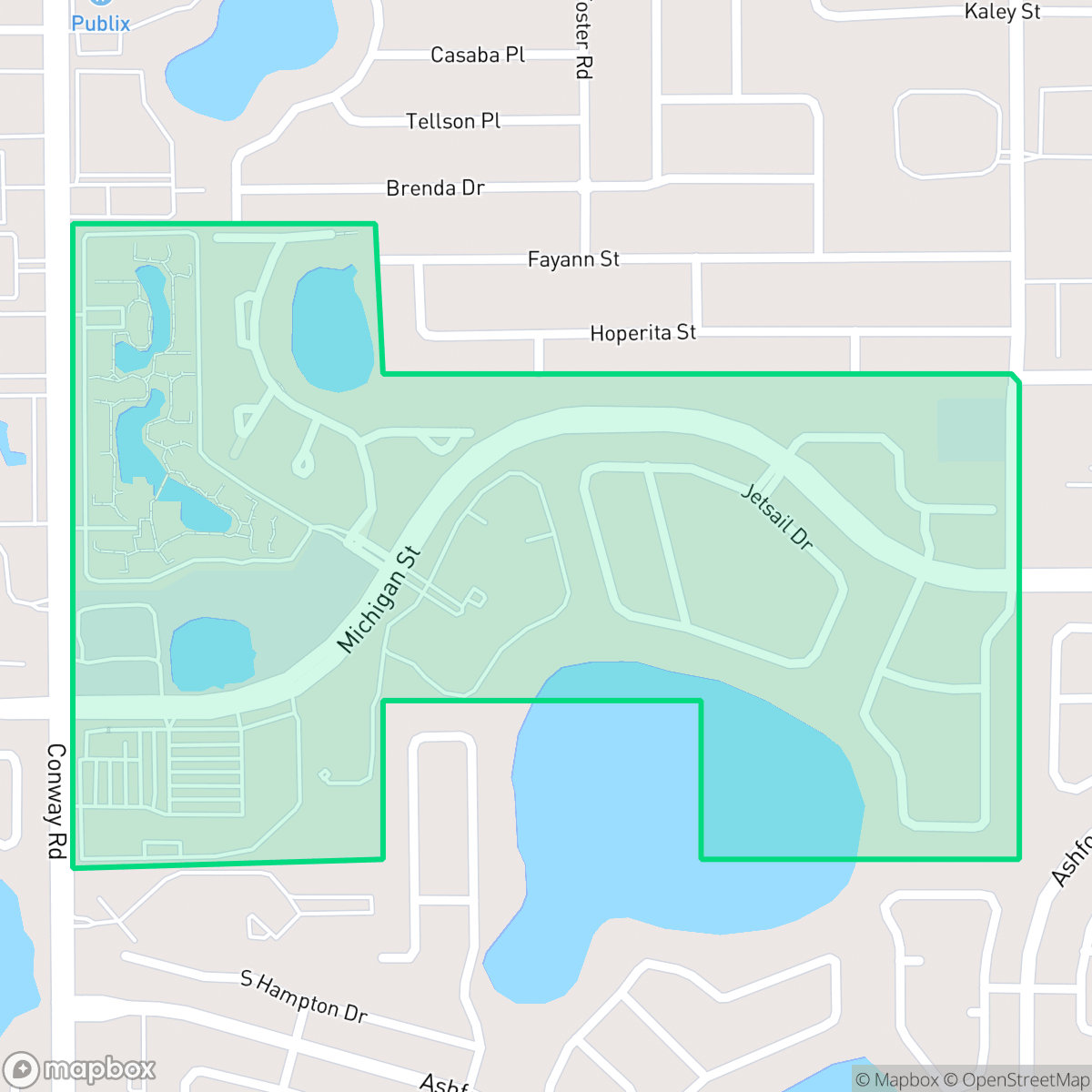
Mariners Village is a residential neighborhood in Orlando characterized by its upscale aesthetic, featuring manicured lawns and spacious home footprints. The area offers high walkability through established sidewalk networks and provides a balanced atmosphere that appeals to a diverse range of age groups.
Key Highlights
About Mariners Village
Mariners Village maintains a polished suburban character defined by its mix of single-family homes with private pools and well-maintained multi-family complexes. The neighborhood stands out for its high level of pedestrian connectivity, as residents benefit from extensive sidewalk networks and accessible greenspaces near local retention ponds. It functions as a semi-rural suburban hybrid, offering a more spacious environment than much of the city while remaining free from heavy industrial activity according to iHuus data. Prospective residents will find a community with steady activity levels, balancing quiet residential pockets with accessible local dining and fitness options. While the area experiences moderate traffic noise from nearby arterial roads, it offers reliable health insurance coverage and a notably higher level of privacy than the Orlando average. The neighborhood is well-suited for families, young professionals, and retirees who value an active, walkable lifestyle within a stable school district, though residents should be aware of the moderate flood risk associated with its placement in a 500-year floodplain.
Neighborhood Scores Across 15 Qualities
Privacy levels fluctuate across the area due to a mix of detached houses with yard buffers and dense apartment clusters. According to iHuus data, the level of separation between neighbors is higher than the Orlando average.
Established sidewalk networks and low-traffic street designs make much of the area easy to navigate on foot. According to iHuus data, the connectivity for pedestrians in Mariners Village is significantly higher than the Orlando average.
Manicured lawns and large home footprints provide a more polished aesthetic than the Orlando average. Many properties feature private pools and spacious driveways, though some areas consist of standard multi-family complexes with shared amenities.
Ample walking space is available due to continuous sidewalks with grass verges, lakeside greenspaces, and various retention pond perimeters. According to iHuus data, these features provide more opportunities for pet exercise than the Orlando average.
Open land and woodland areas are interspersed with denser clusters of single-family homes and apartment complexes, providing a more spacious feel than the Orlando average.
Local activity levels are notably higher than the Orlando average, offering a balanced mix of dining, fitness, and residential life. While some blocks remain quiet and focused on outdoor spaces, other pockets provide a lively atmosphere with accessible cafes and bars according to iHuus data.
Steady traffic sounds from nearby busy streets are present, though the level of acoustic disturbance remains more moderate than the Orlando average according to iHuus data.
Air quality levels typically fluctuate between acceptable and unhealthy for sensitive groups. This consistency remains largely in line with the broader Orlando area according to iHuus data.
Heavy industrial presence is virtually nonexistent here, making the area significantly cleaner of industrial blight than the Orlando average. Minor utility infrastructure and light commercial shopping centers are present near some arterial roads, but these do not dominate the landscape.
Health insurance accessibility is notably higher in this area than the Orlando average, according to iHuus data.
Political leanings in this area are more liberal than the Orlando average, with a majority of residents identifying with liberal ideologies.
Residents live alongside a balanced mix of young adults, families, and older individuals. This demographic variety in Mariners Village is more widely distributed than the average age profile found across Orlando.
Residual flood risk exists due to the area being within a 500-year floodplain, though safety levels remain notably higher than the Orlando average according to iHuus data.
Address-Level Insights for Mariners Village


iHuus Neighborhood Intelligence Insights
Get address-level neighborhood insights for Mariners Village
- Street-level scores — see how individual blocks compare, not just neighborhood averages
- Micro-zone boundaries — identify quiet pockets, flood boundaries, and walkable clusters before you visit
- 15 dimensions in full — walkability, noise, air quality, school quality, insurance coverage, population age profile, urban/rural index, and more
- Boundary risk alerts — know if your address sits near a block boundary where scores drop, the kind of detail no listing will ever mention
- School insights — individual school ratings and insights, not just district-level data
- Compare before you commit — side-by-side data across neighborhoods, down to block precision
No credit card required
Compare with Any Neighborhood
| Dimension | Mariners Village | 33rd St. Industrial |
|---|---|---|
| 🚶 Walkabilityavg 5.62 | ||
| 🔊 Acoustic Comfortavg 3.33 | ||
| 🤫 Privacy Indexavg 4.6 | ||
| 🎨 Visual Appealavg 5.36 | ||
| 🐕 Dog Friendlinessavg 5.01 | ||
| 🗺️ Urban-Rural Indexavg 5.48 | ||
| ✨ Neighborhood Vibeavg 2.98 | ||
| 🏥 Health Insurance Coverageavg 5.11 | ||
| 🌿 Air Qualityavg 5.87 | ||
| 🏭 Industrial Proximityavg 5.75 | ||
| 🌊 Flood Safetyavg 4.98 | ||
| 🗳️ Ideological Leanavg 5.62 | ||
| 👥 Population Age Profileavg 3.78 | ||
| 🔥 Fire Safety | ||
| 🏫 School Quality |
Mariners Village Rankings
School Districts Serving Mariners Village
School Insights for Mariners Village
Below average outcomes; significant attendance and academic challenges.
School Insights
See what's really behind every school rating near Mariners Village
- Individual school ratings — each school's own score with outcome context, not just a district average
- Enrollment & class size data — student-to-teacher ratio and how it compares to the state average
- Full demographics breakdown — ethnicity and gender composition for every school in the enrollment zone
- Every school in the district — all schools within the enrollment boundary ranked by rating, not just the closest one
- Grade levels & benchmarks — elementary through high school, with below/above state-average flags
No credit card required