Malibu Groves, Orlando
Updated · 1,420 residents
Malibu Groves is a quiet, semi-rural community in Orlando characterized by a mix of modest residential homes and pockets of light industrial activity. While the area offers a peaceful, low-key atmosphere, residents should be aware of the persistent noise from nearby transit corridors and limited pedestrian infrastructure.
Key Highlights
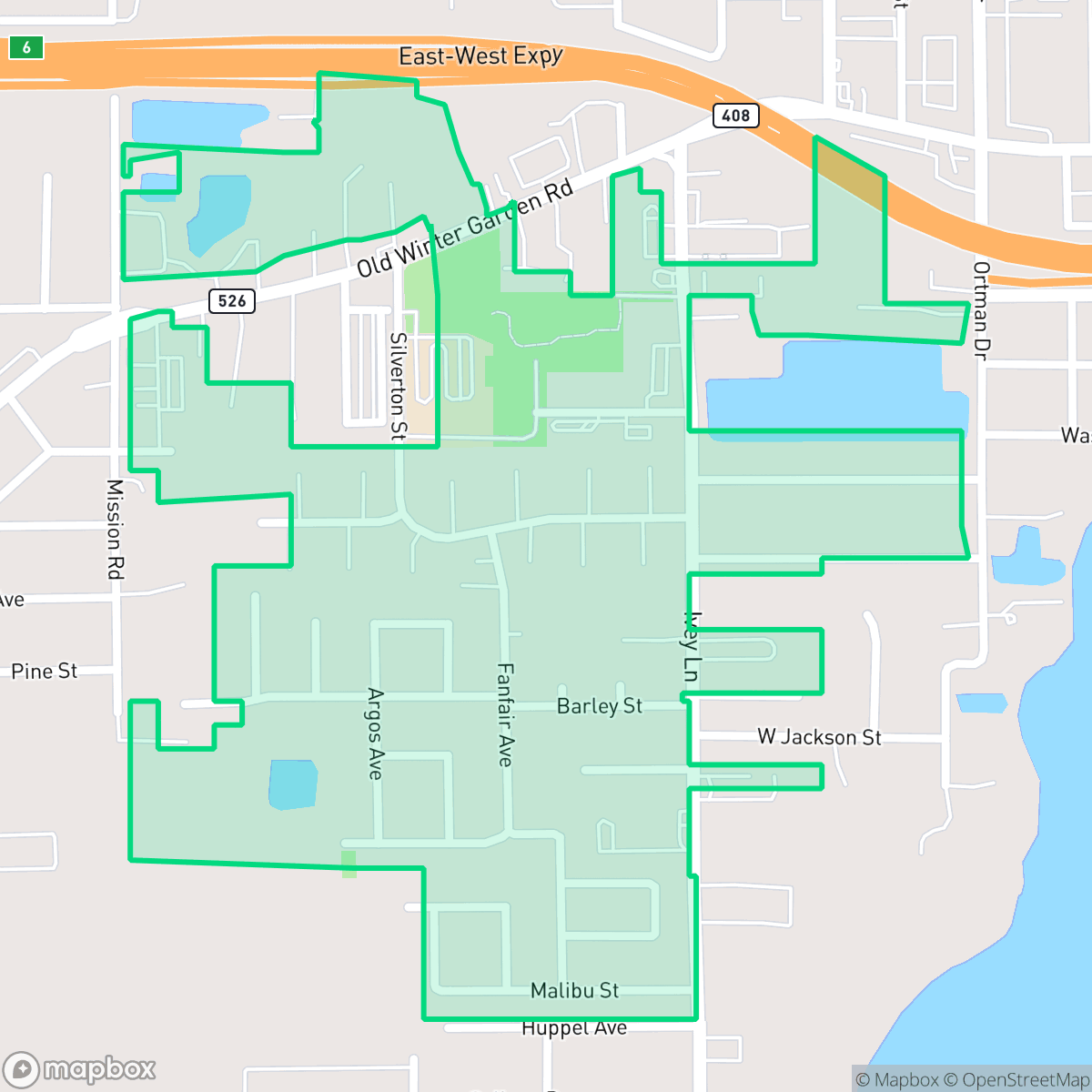
About Malibu Groves
Malibu Groves features a distinct semi-rural aesthetic, defined by open wooded areas and a blend of tract housing and multi-family units. The neighborhood maintains a quiet, functional vibe that leans toward a progressive ideological outlook. While the landscape provides a sense of openness compared to denser parts of the city, occasional light manufacturing and storage facilities in the northern sections contribute to a light commercial presence.
Living in this area involves balancing the benefit of a diverse, multi-generational community with certain infrastructure trade-offs. The neighborhood experiences elevated noise levels due to its proximity to major roadways, and the lack of consistent sidewalks can challenge those who prefer walking as a primary mode of transport. However, pet owners often appreciate the availability of green verges and larger yards. Families in the area are served by the Orange County School District, which provides access to stable academic resources while managing ongoing transitions in student enrollment and facility allocation.
Neighborhood Scores Across 15 Qualities
Privacy levels vary significantly due to a mix of dense apartment clusters and more spacious lakeside estates. This density is notably higher than the Orlando average, providing more buffer space near the periphery than in the central sections.
Low traffic volumes on residential streets make for a peaceful walking environment, though the lack of consistent sidewalks makes it slightly less walkable than much of Orlando. Heavy tree canopy and industrial edges can occasionally obscure or eliminate pedestrian paths according to iHuus data.
Standard tract housing and multi-family apartments define the local landscape, which features slightly more visual variety than the Orlando average. According to iHuus data, the area is characterized by modest yards and functional architectural styles.
Residential streets feature green verges and some large yards, offering slightly better amenities for pet owners than the Orlando average. Some multi-family complexes provide internal lawns, though formal public parks are not immediately accessible within the area.
Open land and wooded areas provide a more rural character than the typical Orlando urban landscape. According to iHuus data, residents will find frequent patches of greenery and scattered homes interspersed with suburban clusters.
Suburban streets offer a low-key atmosphere with sparse commercial activity, though the area is slightly more active than the Orlando average. Residents can find localized pockets of interest near parks and dining, but much of the neighborhood remains centered around quiet residential life.
Frequent noise from nearby heavy traffic and transit corridors makes this area louder than the Orlando average. According to iHuus data, proximity to major roadways creates a less quiet environment for residents.
Air quality in this area presents a mix of acceptable and unhealthy days. According to iHuus data, these conditions are roughly in line with the average for Orlando.
Occasional light manufacturing and storage facilities in the northern quadrant introduce some heavy vehicle traffic to the area. According to iHuus data, this industrial presence is slightly higher than the Orlando average, though the neighborhood remains primarily residential.
Health insurance access is relatively stable in this area, appearing slightly above the Orlando average according to iHuus data.
Voting patterns and census indicators show a much more liberal political leaning than the Orlando average. According to iHuus data, this area is characterized by predominantly progressive demographic trends.
Residents live alongside a diverse mix of young professionals, families, and seniors. According to iHuus data, this age distribution is more varied than the typical profile found across Orlando.
Flood safety levels in this area are comparable to the Orlando average, though a lack of detailed FEMA studies means risk levels remain undetermined. Residents should exercise caution as official flood maps for this specific location have not been fully completed.
Address-Level Insights for Malibu Groves


iHuus Neighborhood Intelligence Insights
Get address-level neighborhood insights for Malibu Groves
- Street-level scores — see how individual blocks compare, not just neighborhood averages
- Micro-zone boundaries — identify quiet pockets, flood boundaries, and walkable clusters before you visit
- 15 dimensions in full — walkability, noise, air quality, school quality, insurance coverage, population age profile, urban/rural index, and more
- Boundary risk alerts — know if your address sits near a block boundary where scores drop, the kind of detail no listing will ever mention
- School insights — individual school ratings and insights, not just district-level data
- Compare before you commit — side-by-side data across neighborhoods, down to block precision
No credit card required
Compare with Any Neighborhood
| Dimension | Malibu Groves | 33rd St. Industrial |
|---|---|---|
| 🚶 Walkabilityavg 5.62 | ||
| 🔊 Acoustic Comfortavg 3.33 | ||
| 🤫 Privacy Indexavg 4.6 | ||
| 🎨 Visual Appealavg 5.36 | ||
| 🐕 Dog Friendlinessavg 5.01 | ||
| 🗺️ Urban-Rural Indexavg 5.48 | ||
| ✨ Neighborhood Vibeavg 2.98 | ||
| 🏥 Health Insurance Coverageavg 5.11 | ||
| 🌿 Air Qualityavg 5.87 | ||
| 🏭 Industrial Proximityavg 5.75 | ||
| 🌊 Flood Safetyavg 4.98 | ||
| 🗳️ Ideological Leanavg 5.62 | ||
| 👥 Population Age Profileavg 3.78 | ||
| 🔥 Fire Safety | ||
| 🏫 School Quality |
Malibu Groves Rankings
School Districts Serving Malibu Groves
School Insights for Malibu Groves
Below average outcomes; significant attendance and academic challenges.
School Insights
See what's really behind every school rating near Malibu Groves
- Individual school ratings — each school's own score with outcome context, not just a district average
- Enrollment & class size data — student-to-teacher ratio and how it compares to the state average
- Full demographics breakdown — ethnicity and gender composition for every school in the enrollment zone
- Every school in the district — all schools within the enrollment boundary ranked by rating, not just the closest one
- Grade levels & benchmarks — elementary through high school, with below/above state-average flags
No credit card required