Malibu Grove, Orlando
Updated · 506 residents
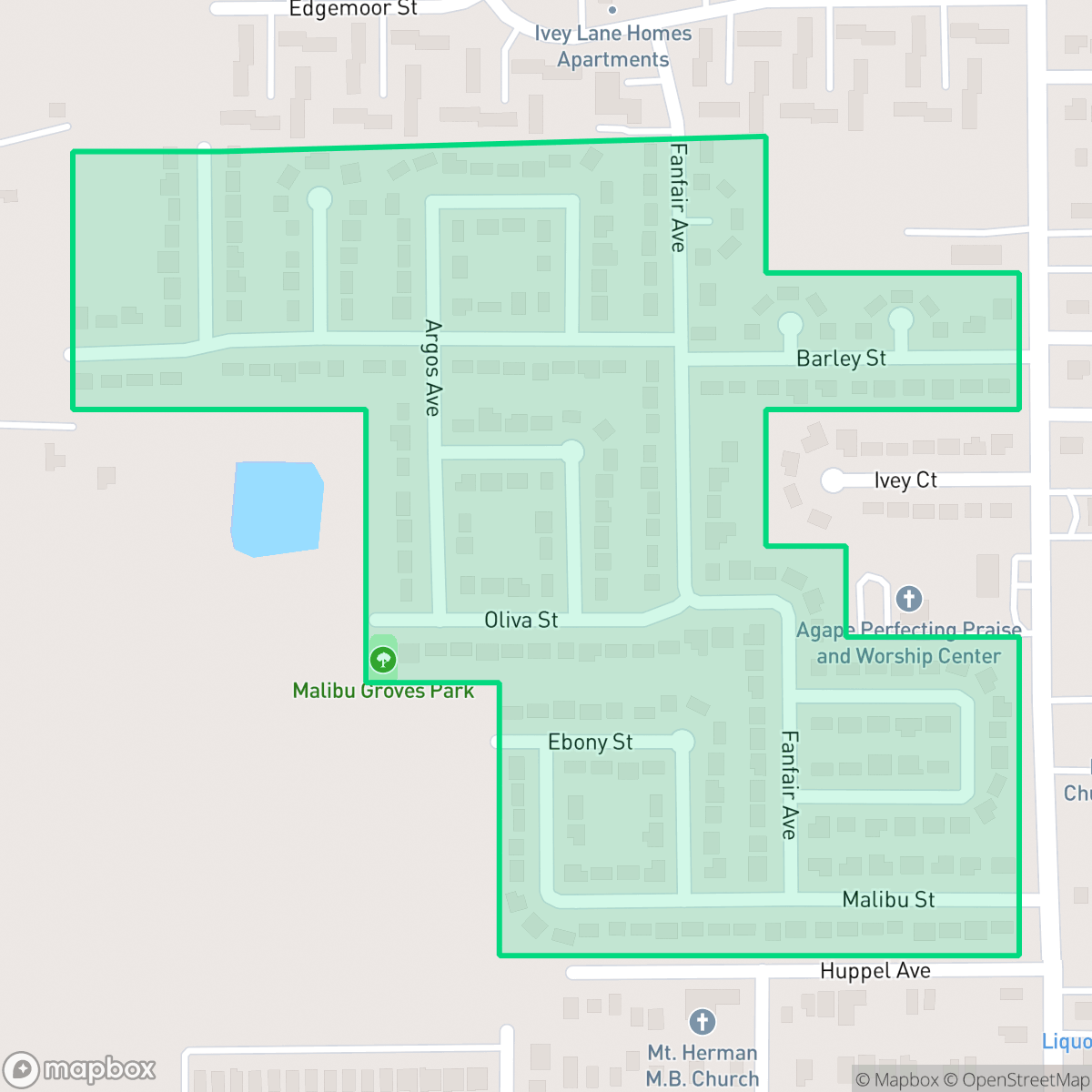
Malibu Grove is a quiet, multicultural residential community located five miles west of downtown Orlando. The area features mid-century ranch-style homes and a semi-rural landscape, though residents should anticipate frequent traffic noise and uneven sidewalk infrastructure.
Key Highlights
About Malibu Grove
Malibu Groves, located approximately five miles west of downtown Orlando, is an established residential community primarily developed between 1967 and 1970. The neighborhood is characterized by its mid-century ranch-style architecture and serves as a notable example of late 20th-century suburban expansion in Orange County. Culturally, Malibu Groves is distinguished by its significant ethnic diversity, home to one of the largest concentrations of residents with Haitian and Jamaican ancestry in the region. This demographic identity has shaped the local character, which is further defined by its proximity to Old Winter Garden Road, a corridor featuring local institutions and a variety of international eateries. The neighborhood maintains an urban-suburban mix, with its housing stock reflecting the mid-century era while evolving into a vibrant, multicultural hub.
The neighborhood maintains a functional, low-key atmosphere characterized by its grid-style street layout and mature tree cover. While light industrial presence exists in the northern quadrant, the area remains primarily residential with a focus on privacy, offering larger lot sizes and more separation between neighbors than the typical Orlando suburb. According to iHuus data, this creates a distinct semi-rural feel that contrasts with the surrounding urban density.
Prospective residents will find a community that balances natural features with suburban convenience, though it is important to note the moderate flood risk and the need for reliable transportation due to inconsistent pedestrian paths. The area is served by the Orange County School District, which is currently navigating significant enrollment shifts and facility consolidation efforts. This location is well-suited for those who value a diverse, quiet environment and are comfortable with a semi-rural aesthetic over a high-density urban lifestyle.
Neighborhood Scores Across 15 Qualities
Residential spacing is inconsistent, featuring a mix of densely packed apartments and more secluded lakeside estates. According to iHuus data, this level of separation between neighbors is higher than the Orlando average.
Low traffic volumes and a grid-style street layout make for peaceful strolls, though the lack of consistent sidewalks can make navigation difficult. According to iHuus data, the area remains slightly more walkable than the Orlando average due to these calm residential streets.
Typical tract housing and multi-family units define the area, offering a visual landscape that is slightly more varied than the Orlando average. According to iHuus data, the neighborhood features modest yards and functional residential architecture without much ornamental greenery.
Residential streets feature grassy verges and large yards that provide more space for pets than the Orlando average. While formal public parks are not immediately adjacent, certain multi-family complexes within the area offer internal lawns according to iHuus data.
Frequent open land and scattered homes amid woodlands create a more semi-rural feel than the typical Orlando urban landscape. According to iHuus data, this area offers a blend of mature tree cover and larger natural features like lakes.
Activity levels are slightly above the Orlando average, characterized by a subdued atmosphere with sparse commercial density. Residents can find pockets of local interest near Riverwalk Park or specific dining spots, but the area remains largely residential and low-key.
Proximity to major transit routes and busy infrastructure leads to notable acoustic disturbances. This level of noise is slightly higher than the Orlando average, according to iHuus data.
Air quality in Malibu Grove typically fluctuates between acceptable and unhealthy levels, which may cause occasional concern for sensitive groups. According to iHuus data, these conditions are roughly in line with the average seen throughout Orlando.
Residential and natural areas dominate the landscape, though some light manufacturing and warehouse facilities are concentrated in the northern quadrant. This lack of heavy industry makes the area notably quieter than much of Orlando.
Health insurance access in Malibu Grove is slightly higher than the Orlando average. According to iHuus data, a portion of the resident population remains uninsured.
Voting patterns and census indicators in Malibu Grove show a much more liberal leaning than the Orlando average, according to iHuus data.
Residents live alongside a varied demographic of young adults, families, and seniors. According to iHuus data, this age distribution is more diverse than the average seen across Orlando.
Residual flood risks exist as parts of the area fall within a 500-year floodplain, though safety levels remain higher than the Orlando city average according to iHuus data.
Address-Level Insights for Malibu Grove


iHuus Neighborhood Intelligence Insights
Get address-level neighborhood insights for Malibu Grove
- Street-level scores — see how individual blocks compare, not just neighborhood averages
- Micro-zone boundaries — identify quiet pockets, flood boundaries, and walkable clusters before you visit
- 15 dimensions in full — walkability, noise, air quality, school quality, insurance coverage, population age profile, urban/rural index, and more
- Boundary risk alerts — know if your address sits near a block boundary where scores drop, the kind of detail no listing will ever mention
- School insights — individual school ratings and insights, not just district-level data
- Compare before you commit — side-by-side data across neighborhoods, down to block precision
No credit card required
Compare with Any Neighborhood
| Dimension | Malibu Grove | 33rd St. Industrial |
|---|---|---|
| 🚶 Walkabilityavg 5.62 | ||
| 🔊 Acoustic Comfortavg 3.33 | ||
| 🤫 Privacy Indexavg 4.6 | ||
| 🎨 Visual Appealavg 5.36 | ||
| 🐕 Dog Friendlinessavg 5.01 | ||
| 🗺️ Urban-Rural Indexavg 5.48 | ||
| ✨ Neighborhood Vibeavg 2.98 | ||
| 🏥 Health Insurance Coverageavg 5.11 | ||
| 🌿 Air Qualityavg 5.87 | ||
| 🏭 Industrial Proximityavg 5.75 | ||
| 🌊 Flood Safetyavg 4.98 | ||
| 🗳️ Ideological Leanavg 5.62 | ||
| 👥 Population Age Profileavg 3.78 | ||
| 🔥 Fire Safety | ||
| 🏫 School Quality |
Malibu Grove Rankings
School Districts Serving Malibu Grove
School Insights for Malibu Grove
Below average outcomes; significant attendance and academic challenges.
School Insights
See what's really behind every school rating near Malibu Grove
- Individual school ratings — each school's own score with outcome context, not just a district average
- Enrollment & class size data — student-to-teacher ratio and how it compares to the state average
- Full demographics breakdown — ethnicity and gender composition for every school in the enrollment zone
- Every school in the district — all schools within the enrollment boundary ranked by rating, not just the closest one
- Grade levels & benchmarks — elementary through high school, with below/above state-average flags
No credit card required