Lawsona-Fern Creek, Orlando
Updated · 2,272 residents
Lawsona-Fern Creek is a historically significant neighborhood defined by its collection of early 20th-century architecture and lush, tree-lined streets. Residents enjoy a highly walkable environment with easy access to local dining and entertainment, though the area experiences noticeable noise from nearby transit routes.
Key Highlights
About Lawsona-Fern Creek
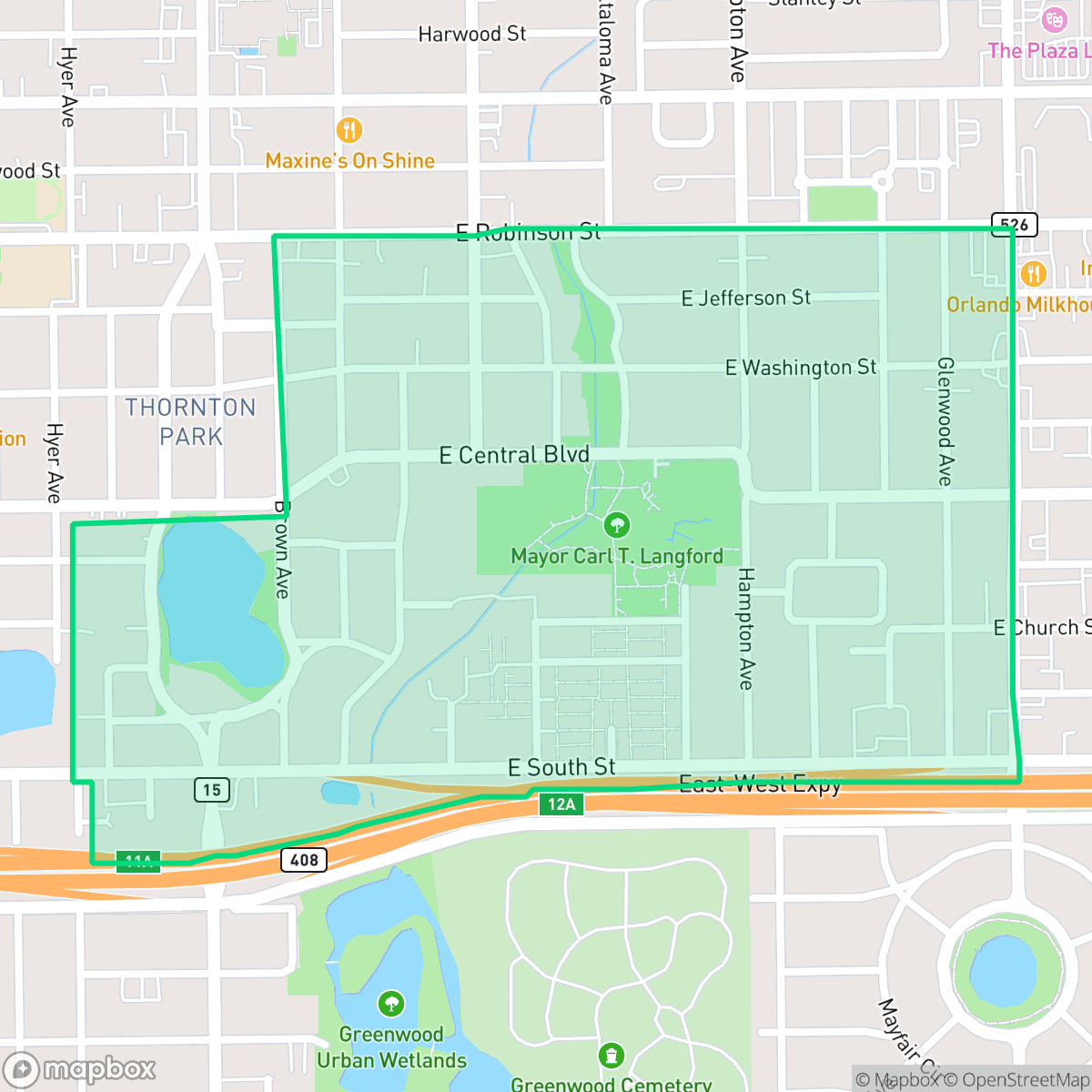
Lawsona-Fern Creek, part of the Lake Lawsona Historic District established in 1994, reflects Orlando's rapid expansion between 1911 and the 1950s. The neighborhood features approximately 500 historic structures, primarily bungalows, alongside Craftsman, Colonial, and Mediterranean Revival styles. A defining landmark is the H.H. Dickson Azalea Park, a lush five-acre ravine developed in the 1930s with assistance from the Works Progress Administration. The area is also home to the 1926 Washington Street Bridge—the first bridge in Florida listed on the National Register of Historic Places—and the 1927 Neoclassical Revival building that formerly served as Orlando High School. These sites, combined with its tree-lined brick streets, preserve a distinct window into the city's early 20th-century development patterns and residential character.
The neighborhood functions as a vibrant social hub, offering a polished aesthetic characterized by well-maintained grounds and a unique semi-rural feel despite its central location. Its layout encourages pedestrian activity, with an extensive network of sidewalks and green spaces that make it an excellent choice for dog owners. The demographic landscape is notably diverse, fostering a generational mix that contributes to the area's active and engaged atmosphere, while consistent access to health insurance coverage reflects a stable resident population.
While the area offers significant visual appeal and walkability, prospective residents should consider the trade-offs associated with its urban proximity. Acoustic comfort is often compromised by traffic from major roadways, and according to data, the neighborhood faces a moderate risk of flooding. Those who prioritize a liberal-leaning community with a strong sense of local identity and high-quality landscaping will find this a compelling place to call home.
Neighborhood Scores Across 15 Qualities
Residential spacing provides more separation than the Orlando average, featuring detached homes with mature tree buffers and varied lot sizes. Most properties maintain a moderate distance from neighbors through fencing and natural greenery.
Extensive sidewalk networks and pedestrian-priority crossings make navigating the area on foot much easier than in most of Orlando. While the central highway acts as a barrier, residential streets offer high connectivity through a dense grid with significant tree canopy coverage.
Large homes with private pools and lush landscaping characterize much of this area, which offers a more polished aesthetic than the Orlando average. According to iHuus data, many properties feature high-quality landscaping and well-maintained grounds.
Abundant lakefront parks, wide green verges, and accessible walking paths provide much more space for pets than the Orlando average. According to iHuus data, the presence of large green spaces and separated sidewalks makes this area particularly well-suited for dog owners.
Open land and woodlands are frequently interspersed with scattered homes, providing a more open environment than the typical Orlando urban density. This landscape offers a transition toward more rural characteristics compared to the city average.
Highly walkable blocks offer a concentrated variety of bars, dining, and entertainment venues, making this area significantly more lively than the Orlando average. According to iHuus data, the neighborhood serves as a local hub with frequent social activity centered around parks and mixed-use corridors.
Frequent disturbances from nearby major roadways and transit infrastructure are common in this area. According to iHuus data, acoustic comfort is lower than the Orlando average.
Air quality levels fluctuate between acceptable and unhealthy, presenting occasional concerns for sensitive groups. This level of air purity is roughly in line with the Orlando city average according to iHuus data.
Heavy industrial activity is absent from this area, making it significantly cleaner than the Orlando average. While residents may encounter light commercial traffic and noise from the nearby highway, there are no significant industrial hazards or large-scale manufacturing facilities present.
Health insurance access among residents is notably higher than the Orlando average, according to iHuus data.
Voting patterns and census indicators show a much more liberal political leaning than the Orlando average, according to iHuus data.
Residents encounter a balanced demographic spread of young adults, families, and older individuals. This age distribution is more diverse than the typical profile found across Orlando.
Flood risk levels are slightly above the Orlando average, though a lack of detailed FEMA studies means the specific danger remains undetermined. Residents should remain cautious as official assessments for this area are currently incomplete.
Address-Level Insights for Lawsona-Fern Creek


iHuus Neighborhood Intelligence Insights
Get address-level neighborhood insights for Lawsona-Fern Creek
- Street-level scores — see how individual blocks compare, not just neighborhood averages
- Micro-zone boundaries — identify quiet pockets, flood boundaries, and walkable clusters before you visit
- 15 dimensions in full — walkability, noise, air quality, school quality, insurance coverage, population age profile, urban/rural index, and more
- Boundary risk alerts — know if your address sits near a block boundary where scores drop, the kind of detail no listing will ever mention
- School insights — individual school ratings and insights, not just district-level data
- Compare before you commit — side-by-side data across neighborhoods, down to block precision
No credit card required
Compare with Any Neighborhood
| Dimension | Lawsona-Fern Creek | 33rd St. Industrial |
|---|---|---|
| 🚶 Walkabilityavg 5.62 | ||
| 🔊 Acoustic Comfortavg 3.33 | ||
| 🤫 Privacy Indexavg 4.6 | ||
| 🎨 Visual Appealavg 5.36 | ||
| 🐕 Dog Friendlinessavg 5.01 | ||
| 🗺️ Urban-Rural Indexavg 5.48 | ||
| ✨ Neighborhood Vibeavg 2.98 | ||
| 🏥 Health Insurance Coverageavg 5.11 | ||
| 🌿 Air Qualityavg 5.87 | ||
| 🏭 Industrial Proximityavg 5.75 | ||
| 🌊 Flood Safetyavg 4.98 | ||
| 🗳️ Ideological Leanavg 5.62 | ||
| 👥 Population Age Profileavg 3.78 | ||
| 🔥 Fire Safety | ||
| 🏫 School Quality |
Lawsona-Fern Creek Rankings
School Districts Serving Lawsona-Fern Creek
School Insights for Lawsona-Fern Creek
Below average outcomes; significant attendance and academic challenges.
School Insights
See what's really behind every school rating near Lawsona-Fern Creek
- Individual school ratings — each school's own score with outcome context, not just a district average
- Enrollment & class size data — student-to-teacher ratio and how it compares to the state average
- Full demographics breakdown — ethnicity and gender composition for every school in the enrollment zone
- Every school in the district — all schools within the enrollment boundary ranked by rating, not just the closest one
- Grade levels & benchmarks — elementary through high school, with below/above state-average flags
No credit card required