Lancaster Park, Orlando
Updated · 640 residents
Lancaster Park is a historic Orlando neighborhood defined by its lush, tree-lined streets and proximity to Lake Lancaster. Residents enjoy a highly walkable environment with a semi-rural feel, offering a balanced mix of privacy and access to local amenities.
Key Highlights
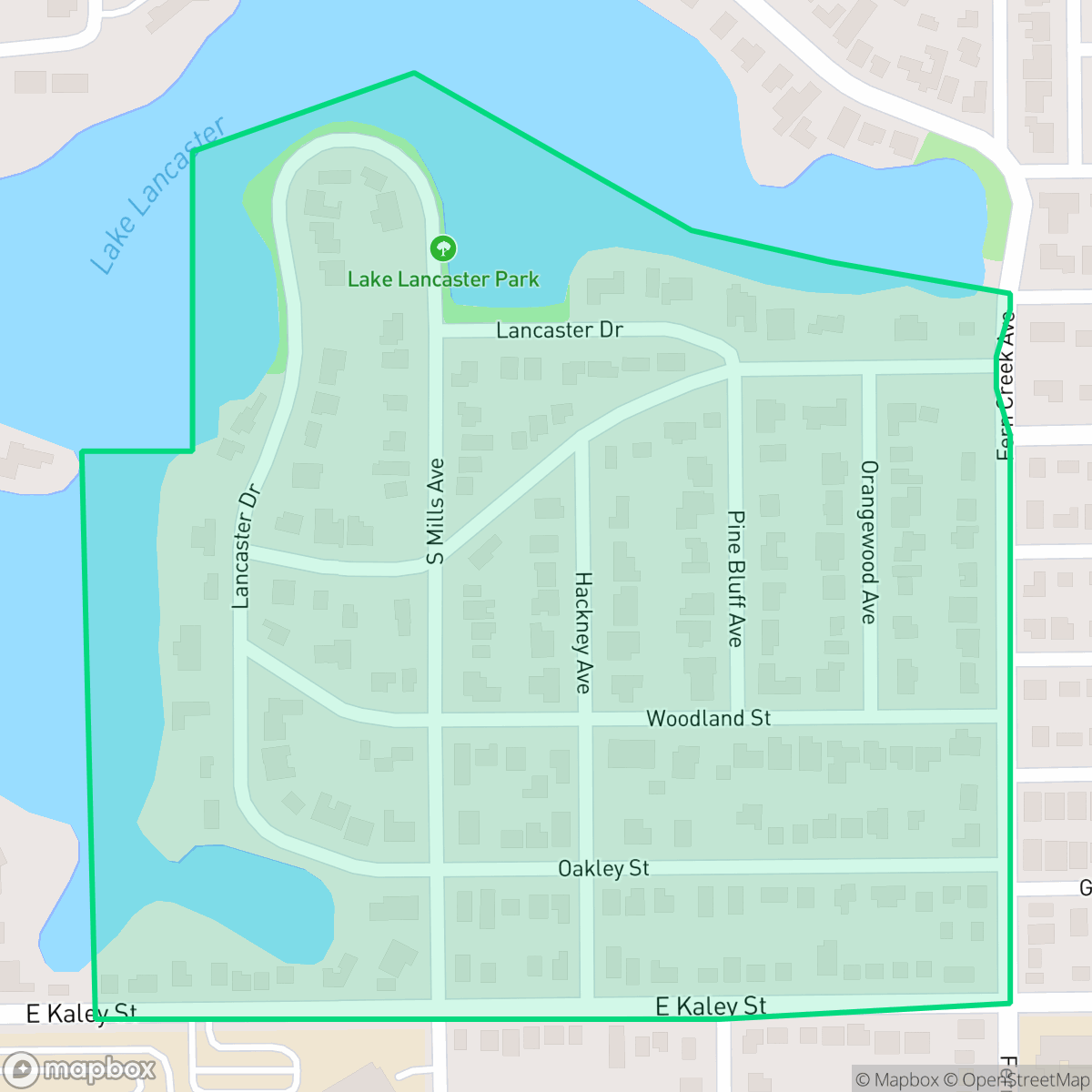
About Lancaster Park
Established in 1925, Lancaster Park is a historic Orlando neighborhood centered around Lake Lancaster. Originally farmland, the area was developed by the Sias-Shepherd-Wright Investment Company, with early model homes marketed as 'the Homes Artistic' to showcase modern 1920s amenities. The neighborhood is defined by its signature brick-paved, tree-lined streets, trademark entrance gates, and a diverse collection of homes ranging from early 20th-century farmhouses to later architectural styles. Two houses predating the 1925 development—a 1901 farmhouse and a 1910 Sears kit home—remain in the community. Lancaster Park is noted for its strong sense of identity, maintained through long-standing traditions like an annual Christmas progressive dinner, which began in 1970, and a history of community-led holiday celebrations dating back to the 1940s.
The neighborhood maintains a distinct character through its mature canopy and well-maintained landscapes, creating a visually appealing environment that stands out from the typical suburban sprawl. With a semi-rural atmosphere characterized by open land and lake views, the area provides a peaceful setting for a diverse mix of residents, ranging from families to young professionals. Its layout encourages pedestrian activity, as the consistent sidewalk network and quiet streets make it one of the more accessible areas in the city for those who prefer to travel on foot.
Living in this community involves balancing its unique historic charm with modern considerations. While the area is largely residential and free from industrial activity, residents should be aware that traffic noise from nearby busy corridors can be noticeable at times. Furthermore, while the neighborhood enjoys high levels of health insurance coverage and a strong sense of community, potential residents should note that current flood risk assessments are incomplete. The area is served by the Orange County School District, which is currently working through regional enrollment shifts and facility consolidation efforts to maintain long-term stability.
Neighborhood Scores Across 15 Qualities
Residential lots offer a moderate amount of separation between neighbors, providing more personal buffer than the Orlando average. According to iHuus data, the area features a mix of single-family homes with standard setbacks and denser apartment zones.
Pedestrian-friendly streets with consistent sidewalks and a mature tree canopy make much of the area easy to navigate on foot. This level of walkability is significantly higher than the average found throughout Orlando.
Manicured landscaping, private pools, and large lakefront estates create a visually pleasing environment that is significantly more polished than the Orlando average. Extensive greenery and custom architectural details characterize much of the area according to iHuus data.
Tree-lined streets and lakeside views provide pleasant environments for walking pets, though public park access is limited. According to iHuus data, the availability of green verges here is higher than the Orlando average.
Open land and wooded areas are more frequent here than in most of Orlando. Residents will find a landscape characterized by scattered homes and significant lake coverage, according to iHuus data.
Local amenities and dining options provide a noticeably more active rhythm than the Orlando average. Residents can find a balanced mix of suburban residential life and accessible street-level services.
Steady traffic sounds from nearby busy streets are present, though acoustic levels remain more tranquil than the average for Orlando according to iHuus data.
Air quality levels are generally acceptable, though sensitive groups may experience occasional concern on certain days. This rating remains largely consistent with the city average according to iHuus data.
Largely residential and institutional in nature, this area lacks heavy industry, warehouses, or hazardous sites. According to iHuus data, the neighborhood is significantly further from industrial zones than the Orlando average.
Health insurance enrollment among residents is significantly higher than the Orlando average, according to iHuus data.
Political leanings in Lancaster Park are predominantly liberal, representing a significant shift from the broader Orlando average according to iHuus data.
Residents live alongside a balanced blend of young adults, families, and older populations. This demographic variety is more pronounced than the average seen across Orlando, according to iHuus data.
Flood safety levels in Lancaster Park are slightly below the Orlando average. Current FEMA assessments for this area are incomplete, meaning precise flood risk levels have not yet been fully determined.
Address-Level Insights for Lancaster Park


iHuus Neighborhood Intelligence Insights
Get address-level neighborhood insights for Lancaster Park
- Street-level scores — see how individual blocks compare, not just neighborhood averages
- Micro-zone boundaries — identify quiet pockets, flood boundaries, and walkable clusters before you visit
- 15 dimensions in full — walkability, noise, air quality, school quality, insurance coverage, population age profile, urban/rural index, and more
- Boundary risk alerts — know if your address sits near a block boundary where scores drop, the kind of detail no listing will ever mention
- School insights — individual school ratings and insights, not just district-level data
- Compare before you commit — side-by-side data across neighborhoods, down to block precision
No credit card required
Compare with Any Neighborhood
| Dimension | Lancaster Park | 33rd St. Industrial |
|---|---|---|
| 🚶 Walkabilityavg 5.62 | ||
| 🔊 Acoustic Comfortavg 3.33 | ||
| 🤫 Privacy Indexavg 4.6 | ||
| 🎨 Visual Appealavg 5.36 | ||
| 🐕 Dog Friendlinessavg 5.01 | ||
| 🗺️ Urban-Rural Indexavg 5.48 | ||
| ✨ Neighborhood Vibeavg 2.98 | ||
| 🏥 Health Insurance Coverageavg 5.11 | ||
| 🌿 Air Qualityavg 5.87 | ||
| 🏭 Industrial Proximityavg 5.75 | ||
| 🌊 Flood Safetyavg 4.98 | ||
| 🗳️ Ideological Leanavg 5.62 | ||
| 👥 Population Age Profileavg 3.78 | ||
| 🔥 Fire Safety | ||
| 🏫 School Quality |
Lancaster Park Rankings
School Districts Serving Lancaster Park
School Insights for Lancaster Park
Below average outcomes; significant attendance and academic challenges.
School Insights
See what's really behind every school rating near Lancaster Park
- Individual school ratings — each school's own score with outcome context, not just a district average
- Enrollment & class size data — student-to-teacher ratio and how it compares to the state average
- Full demographics breakdown — ethnicity and gender composition for every school in the enrollment zone
- Every school in the district — all schools within the enrollment boundary ranked by rating, not just the closest one
- Grade levels & benchmarks — elementary through high school, with below/above state-average flags
No credit card required