Lake Holden, Orlando
Updated · 98 residents
Lake Holden offers a semi-rural atmosphere characterized by spacious, well-maintained properties and a quiet residential environment. While the area provides a peaceful setting with a diverse multi-generational population, residents face limited walkability and occasional noise from nearby commercial and industrial activity.
Key Highlights
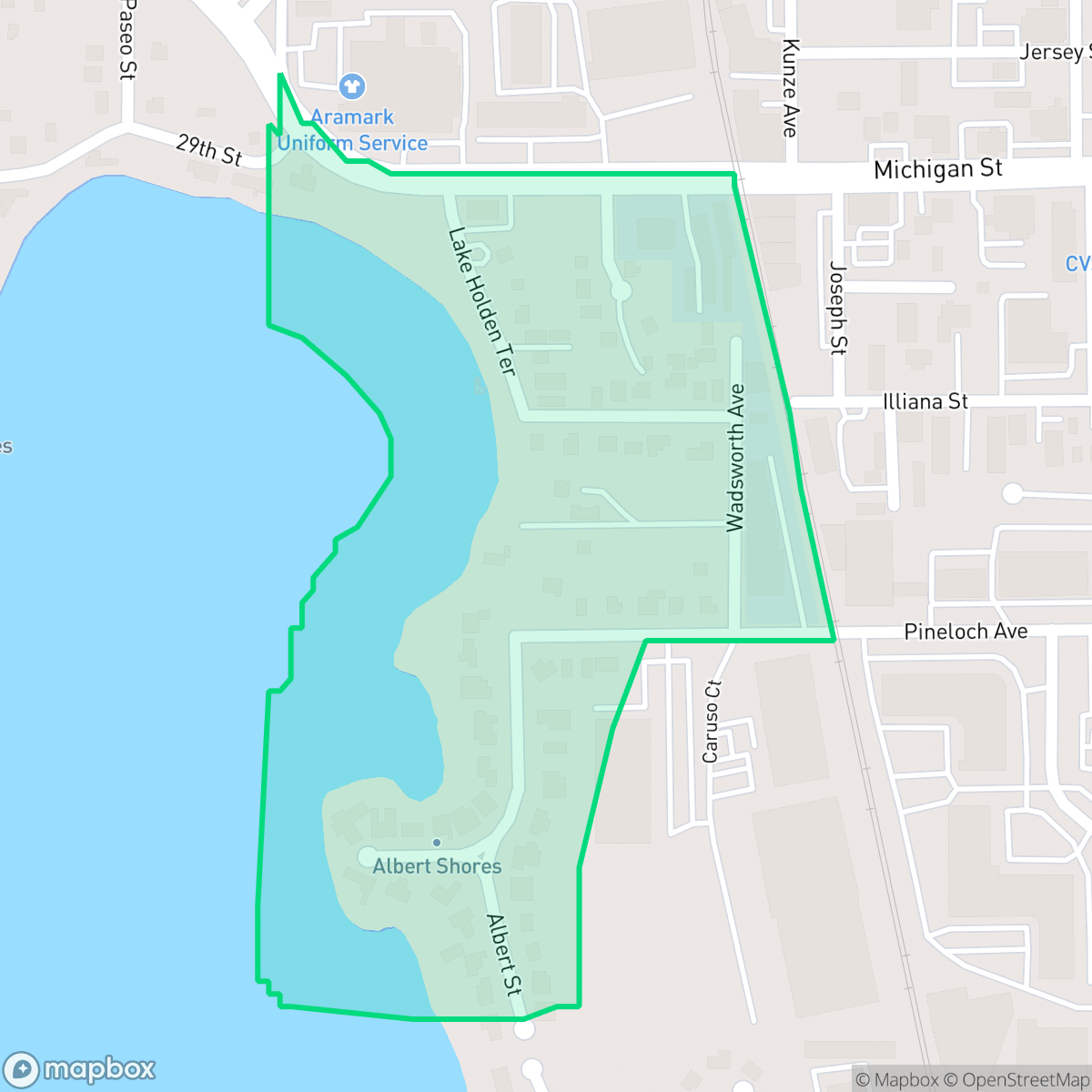
About Lake Holden
The Lake Holden area holds significant historical weight as the site of some of Orlando's earliest European settlement. In 1843, cattleman Aaron Jernigan established a homestead on the lake's northwest shore, creating a settlement informally known as Jernigan, which served as a regional hub for trade and agriculture. By 1865, William Harrison Holden, another prominent pioneer, purchased land from Jernigan and established orange groves and a sugar plantation, eventually lending his name to the lake. While the area has transitioned from its frontier roots into a residential community, it retains a distinct identity centered on its lakefront lifestyle. Landmarks like the Jernigan property site near Alamo Drive remain touchstones of this foundational era, marking where the transition from untamed wilderness to the early agricultural economy of Central Florida first began.
The area maintains a distinct semi-rural character, defined by open land and large, manicured residential lots that offer more privacy than many other parts of Orlando. It serves as a quiet enclave where young adults, families, and seniors live in a balanced demographic mix. Local activity centers around pockets of wellness services and casual dining, providing a blend of residential calm and accessible local amenities.
Prospective residents should consider the trade-offs of living in this environment, as the lack of sidewalks makes walking less convenient compared to more urbanized districts. While the area is generally peaceful, it experiences moderate traffic noise and occasional industrial odors due to the proximity of light commercial storage facilities. According to iHuus data, the neighborhood maintains a liberal political leaning and higher rates of health insurance coverage, making it a stable choice for those who prioritize privacy and a scenic landscape over high-density walkability.
Neighborhood Scores Across 15 Qualities
Residential spacing features a mix of density levels with some buffering between properties, providing more privacy than the typical Orlando neighborhood according to iHuus data.
Low street traffic makes for a peaceful environment, though the lack of sidewalks means walking may be less convenient than in other parts of Orlando.
Spacious properties and well-maintained amenities provide a more scenic environment than the Orlando average. According to iHuus data, the area features large residential lots and manicured surroundings.
Access to public parks and wide grassy verges for walking is slightly below the Orlando average. According to iHuus data, pet owners may find fewer dedicated outdoor spaces for exercise within this specific area.
Frequent open land and scattered homes amid woodland characterize this area. According to iHuus data, the landscape is noticeably more open and less dense than the Orlando average.
Local activity levels are higher than the Orlando average, offering a blend of low-key residential life and pockets of notable business density. While commercial options are sparse in some areas, certain sections serve as local hotspots for wellness services, independent shops, and casual dining.
Steady traffic sounds from nearby busy streets are present, though the level of acoustic disturbance remains slightly lower than the Orlando average according to iHuus data.
Air quality levels are generally acceptable, though residents may experience occasional periods of concern during certain weather patterns. According to iHuus data, these conditions are roughly in line with the average seen across Orlando.
Light commercial activity and storage facilities are interspersed with residential areas, resulting in slightly higher levels of utility odors and freight traffic than the Orlando average. Residents may experience occasional noise from loading docks and active transit near local service providers.
Health insurance access among residents is notably higher than the Orlando average, according to iHuus data.
Political leanings in Lake Holden trend more liberal than the Orlando average. According to iHuus data, the area maintains a liberal majority with a modest opposing presence.
Residents live alongside a diverse age range of young adults, families, and seniors. This demographic variety is notably more balanced than the typical age distribution seen across Orlando.
Residual flood risks exist within this area due to its location in a 500-year floodplain, though safety levels remain notably higher than the Orlando average according to iHuus data.
Address-Level Insights for Lake Holden


iHuus Neighborhood Intelligence Insights
Get address-level neighborhood insights for Lake Holden
- Street-level scores — see how individual blocks compare, not just neighborhood averages
- Micro-zone boundaries — identify quiet pockets, flood boundaries, and walkable clusters before you visit
- 15 dimensions in full — walkability, noise, air quality, school quality, insurance coverage, population age profile, urban/rural index, and more
- Boundary risk alerts — know if your address sits near a block boundary where scores drop, the kind of detail no listing will ever mention
- School insights — individual school ratings and insights, not just district-level data
- Compare before you commit — side-by-side data across neighborhoods, down to block precision
No credit card required
Compare with Any Neighborhood
| Dimension | Lake Holden | 33rd St. Industrial |
|---|---|---|
| 🚶 Walkabilityavg 5.62 | ||
| 🔊 Acoustic Comfortavg 3.33 | ||
| 🤫 Privacy Indexavg 4.6 | ||
| 🎨 Visual Appealavg 5.36 | ||
| 🐕 Dog Friendlinessavg 5.01 | ||
| 🗺️ Urban-Rural Indexavg 5.48 | ||
| ✨ Neighborhood Vibeavg 2.98 | ||
| 🏥 Health Insurance Coverageavg 5.11 | ||
| 🌿 Air Qualityavg 5.87 | ||
| 🏭 Industrial Proximityavg 5.75 | ||
| 🌊 Flood Safetyavg 4.98 | ||
| 🗳️ Ideological Leanavg 5.62 | ||
| 👥 Population Age Profileavg 3.78 | ||
| 🔥 Fire Safety | ||
| 🏫 School Quality |
Lake Holden Rankings
School Districts Serving Lake Holden
School Insights for Lake Holden
Below average outcomes; significant attendance and academic challenges.
School Insights
See what's really behind every school rating near Lake Holden
- Individual school ratings — each school's own score with outcome context, not just a district average
- Enrollment & class size data — student-to-teacher ratio and how it compares to the state average
- Full demographics breakdown — ethnicity and gender composition for every school in the enrollment zone
- Every school in the district — all schools within the enrollment boundary ranked by rating, not just the closest one
- Grade levels & benchmarks — elementary through high school, with below/above state-average flags
No credit card required