Lake Eola Heights, Orlando
Updated · 2,681 residents
Lake Eola Heights is a historic district defined by its diverse architectural styles and tree-lined brick streets. It offers exceptional walkability and a vibrant urban atmosphere, making it a highly desirable location for those seeking a blend of historic charm and modern city living.
Key Highlights
About Lake Eola Heights
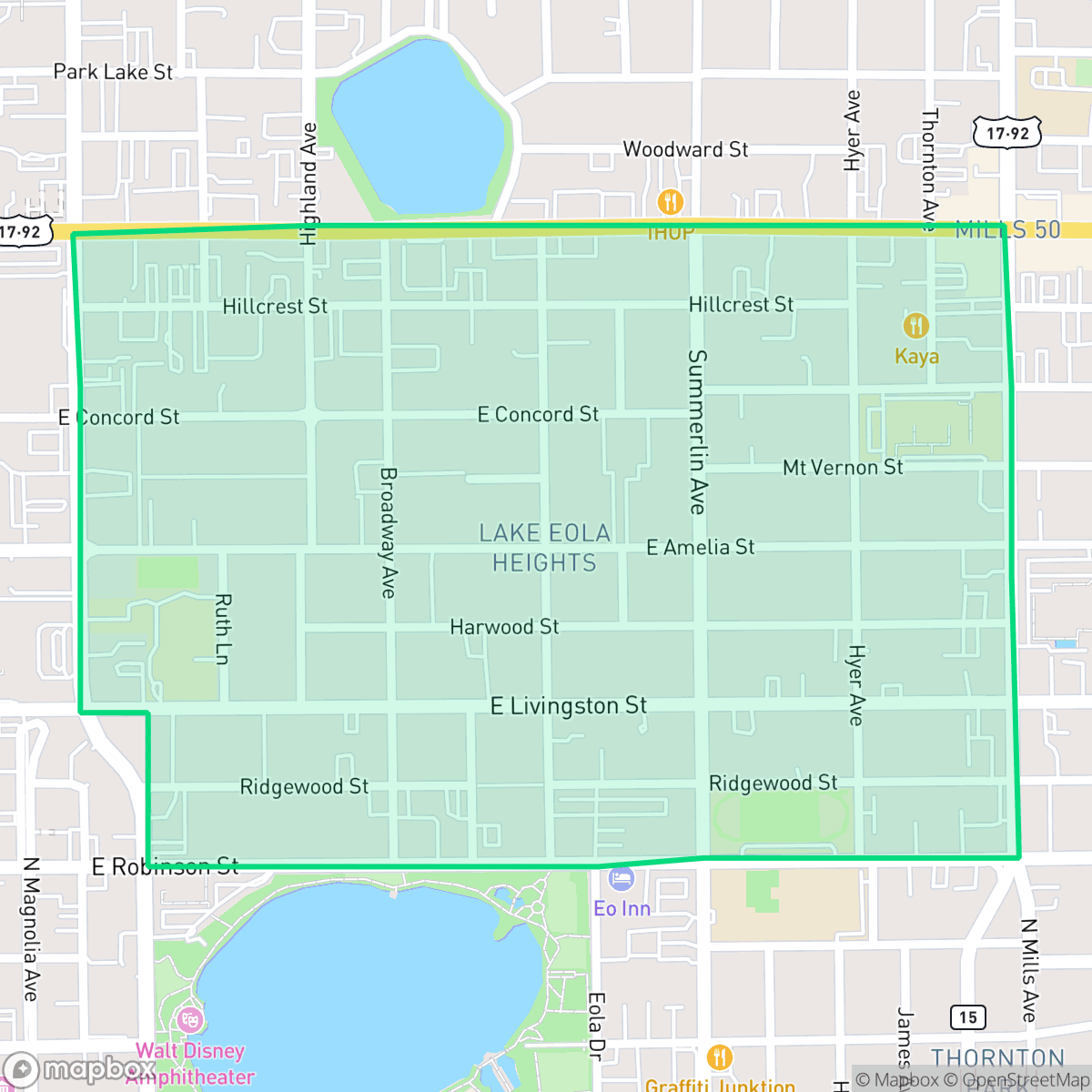
Lake Eola Heights is one of Orlando’s oldest and most architecturally diverse residential neighborhoods, officially recognized as a National Register Historic District. Originally part of a 200-acre citrus tract owned by Jacob Summerlin, the area was subdivided for housing following the devastating Great Freeze of 1894–1895. The neighborhood’s primary growth occurred between 1905 and 1925, resulting in a unique collection of approximately 570 historic structures. It is defined by its tree-lined brick streets and a rich variety of architectural styles, including Colonial Revival, Craftsman, Mediterranean Revival, Mission Revival, and vernacular clapboard farmhouses. Designated as a local historic district in 1989, the area remains a well-preserved enclave that reflects the early 20th-century urban development of Orlando, distinguishing itself through its cohesive historic character and active community preservation efforts.
This neighborhood serves as a highly active urban enclave located just steps from the city core. Residents benefit from a dense network of sidewalks that connect the area to a variety of local dining, nightlife, and retail options. The aesthetic is defined by well-maintained landscaping and mature tree canopies, creating a visually appealing environment that balances residential privacy with a lively, social atmosphere. The area is particularly well-suited for those who prioritize pedestrian access and a strong sense of community within an established, historic setting. While the area offers a high quality of life, prospective residents should note the presence of moderate traffic noise from nearby busy streets. The neighborhood maintains a balanced suburban feel, though it is subject to occasional flood risks common to the region. Families are served by the Orange County School District, which provides stable institutional support despite ongoing efforts to manage enrollment shifts and facility consolidation.
Neighborhood Scores Across 15 Qualities
Residential spacing provides a balanced level of seclusion, offering slightly more separation between neighbors than the Orlando average. Mature tree canopies and typical lot sizes help create moderate buffers between homes.
A complete sidewalk grid and numerous crosswalks provide exceptional pedestrian connectivity that is significantly higher than the Orlando average. Most local destinations are easily accessible on foot due to well-defined paths on both sides of the streets.
Manicured landscaping, large homes, and private pools contribute to an aesthetic that is significantly more visually appealing than the Orlando average. According to iHuus data, the area features high-quality architectural details and well-maintained greenery throughout many residential lots.
Abundant tree-lined streets and the proximity to Lake Eola Park provide much more accessible green space and paved walking paths than the Orlando average. Wide sidewalks and connected parklands offer safe, continuous routes for pet owners.
Residential streets and green spaces exist in roughly equal measure, providing a setting that is very similar to the Orlando average. This mix of single-family homes and low-density urban elements creates a consistent suburban character across the area.
High levels of activity and a dense concentration of diverse dining, nightlife, and retail options make this area significantly more lively than the Orlando average. Residents benefit from a bustling atmosphere characterized by highly walkable streets and frequent local destinations, according to iHuus data.
Steady hums from nearby busy streets characterize the area. This level of acoustic activity is slightly higher than the Orlando city average, according to iHuus data.
Air quality levels are generally acceptable, though sensitive groups may experience occasional concern during certain periods. This neighborhood maintains a standard comparable to the broader Orlando area according to iHuus data.
Industrial presence is minimal, consisting mostly of light commercial use and occasional utility services. This lack of heavy industry makes the area significantly cleaner than the Orlando average.
Health insurance access among residents is notably higher than the Orlando average, according to iHuus data.
Voting patterns and census indicators show a significantly more liberal leaning than the Orlando average, according to iHuus data.
Residents live alongside a balanced mix of young professionals, families, and seniors. This demographic spread is more diverse than the typical age distribution found across Orlando.
Residual flood risks exist within certain areas of the neighborhood, though safety levels remain higher than the Orlando city average according to iHuus data.
Address-Level Insights for Lake Eola Heights


iHuus Neighborhood Intelligence Insights
Get address-level neighborhood insights for Lake Eola Heights
- Street-level scores — see how individual blocks compare, not just neighborhood averages
- Micro-zone boundaries — identify quiet pockets, flood boundaries, and walkable clusters before you visit
- 15 dimensions in full — walkability, noise, air quality, school quality, insurance coverage, population age profile, urban/rural index, and more
- Boundary risk alerts — know if your address sits near a block boundary where scores drop, the kind of detail no listing will ever mention
- School insights — individual school ratings and insights, not just district-level data
- Compare before you commit — side-by-side data across neighborhoods, down to block precision
No credit card required
Compare with Any Neighborhood
| Dimension | Lake Eola Heights | 33rd St. Industrial |
|---|---|---|
| 🚶 Walkabilityavg 5.62 | ||
| 🔊 Acoustic Comfortavg 3.33 | ||
| 🤫 Privacy Indexavg 4.6 | ||
| 🎨 Visual Appealavg 5.36 | ||
| 🐕 Dog Friendlinessavg 5.01 | ||
| 🗺️ Urban-Rural Indexavg 5.48 | ||
| ✨ Neighborhood Vibeavg 2.98 | ||
| 🏥 Health Insurance Coverageavg 5.11 | ||
| 🌿 Air Qualityavg 5.87 | ||
| 🏭 Industrial Proximityavg 5.75 | ||
| 🌊 Flood Safetyavg 4.98 | ||
| 🗳️ Ideological Leanavg 5.62 | ||
| 👥 Population Age Profileavg 3.78 | ||
| 🔥 Fire Safety | ||
| 🏫 School Quality |
Lake Eola Heights Rankings
School Districts Serving Lake Eola Heights
School Insights for Lake Eola Heights
Below average outcomes; significant attendance and academic challenges.
School Insights
See what's really behind every school rating near Lake Eola Heights
- Individual school ratings — each school's own score with outcome context, not just a district average
- Enrollment & class size data — student-to-teacher ratio and how it compares to the state average
- Full demographics breakdown — ethnicity and gender composition for every school in the enrollment zone
- Every school in the district — all schools within the enrollment boundary ranked by rating, not just the closest one
- Grade levels & benchmarks — elementary through high school, with below/above state-average flags
No credit card required