Johnson Village, Orlando
Updated · 1,230 residents
Johnson Village is a quiet, semi-rural residential enclave in Orlando that offers a polished suburban aesthetic with notable pedestrian connectivity. Residents benefit from high health insurance coverage and a strong sense of community, though the area experiences persistent traffic noise from nearby roads.
Key Highlights
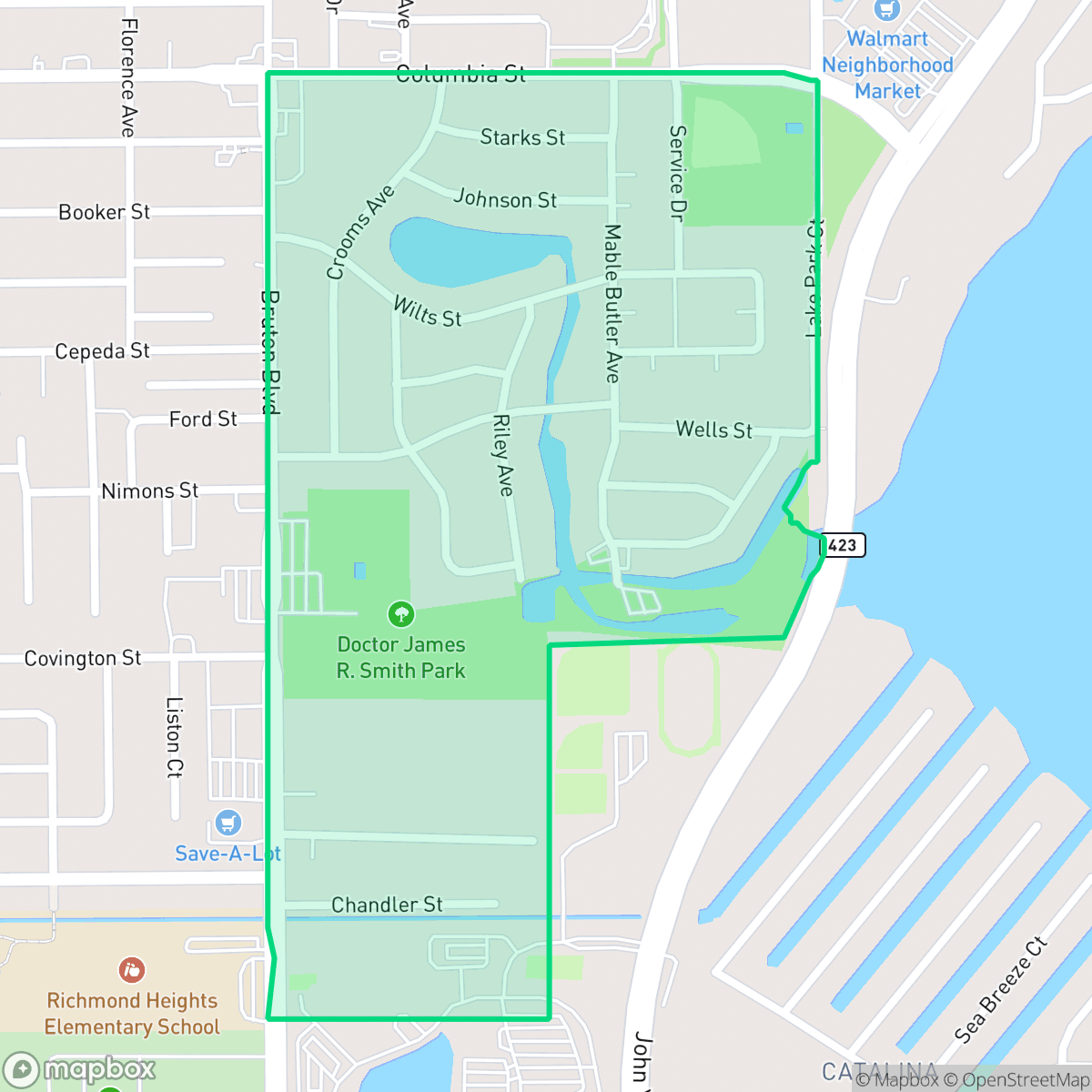
About Johnson Village
Johnson Village is a residential enclave located within the Washington Shores area of Orlando, Florida. Primarily developed in the 1950s, the neighborhood is historically recognized for its significant population of military families during the mid-20th century. This demographic reflected the era's robust military presence in Orlando, which included the nearby McCoy Air Force Base and the Orlando Navy Base. While often categorized within broader Washington Shores subdivision records, Johnson Village remains culturally noted for its mid-century residential character and its role in housing families during a period of rapid post-war growth in Central Florida.
Johnson Village is characterized by its spacious, well-maintained homes and a layout that feels more open and less dense than typical urban Orlando. The area maintains a peaceful, functional atmosphere with minimal industrial presence, making it an attractive choice for those seeking a suburban lifestyle with easy access to local parks and green spaces. Pedestrian infrastructure is well-developed, allowing for convenient movement through many parts of the community. Prospective residents should consider that the neighborhood experiences a consistent hum of traffic noise from surrounding streets. While the area offers a balanced, multi-generational demographic and high levels of health insurance coverage, it also carries a moderate risk of flooding. It is best suited for individuals or families who value a quiet, stable environment and appreciate the blend of semi-rural openness with the convenience of suburban amenities.
Neighborhood Scores Across 15 Qualities
Residential spacing provides a better sense of separation than the Orlando average, though density varies between detached homes and nearby apartment complexes. According to iHuus data, many properties feature fenced backyards and consistent buffers between neighbors.
Pedestrian infrastructure, including sidewalks and safe crossings, is significantly more developed here than in the rest of Orlando. While major roads are well-connected to local parks, some interior residential streets lack continuous sidewalk networks according to iHuus data.
Larger homes and upscale community amenities contribute to a visual profile that is more attractive than the Orlando average. Residents will find a landscape characterized by spacious driveways and well-maintained suburban architecture, according to iHuus data.
Access to large public parks with lake access and sports fields provides significantly more green space than the Orlando average. Many residential yards in this area are also privately fenced, offering secure spaces for pets.
Open land and wooded areas are more prevalent here than in most of Orlando. This creates a landscape of scattered homes and fields that feels less dense than the city average.
Daily activity levels are slightly above the Orlando average, characterized by a mix of calm residential streets and pockets of suburban commerce. While some areas offer walkable access to local dining and services, much of the neighborhood remains primarily focused on residential life.
A persistent hum of local traffic from nearby busy streets defines the acoustic environment. This level of noise is slightly higher than the average for Orlando.
Air quality levels fluctuate between acceptable and unhealthy, with occasional concerns for sensitive groups. According to iHuus data, these conditions are largely consistent with the broader Orlando area.
Primarily residential and recreational, this area lacks heavy industry and maintains a much lower industrial presence than the Orlando average. Residents can expect mostly quiet streets and open green spaces with only occasional light commercial buildings nearby.
Health insurance accessibility in this area is notably higher than the Orlando average, according to iHuus data.
Voting patterns and census indicators in Johnson Village show a significantly more liberal political leaning than the Orlando average, according to iHuus data.
A diverse range of age groups resides here, showing a more balanced demographic spread than the typical Orlando profile. According to iHuus data, this includes a stable presence of young adults, families, and older residents.
Flood risk in this area is slightly higher than the Orlando average. According to iHuus data, the precise level of risk remains undetermined because official federal flood studies for this specific location are not yet complete.
Address-Level Insights for Johnson Village


iHuus Neighborhood Intelligence Insights
Get address-level neighborhood insights for Johnson Village
- Street-level scores — see how individual blocks compare, not just neighborhood averages
- Micro-zone boundaries — identify quiet pockets, flood boundaries, and walkable clusters before you visit
- 15 dimensions in full — walkability, noise, air quality, school quality, insurance coverage, population age profile, urban/rural index, and more
- Boundary risk alerts — know if your address sits near a block boundary where scores drop, the kind of detail no listing will ever mention
- School insights — individual school ratings and insights, not just district-level data
- Compare before you commit — side-by-side data across neighborhoods, down to block precision
No credit card required
Compare with Any Neighborhood
| Dimension | Johnson Village | 33rd St. Industrial |
|---|---|---|
| 🚶 Walkabilityavg 5.62 | ||
| 🔊 Acoustic Comfortavg 3.33 | ||
| 🤫 Privacy Indexavg 4.6 | ||
| 🎨 Visual Appealavg 5.36 | ||
| 🐕 Dog Friendlinessavg 5.01 | ||
| 🗺️ Urban-Rural Indexavg 5.48 | ||
| ✨ Neighborhood Vibeavg 2.98 | ||
| 🏥 Health Insurance Coverageavg 5.11 | ||
| 🌿 Air Qualityavg 5.87 | ||
| 🏭 Industrial Proximityavg 5.75 | ||
| 🌊 Flood Safetyavg 4.98 | ||
| 🗳️ Ideological Leanavg 5.62 | ||
| 👥 Population Age Profileavg 3.78 | ||
| 🔥 Fire Safety | ||
| 🏫 School Quality |
Johnson Village Rankings
School Districts Serving Johnson Village
School Insights for Johnson Village
Below average outcomes; significant attendance and academic challenges.
School Insights
See what's really behind every school rating near Johnson Village
- Individual school ratings — each school's own score with outcome context, not just a district average
- Enrollment & class size data — student-to-teacher ratio and how it compares to the state average
- Full demographics breakdown — ethnicity and gender composition for every school in the enrollment zone
- Every school in the district — all schools within the enrollment boundary ranked by rating, not just the closest one
- Grade levels & benchmarks — elementary through high school, with below/above state-average flags
No credit card required