East Central Park, Orlando
Updated · 1,552 residents
East Central Park is a walkable, semi-rural community in Orlando known for its upscale residential aesthetic and active local lifestyle. While the area offers convenient access to diverse dining and fitness amenities, residents should note the higher noise levels stemming from nearby freeway and rail infrastructure.
Key Highlights
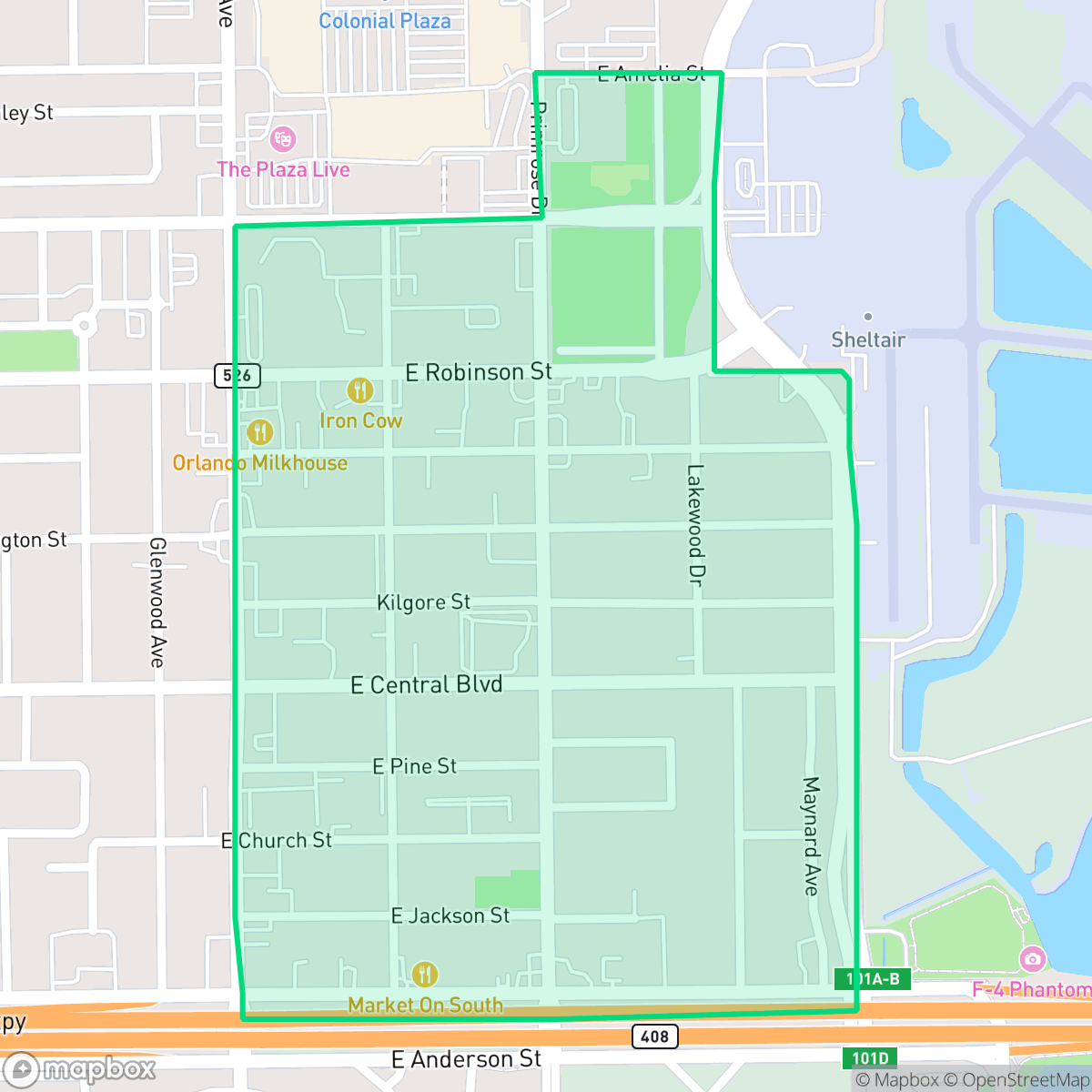
About East Central Park
East Central Park maintains a distinct semi-rural character, blending wooded areas and open land with manicured residential streets. The neighborhood features a dense sidewalk network that makes it highly walkable, connecting residents to local fitness studios, bars, and diverse dining options. According to iHuus data, the visual appeal is defined by spacious, well-maintained homes and private pools, contributing to an upscale aesthetic that stands out within the broader Orlando region.
Prospective residents should consider the trade-offs of living in this active hub, as the proximity to major transportation corridors results in frequent acoustic disturbances. While the area offers a strong sense of community and high health insurance coverage, it also carries a higher flood risk that warrants attention. The neighborhood appeals to a diverse demographic of young adults, families, and older residents who prioritize walkability and a liberal-leaning community environment over absolute quiet.
Neighborhood Scores Across 15 Qualities
Residential spacing provides more separation than the typical Orlando neighborhood, with detached houses often buffered by fences and trees. According to iHuus data, properties maintain a moderate distance from one another that offers greater seclusion than the city average.
A dense street grid and consistent sidewalk network make much of the area accessible for pedestrians. This connectivity and tree canopy coverage are notably higher than the Orlando average, according to iHuus data.
Manicured lawns and large homes with private pools provide a more polished aesthetic than the Orlando average. According to iHuus data, the area features frequent upscale amenities and spacious residential lots.
Abundant green space, including a large central park and grassy sidewalk verges, provides more opportunities for pet exercise than the Orlando average. According to iHuus data, while many residential yards are private and fenced, the presence of nearby public parks supports easy access for dog owners.
Open land and wooded areas are more frequent here than in much of Orlando. Residents will find a mix of scattered homes and fields interspersed with suburban developments, according to iHuus data.
Diverse dining, local bars, and fitness studios create a level of activity significantly higher than the Orlando average. This area transitions from high-energy, walkable pockets near various amenities to more subdued, park-centered residential stretches.
Frequent acoustic disturbances are common due to the proximity of a major freeway and railroad tracks. This level of noise is notably higher than the Orlando city average, according to iHuus data.
Air quality in this area fluctuates between acceptable and unhealthy levels, presenting occasional concerns for sensitive groups. According to iHuus data, conditions are roughly in line with the city average.
Largely residential with only light commercial activity, this area maintains a lower industrial presence than the Orlando average. Residents may encounter occasional transit traffic and freight activity near the airport and certain utility services, according to iHuus data.
Health insurance accessibility for residents is notably higher than the Orlando average, according to iHuus data.
Voting patterns and census indicators in this area reflect a much more liberal leaning than the Orlando average, according to iHuus data.
A balanced blend of young adults, families, and older residents characterizes the area. This demographic variety is more widespread than in other parts of Orlando, according to iHuus data.
Flood risk in this area is higher than the Orlando average, though official FEMA studies for this specific location remain incomplete. Residents should exercise caution as detailed flood maps for this neighborhood have not yet been finalized.
Address-Level Insights for East Central Park


iHuus Neighborhood Intelligence Insights
Get address-level neighborhood insights for East Central Park
- Street-level scores — see how individual blocks compare, not just neighborhood averages
- Micro-zone boundaries — identify quiet pockets, flood boundaries, and walkable clusters before you visit
- 15 dimensions in full — walkability, noise, air quality, school quality, insurance coverage, population age profile, urban/rural index, and more
- Boundary risk alerts — know if your address sits near a block boundary where scores drop, the kind of detail no listing will ever mention
- School insights — individual school ratings and insights, not just district-level data
- Compare before you commit — side-by-side data across neighborhoods, down to block precision
No credit card required
Compare with Any Neighborhood
| Dimension | East Central Park | 33rd St. Industrial |
|---|---|---|
| 🚶 Walkabilityavg 5.62 | ||
| 🔊 Acoustic Comfortavg 3.33 | ||
| 🤫 Privacy Indexavg 4.6 | ||
| 🎨 Visual Appealavg 5.36 | ||
| 🐕 Dog Friendlinessavg 5.01 | ||
| 🗺️ Urban-Rural Indexavg 5.48 | ||
| ✨ Neighborhood Vibeavg 2.98 | ||
| 🏥 Health Insurance Coverageavg 5.11 | ||
| 🌿 Air Qualityavg 5.87 | ||
| 🏭 Industrial Proximityavg 5.75 | ||
| 🌊 Flood Safetyavg 4.98 | ||
| 🗳️ Ideological Leanavg 5.62 | ||
| 👥 Population Age Profileavg 3.78 | ||
| 🔥 Fire Safety | ||
| 🏫 School Quality |
East Central Park Rankings
School Districts Serving East Central Park
School Insights for East Central Park
Below average outcomes; significant attendance and academic challenges.
School Insights
See what's really behind every school rating near East Central Park
- Individual school ratings — each school's own score with outcome context, not just a district average
- Enrollment & class size data — student-to-teacher ratio and how it compares to the state average
- Full demographics breakdown — ethnicity and gender composition for every school in the enrollment zone
- Every school in the district — all schools within the enrollment boundary ranked by rating, not just the closest one
- Grade levels & benchmarks — elementary through high school, with below/above state-average flags
No credit card required