Colonial Town Center, Orlando
Updated · 2,015 residents
Colonial Town Center is a dynamic suburban area in Orlando known for its polished aesthetic and high walkability. While the neighborhood offers access to diverse dining and parks, residents should anticipate consistent traffic noise and occasional drainage concerns during heavy rain.
Key Highlights
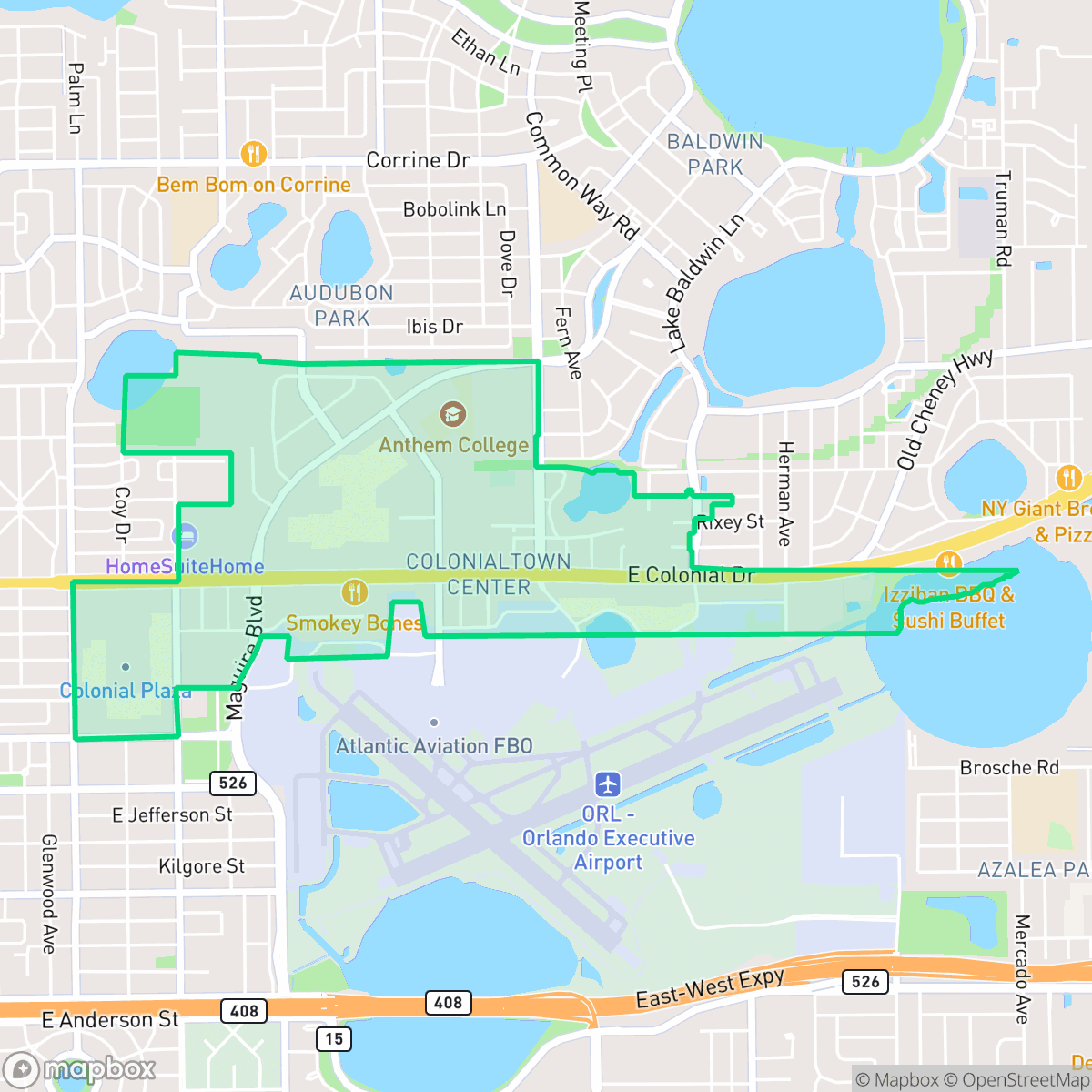
About Colonial Town Center
Colonial Town Center features a polished suburban landscape defined by well-maintained homes and a mix of multi-family developments. The area stands out for its walkability, offering residents easy access to local cafes, restaurants, and essential services within a vibrant, built-up environment. According to iHuus data, the neighborhood maintains a diverse age profile, fostering a community that is both active and socially engaged with a liberal-leaning perspective.
Potential residents should note that the neighborhood experiences significant acoustic disturbances from nearby transit corridors and major highways. While the area is generally pet-friendly with access to lakefront greenspace, it is also subject to slightly elevated flood risks during severe weather. This location is well-suited for individuals who prioritize proximity to urban amenities and a social community over absolute quiet, provided they are comfortable navigating a suburban environment with active traffic patterns.
Neighborhood Scores Across 15 Qualities
Neighboring distances vary due to a mix of detached homes and multi-family apartment clusters. This level of privacy and spacing is higher than the Orlando average according to iHuus data.
Continuous sidewalk networks are established throughout the residential blocks and around central park areas, offering slightly better pedestrian connectivity than the Orlando average. While most streets are safe for walking, some high-traffic intersections and major highway crossings lack dedicated pedestrian infrastructure.
Well-maintained lawns, private pools, and large single-family homes contribute to a visual appeal that is notably higher than the Orlando average. This landscape consists of a mix of upscale residences and standard apartment complexes with manicured communal amenities.
Access to large central parks and lakefront greenspace provides good walking opportunities for pets. This neighborhood offers slightly better access to open grassy areas than the Orlando average.
Developed land and commercial infrastructure dominate the landscape, offering a more built-up environment than the Orlando average. Residential pockets consist of a mix of single-family homes and multi-story apartment complexes interspersed with large retail blocks.
Dynamic pockets of activity and diverse dining options provide much more vitality than the Orlando average. While some residential streets remain quiet, many areas function as lively local hubs with high walkability and frequent access to cafes, restaurants, and essential services.
Frequent noise from nearby major highways and transit corridors creates a louder environment than the typical Orlando neighborhood. According to iHuus data, residents can expect consistent auditory disturbances due to proximity to heavy traffic and infrastructure.
Air quality levels fluctuate between acceptable and unhealthy, presenting occasional concerns for sensitive groups. These conditions are largely consistent with the broader Orlando area according to iHuus data.
The area is predominantly residential with light commercial activity; it features significantly less heavy industry than the Orlando average. While some proximity to warehouses and logistics centers creates moderate transit traffic, there are no major industrial hazards present.
Health insurance enrollment among residents is significantly higher than the Orlando city average, according to iHuus data.
Political leanings in this area trend more liberal than the Orlando average. According to iHuus data, the community maintains a liberal majority with a modest opposing presence.
A varied mix of young adults, families, and seniors resides here, representing a more balanced age distribution than the Orlando average according to iHuus data.
Flood risk in this area is slightly above the Orlando average, though official FEMA studies for this specific location remain incomplete. Residents should remain aware of potential drainage concerns during heavy rain events according to iHuus data.
Address-Level Insights for Colonial Town Center


iHuus Neighborhood Intelligence Insights
Get address-level neighborhood insights for Colonial Town Center
- Street-level scores — see how individual blocks compare, not just neighborhood averages
- Micro-zone boundaries — identify quiet pockets, flood boundaries, and walkable clusters before you visit
- 15 dimensions in full — walkability, noise, air quality, school quality, insurance coverage, population age profile, urban/rural index, and more
- Boundary risk alerts — know if your address sits near a block boundary where scores drop, the kind of detail no listing will ever mention
- School insights — individual school ratings and insights, not just district-level data
- Compare before you commit — side-by-side data across neighborhoods, down to block precision
No credit card required
Compare with Any Neighborhood
| Dimension | Colonial Town Center | 33rd St. Industrial |
|---|---|---|
| 🚶 Walkabilityavg 5.62 | ||
| 🔊 Acoustic Comfortavg 3.33 | ||
| 🤫 Privacy Indexavg 4.6 | ||
| 🎨 Visual Appealavg 5.36 | ||
| 🐕 Dog Friendlinessavg 5.01 | ||
| 🗺️ Urban-Rural Indexavg 5.48 | ||
| ✨ Neighborhood Vibeavg 2.98 | ||
| 🏥 Health Insurance Coverageavg 5.11 | ||
| 🌿 Air Qualityavg 5.87 | ||
| 🏭 Industrial Proximityavg 5.75 | ||
| 🌊 Flood Safetyavg 4.98 | ||
| 🗳️ Ideological Leanavg 5.62 | ||
| 👥 Population Age Profileavg 3.78 | ||
| 🔥 Fire Safety | ||
| 🏫 School Quality |
Colonial Town Center Rankings
School Districts Serving Colonial Town Center
School Insights for Colonial Town Center
Below average outcomes; significant attendance and academic challenges.
School Insights
See what's really behind every school rating near Colonial Town Center
- Individual school ratings — each school's own score with outcome context, not just a district average
- Enrollment & class size data — student-to-teacher ratio and how it compares to the state average
- Full demographics breakdown — ethnicity and gender composition for every school in the enrollment zone
- Every school in the district — all schools within the enrollment boundary ranked by rating, not just the closest one
- Grade levels & benchmarks — elementary through high school, with below/above state-average flags
No credit card required