Prospect Gardens, Oakland Park
Updated · 1,883 residents
Prospect Gardens is a residential neighborhood in Oakland Park defined by a semi-rural atmosphere and a diverse demographic mix. The area features a functional, uniform architectural style but faces challenges related to traffic noise and limited pedestrian infrastructure.
Key Highlights
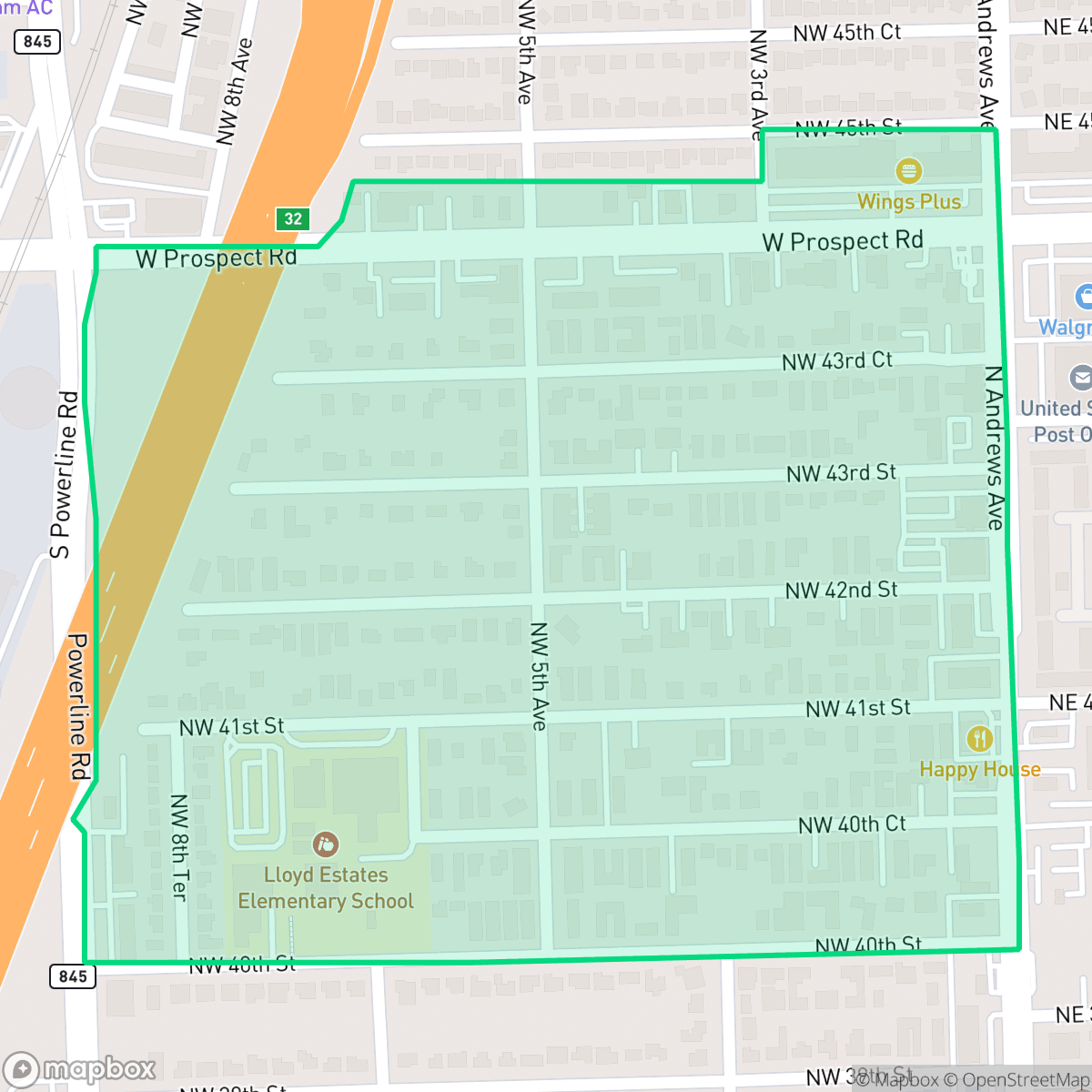
About Prospect Gardens
Prospect Gardens offers a unique blend of residential pockets and undeveloped land, creating a semi-rural feel that remains consistent with the broader Oakland Park landscape. The neighborhood is characterized by a mix of single-family homes and apartment complexes with uniform design, providing a stable environment for a diverse population of young adults, families, and older residents. While the area maintains a steady rhythm of daily life with access to local services and dining, its proximity to transit corridors and light industrial zones results in noticeable traffic noise and occasional utility odors. Residents often find that the neighborhood provides a balanced, functional setting, though the presence of nearby warehouses and commercial activity influences the overall character of the area.
Living in this neighborhood involves specific trade-offs regarding environmental and lifestyle factors. The area is situated within a 100-year floodplain, which presents a higher risk of flooding compared to other parts of the city. Pedestrian mobility is somewhat restricted due to a lack of sidewalks and the presence of industrial barriers, and pet owners may find limited outdoor space as the neighborhood relies heavily on private, fenced yards. Those considering the area should be aware of the ongoing challenges within the Broward County School District, which is currently undergoing significant structural consolidation and budgetary adjustments. The neighborhood is best suited for individuals who prioritize a quiet, established community atmosphere and are comfortable navigating the practical realities of its specific geographic and infrastructural constraints.
Neighborhood Scores Across 15 Qualities
Residential spacing is consistent with the Oakland Park average, featuring a mix of closely set houses and multi-family complexes. Some areas feature shared walls or minimal vegetation between structures, which provides limited buffer from neighboring properties.
Quiet streets allow for walking, but the lack of sidewalks and nearby industrial barriers make it less walkable than the Oakland Park average. High traffic from western highways and warehouse areas can also impede easy movement on foot.
Standard single-family homes and apartment complexes feature uniform rooflines and small yards. According to iHuus data, the visual variety in this area is slightly lower than the Oakland Park average due to the prevalence of tract housing and nearby industrial zones.
Green space for pets is primarily restricted to private, fenced backyards due to narrow street verges and a lack of nearby public parks. This area offers fewer walking opportunities for dogs compared to the Oakland Park average, according to iHuus data.
Frequent open land and scattered homes amidst woodlands characterize this area, which aligns with the city average for urban density. According to iHuus data, the landscape provides a mix of residential pockets and larger undeveloped spaces.
A steady mix of residential streets and local services provides a consistent level of activity that matches the city average. Residents have access to various dining options, wellness centers, and community hubs situated near transit corridors.
Frequent noise from nearby transit corridors and major roadways impacts the area. According to iHuus data, acoustic levels in Prospect Gardens are lower than the Oakland Park average.
Air conditions in Prospect Gardens typically fluctuate between acceptable and unhealthy levels. According to iHuus data, the air quality in this area remains consistent with the Oakland Park city average.
Active commercial uses like gas stations and printing services bring daytime traffic and utility odors to the area. According to iHuus data, the presence of light industrial elements and nearby storage facilities makes this area slightly more industrial than the Oakland Park average.
Health insurance access among residents is notably lower than the Oakland Park average, according to iHuus data.
Political leanings in this area align closely with the broader Oakland Park community, characterized by a liberal majority and a small presence of opposing viewpoints.
A balanced mix of young adults, families, and older residents characterizes the area. This demographic distribution is largely consistent with the broader Oakland Park average, according to iHuus data.
Significant flood risk exists due to the neighborhood's location within a 100-year floodplain; according to iHuus data, this level of vulnerability is slightly higher than the Oakland Park average.
Address-Level Insights for Prospect Gardens


iHuus Neighborhood Intelligence Insights
Get address-level neighborhood insights for Prospect Gardens
- Street-level scores — see how individual blocks compare, not just neighborhood averages
- Micro-zone boundaries — identify quiet pockets, flood boundaries, and walkable clusters before you visit
- 15 dimensions in full — walkability, noise, air quality, school quality, insurance coverage, population age profile, urban/rural index, and more
- Boundary risk alerts — know if your address sits near a block boundary where scores drop, the kind of detail no listing will ever mention
- School insights — individual school ratings and insights, not just district-level data
- Compare before you commit — side-by-side data across neighborhoods, down to block precision
No credit card required
Compare with Any Neighborhood
| Dimension | Prospect Gardens | Andrews Gardens |
|---|---|---|
| 🚶 Walkabilityavg 6.86 | ||
| 🔊 Acoustic Comfortavg 3.24 | ||
| 🤫 Privacy Indexavg 5.54 | ||
| 🎨 Visual Appealavg 6.36 | ||
| 🐕 Dog Friendlinessavg 5.18 | ||
| 🗺️ Urban-Rural Indexavg 6.55 | ||
| ✨ Neighborhood Vibeavg 4.88 | ||
| 🏥 Health Insurance Coverageavg 5.61 | ||
| 🌿 Air Qualityavg 6.04 | ||
| 🏭 Industrial Proximityavg 6.08 | ||
| 🌊 Flood Safetyavg 3.7 | ||
| 🗳️ Ideological Leanavg 8.11 | ||
| 👥 Population Age Profileavg 5.13 | ||
| 🔥 Fire Safety | ||
| 🏫 School Quality |
Prospect Gardens Rankings
School Districts Serving Prospect Gardens
School Insights for Prospect Gardens
Below average outcomes; significant attendance and academic challenges.
School Insights
See what's really behind every school rating near Prospect Gardens
- Individual school ratings — each school's own score with outcome context, not just a district average
- Enrollment & class size data — student-to-teacher ratio and how it compares to the state average
- Full demographics breakdown — ethnicity and gender composition for every school in the enrollment zone
- Every school in the district — all schools within the enrollment boundary ranked by rating, not just the closest one
- Grade levels & benchmarks — elementary through high school, with below/above state-average flags
No credit card required