Di Lido Island, Miami Beach
Updated · 383 residents
Di Lido Island is a serene, residential enclave within the Venetian Islands, offering a quiet atmosphere defined by its waterfront estates and limited commercial activity. Residents enjoy a peaceful environment away from the city bustle, though the area is characterized by limited pedestrian infrastructure and higher flood risk.
Key Highlights
About Di Lido Island
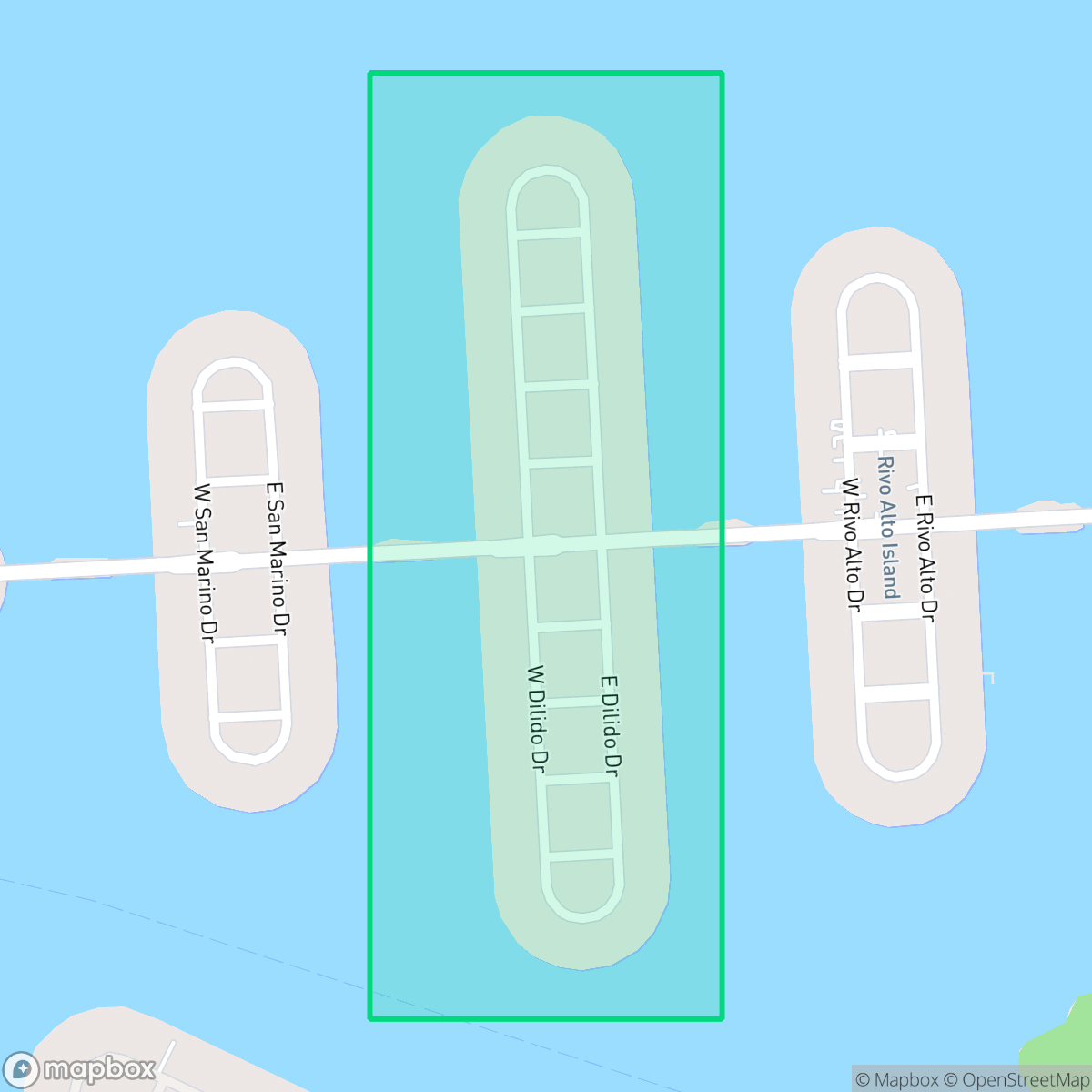
Di Lido Island is one of the six man-made Venetian Islands in Biscayne Bay, created during the 1920s Florida land boom by developer Carl Fisher. Originally part of an ambitious project to link Miami and Miami Beach via the Venetian Causeway, the island was formed through extensive dredging of the bay. Its development is characterized by a mix of historic mid-century modern residences and contemporary luxury estates, reflecting the evolving architectural trends of Miami Beach. As a residential enclave, Di Lido Island is defined by its waterfront orientation and its strategic position along the historic causeway, which remains a vital connection between the mainland and the island city. It lacks commercial zones, maintaining a strictly residential character that has attracted high-profile residents since its inception.
The area serves as a tranquil retreat, prioritizing privacy and a suburban pace of life that stands in contrast to the dense urban core of Miami Beach. Its layout features spacious properties and well-maintained infrastructure, fostering an upscale residential aesthetic. The lack of commercial zones ensures that the streets remain quiet, with ambient noise levels significantly lower than the city average.
Prospective residents should consider the trade-offs of this exclusive setting, including the need for flood insurance due to its location within a floodplain. The neighborhood presents challenges for pet owners due to a lack of accessible green space and features limited sidewalk access, which impacts walkability. It is best suited for those seeking a quiet, private waterfront lifestyle who are prepared for the specific environmental and infrastructure considerations of island living.
Neighborhood Scores Across 15 Qualities
Residential spacing provides a moderate level of separation between neighbors, though privacy levels are slightly lower than the Miami Beach average according to iHuus data.
Quiet streets allow for casual strolls, but a lack of sidewalks makes pedestrian transit significantly less accessible than in the rest of Miami Beach. According to iHuus data, navigating the area on foot is more difficult compared to the city average.
Large estates and premium amenities define the local landscape, though overall visual variety remains slightly below the Miami Beach average. According to iHuus data, the area is characterized by spacious properties and well-maintained residential infrastructure.
Sparse greenery and mostly fenced areas make finding open space for pets difficult. According to iHuus data, the availability of accessible outdoor areas for dogs is notably lower than the Miami Beach average.
Residential streets and green spaces are distributed fairly evenly throughout the area. This layout provides a slightly more suburban character compared to the denser urban environment found in much of Miami Beach.
Primarily residential in nature, this area offers a calm atmosphere with significantly less activity than the Miami Beach average. Local destinations are sparse, as most of the neighborhood consists of low-key suburban streets near the coastline.
Acoustic levels remain notably lower than the Miami Beach average, consisting primarily of infrequent distant traffic or passing trains. Residents can expect a peaceful environment with very little ambient noise according to iHuus data.
Frequent unhealthy air quality levels pose significant risks to sensitive groups, with conditions appearing worse than the Miami Beach average according to iHuus data.
Residential streets and open green spaces dominate the area, with very little industrial presence. This neighborhood features slightly more commercial activity than the Miami Beach average according to iHuus data.
Health insurance enrollment among Di Lido Island residents is lower than the Miami Beach average, according to iHuus data.
Political leanings in this area are roughly evenly split, representing a more moderate ideological landscape than the broader Miami Beach area. According to iHuus data, residents will find a mix of conservative and liberal viewpoints within the community.
Residents of all ages, from young adults to seniors, reside here in a balanced demographic mix. This population distribution is slightly lower than the Miami Beach average, reflecting a more concentrated presence of certain age groups according to iHuus data.
Property sits within a designated floodplain, which means flood insurance is typically required for residents. This level of risk is notably higher than the average for Miami Beach according to iHuus data.
Address-Level Insights for Di Lido Island


iHuus Neighborhood Intelligence Insights
Get address-level neighborhood insights for Di Lido Island
- Street-level scores — see how individual blocks compare, not just neighborhood averages
- Micro-zone boundaries — identify quiet pockets, flood boundaries, and walkable clusters before you visit
- 15 dimensions in full — walkability, noise, air quality, school quality, insurance coverage, population age profile, urban/rural index, and more
- Boundary risk alerts — know if your address sits near a block boundary where scores drop, the kind of detail no listing will ever mention
- School insights — individual school ratings and insights, not just district-level data
- Compare before you commit — side-by-side data across neighborhoods, down to block precision
No credit card required
Compare with Any Neighborhood
| Dimension | Di Lido Island | Bayshore |
|---|---|---|
| 🚶 Walkabilityavg 7.83 | ||
| 🔊 Acoustic Comfortavg 4 | ||
| 🤫 Privacy Indexavg 4.76 | ||
| 🎨 Visual Appealavg 8.17 | ||
| 🐕 Dog Friendlinessavg 5.83 | ||
| 🗺️ Urban-Rural Indexavg 4.39 | ||
| ✨ Neighborhood Vibeavg 4.49 | ||
| 🏥 Health Insurance Coverageavg 6.26 | ||
| 🌿 Air Qualityavg 3.72 | ||
| 🏭 Industrial Proximityavg 8.28 | ||
| 🌊 Flood Safetyavg 2.65 | ||
| 🗳️ Ideological Leanavg 4.64 | ||
| 👥 Population Age Profileavg 4.7 | ||
| 🔥 Fire Safety | ||
| 🏫 School Quality |
Di Lido Island Rankings
School Districts Serving Di Lido Island
School Insights for Di Lido Island
Below average outcomes; significant attendance and academic challenges.
School Insights
See what's really behind every school rating near Di Lido Island
- Individual school ratings — each school's own score with outcome context, not just a district average
- Enrollment & class size data — student-to-teacher ratio and how it compares to the state average
- Full demographics breakdown — ethnicity and gender composition for every school in the enrollment zone
- Every school in the district — all schools within the enrollment boundary ranked by rating, not just the closest one
- Grade levels & benchmarks — elementary through high school, with below/above state-average flags
No credit card required