Raintree, Lakeland
Updated · 304 residents
Raintree is a quiet, upscale suburban neighborhood in Lakeland characterized by large homes and expansive green spaces. While the area offers a semi-rural atmosphere with clean air, residents should be aware of frequent traffic noise from nearby transit corridors.
Key Highlights
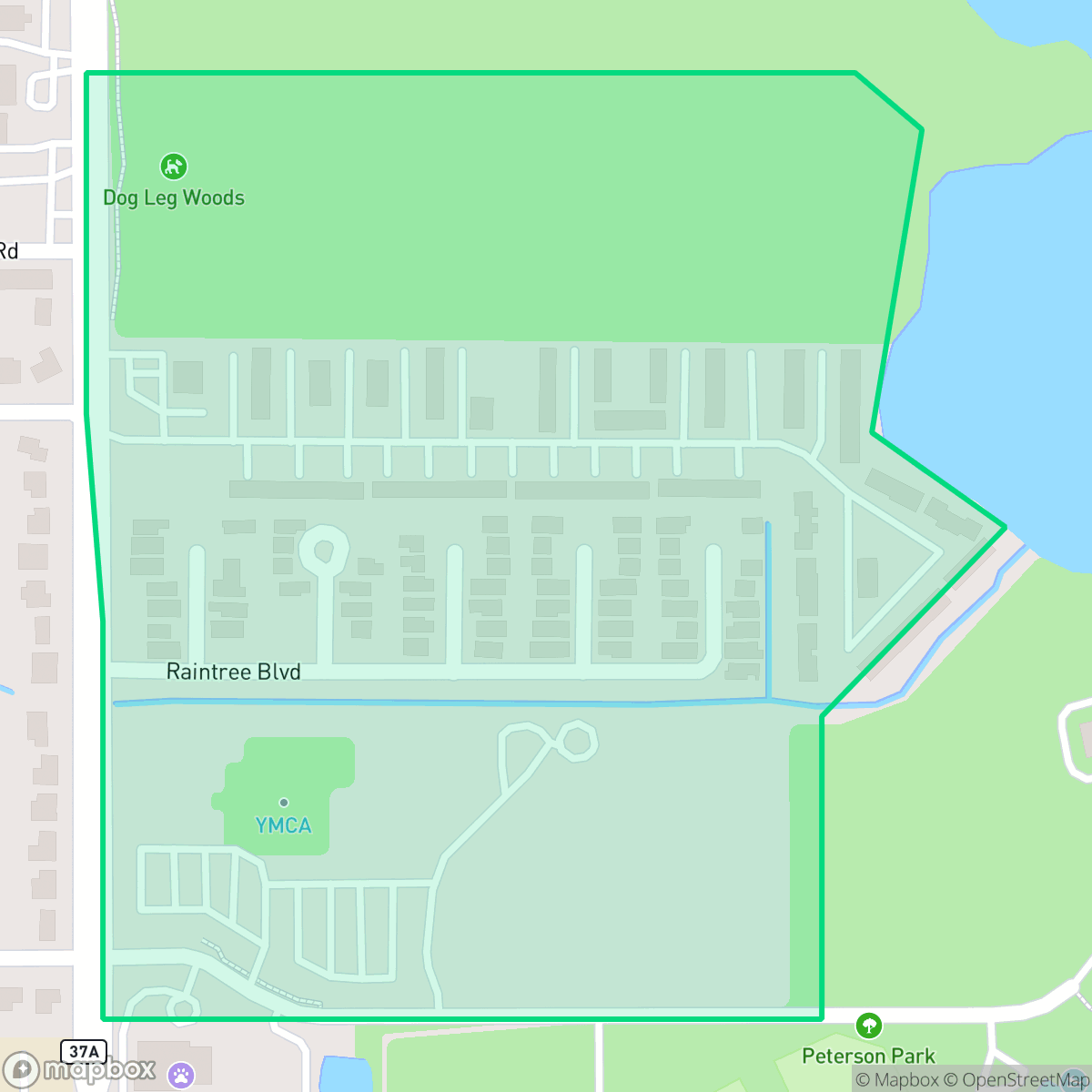
About Raintree
Raintree presents an upscale suburban aesthetic, featuring spacious homes, private pools, and abundant greenery that provides a distinct sense of privacy. The neighborhood maintains a semi-rural character with scattered homes and open land, offering a tranquil environment that stands out from more densely developed parts of Lakeland. According to iHuus data, the area benefits from high air quality and minimal industrial activity, making it a peaceful setting for those who value a quiet, low-key lifestyle.
Living in this area requires balancing the benefits of a spacious environment with certain trade-offs. While pedestrian-friendly paths and nearby golf courses accommodate active lifestyles and pet owners, the proximity to major highways creates noticeable traffic noise. Families residing here fall within the Polk County School District, where educational success often depends on navigating a competitive school choice system to access high-performing magnet or charter programs. The neighborhood is well-suited for individuals seeking a blend of upscale residential living and a quieter, more spread-out community feel.
Neighborhood Scores Across 15 Qualities
Suburban spacing provides a moderate level of separation between neighbors, offering more buffer than the typical Lakeland residential area. According to iHuus data, the presence of nearby golf course greenery further enhances distance between homes.
Sidewalks are available along some residential streets, though nearby highways and major arterials act as significant barriers to easy movement. According to iHuus data, the neighborhood offers better pedestrian accessibility than the Lakeland average.
Large homes and upscale amenities provide a visual quality that is notably higher than the Lakeland average. According to iHuus data, the landscape features spacious driveways and private pools interspersed with recreational areas.
Expansive green spaces and nearby golf courses provide ample room for exercise. Wide, traffic-safe paths offer much better accessibility for pet owners than the typical Lakeland average.
Open land and woodland are common throughout the area, offering a more spread out atmosphere than much of Lakeland. According to iHuus data, this neighborhood features a higher concentration of fields and scattered homes compared to the city average.
Limited commercial activity and sparse street life create a subdued atmosphere that is notably more tranquil than the average Lakeland area. Most parts of this neighborhood function as quiet residential or semi-rural stretches with very few points of interest nearby.
Frequent traffic and transit noise from nearby highways or rail lines impacts the area. According to iHuus data, acoustic comfort in Raintree is significantly lower than the Lakeland average.
Air quality remains consistently high with very few pollutants detected. This level of cleanliness is significantly better than the average found throughout Lakeland, according to iHuus data.
Primarily residential with very little heavy industry, this area offers much more tranquility than the Lakeland average. While a single storage facility introduces some localized freight traffic and loading activity, most streets remain quiet and free from industrial hazards.
Health insurance access in Raintree is consistent with the average levels found throughout Lakeland. According to iHuus data, a significant portion of the local population remains uninsured.
Conservative voters represent a significant majority in this area, though a small opposing presence exists. This political leaning is slightly more conservative than the average found across Lakeland.
A balanced distribution of young adults, families, and seniors characterizes the area. According to iHuus data, this age profile is largely consistent with the broader Lakeland average.
Flood risk in this area remains uncertain because FEMA has not yet completed a detailed study for the neighborhood. According to iHuus data, the level of risk is roughly comparable to the average found across Lakeland.
Address-Level Insights for Raintree


iHuus Neighborhood Intelligence Insights
Get address-level neighborhood insights for Raintree
- Street-level scores — see how individual blocks compare, not just neighborhood averages
- Micro-zone boundaries — identify quiet pockets, flood boundaries, and walkable clusters before you visit
- 15 dimensions in full — walkability, noise, air quality, school quality, insurance coverage, population age profile, urban/rural index, and more
- Boundary risk alerts — know if your address sits near a block boundary where scores drop, the kind of detail no listing will ever mention
- School insights — individual school ratings and insights, not just district-level data
- Compare before you commit — side-by-side data across neighborhoods, down to block precision
No credit card required
Compare with Any Neighborhood
| Dimension | Raintree | Beacon Hill |
|---|---|---|
| 🚶 Walkabilityavg 5.03 | ||
| 🔊 Acoustic Comfortavg 3.5 | ||
| 🤫 Privacy Indexavg 5.3 | ||
| 🎨 Visual Appealavg 5.07 | ||
| 🐕 Dog Friendlinessavg 5.42 | ||
| 🗺️ Urban-Rural Indexavg 6.53 | ||
| ✨ Neighborhood Vibeavg 2.18 | ||
| 🏥 Health Insurance Coverageavg 5.4 | ||
| 🌿 Air Qualityavg 7.09 | ||
| 🏭 Industrial Proximityavg 5.58 | ||
| 🌊 Flood Safetyavg 5.2 | ||
| 🗳️ Ideological Leanavg 2.17 | ||
| 👥 Population Age Profileavg 4.38 | ||
| 🔥 Fire Safety | ||
| 🏫 School Quality |
Raintree Rankings
School Districts Serving Raintree
School Insights for Raintree
Below average outcomes; significant attendance and academic challenges.
School Insights
See what's really behind every school rating near Raintree
- Individual school ratings — each school's own score with outcome context, not just a district average
- Enrollment & class size data — student-to-teacher ratio and how it compares to the state average
- Full demographics breakdown — ethnicity and gender composition for every school in the enrollment zone
- Every school in the district — all schools within the enrollment boundary ranked by rating, not just the closest one
- Grade levels & benchmarks — elementary through high school, with below/above state-average flags
No credit card required