Lake Hunter Terrace, Lakeland
Updated · 839 residents
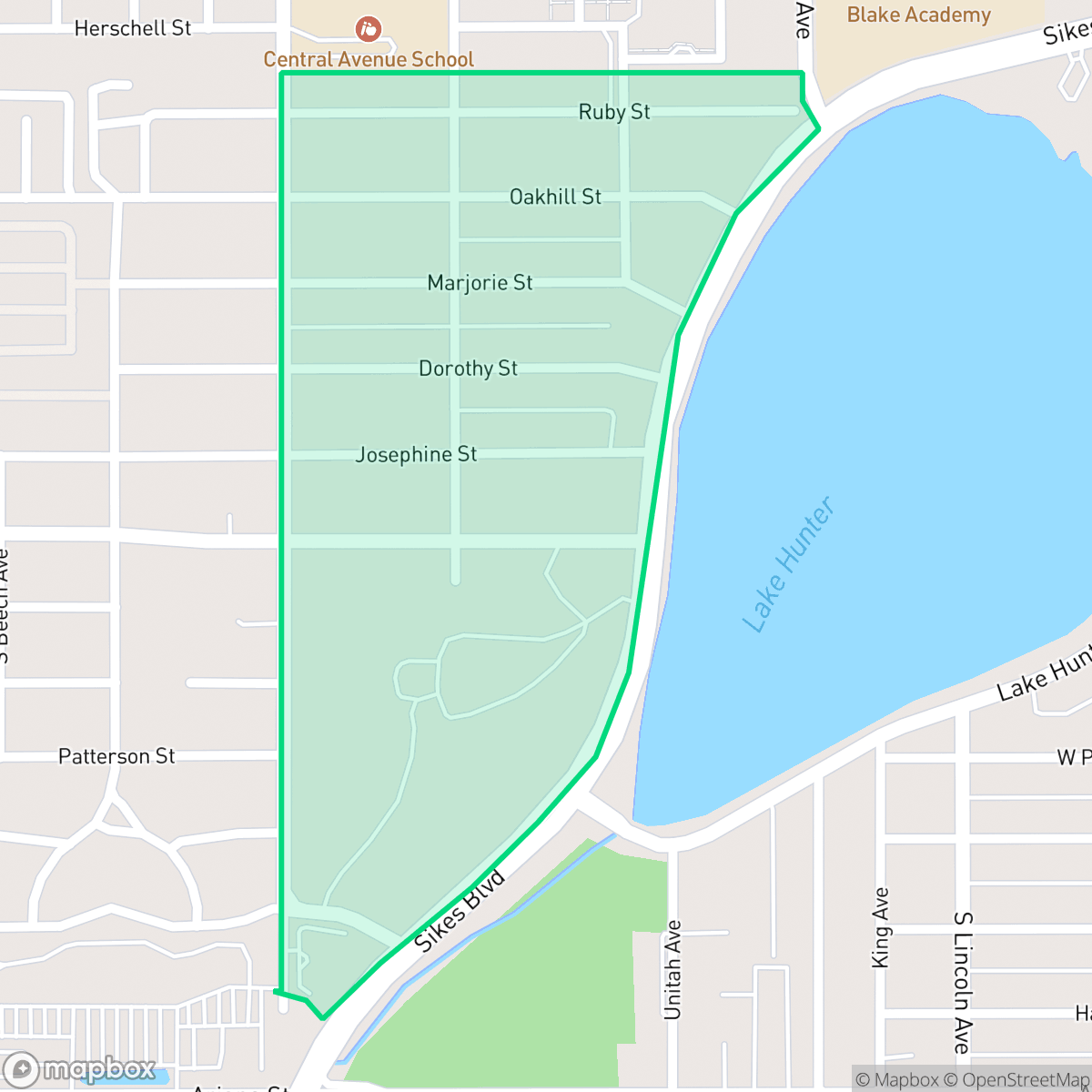
Lake Hunter Terrace is a highly walkable community situated along the western shore of Lake Hunter, offering residents access to scenic lakeside paths and a compact street grid. It features exceptionally clean air and a pet-friendly environment, making it a practical choice for those who prioritize outdoor activity and pedestrian convenience.
Key Highlights
About Lake Hunter Terrace
The Lake Hunter Terrace Historic District, located on the western shore of Lake Hunter in Lakeland, Florida, is a significant residential community recognized for its unique architectural evolution. Designated as a U.S. historic district in 2002, it holds the distinction of being the first post-World War II neighborhood in Lakeland to receive such status. While initial subdivision of the area began in the early 1900s, the majority of its development occurred during and shortly after World War II. The neighborhood is characterized by a blend of architectural styles, transitioning from 1920s-era bungalows to the modern masonry vernacular style that became prevalent in the late 1940s. Bounded by Central Avenue, Greenwood Street, Ruby Street, and Sikes Boulevard, the district remains a well-preserved example of mid-century residential growth and architectural adaptation in Polk County.
The neighborhood maintains a steady, local atmosphere characterized by a semi-rural mix of residential streets and open landscapes. Residents benefit from a robust infrastructure that supports a highly walkable lifestyle, with well-maintained sidewalks providing safe connections to local park facilities and dining options. The area is home to a multi-generational population and enjoys air quality that is consistently cleaner than the city average, contributing to a pleasant living environment for those who value outdoor accessibility.
While the area offers a quiet residential setting with minimal industrial presence, prospective residents should consider that it is situated within a 500-year floodplain, though this risk remains lower than the city-wide average. The housing stock consists of standard suburban profiles with modest yards, providing a consistent visual landscape. It is an ideal location for individuals and families who prioritize pedestrian-friendly amenities and a politically diverse, stable community atmosphere over high-density urban development.
Neighborhood Scores Across 15 Qualities
Housing spacing varies across the area, ranging from closely clustered structures in mobile home sections to more spaced suburban layouts. This level of density is consistent with the average seen throughout Lakeland.
Pedestrian infrastructure is much better than the Lakeland average, featuring a consistent sidewalk network and safe crossings near lakefront paths and local schools. Many daily trips can be completed safely on foot due to the compact street grid and accessible park facilities.
Modest housing and small yards characterize this area, which offers a visual landscape very similar to the Lakeland average. The neighborhood consists primarily of standard tract housing and high-density residential pockets with minimal ornamental landscaping.
Lakeside trails and expansive green spaces provide ample room for pets away from traffic. This area offers significantly more accessible walking areas and parkland than the typical Lakeland neighborhood, according to iHuus data.
A blend of suburban residential grids and open landscapes characterizes this area. According to iHuus data, the level of open land and scattered greenery is consistent with the broader Lakeland average.
A moderate level of activity defines this area, providing a more active atmosphere than the typical Lakeland neighborhood. Residents can access a mix of residential streets and local dining options within a highly walkable suburban grid.
Steady sounds from nearby busy streets are present, though the area remains noticeably quieter than the Lakeland average.
Air quality remains consistently high with minimal health concerns for residents. According to iHuus data, the atmosphere in this area is significantly cleaner than the Lakeland average.
Minimal industrial activity characterizes the immediate area, though proximity to an EPA Superfund site may present potential concerns regarding soil and groundwater contaminants. This level of industrial presence is notably lower than the typical found throughout Lakeland.
Health insurance accessibility is notably higher here than the Lakeland average, according to iHuus data.
Political views in this area are relatively balanced, showing a more even split between conservative and liberal leanings than the city average according to iHuus data.
A diverse range of age groups lives here, ranging from young adults to older residents. This demographic spread is more balanced than the average found throughout Lakeland.
Residual flood risk exists within this area as it sits inside the 500-year floodplain, though safety levels remain notably higher than the Lakeland average according to iHuus data.
Address-Level Insights for Lake Hunter Terrace


iHuus Neighborhood Intelligence Insights
Get address-level neighborhood insights for Lake Hunter Terrace
- Street-level scores — see how individual blocks compare, not just neighborhood averages
- Micro-zone boundaries — identify quiet pockets, flood boundaries, and walkable clusters before you visit
- 15 dimensions in full — walkability, noise, air quality, school quality, insurance coverage, population age profile, urban/rural index, and more
- Boundary risk alerts — know if your address sits near a block boundary where scores drop, the kind of detail no listing will ever mention
- School insights — individual school ratings and insights, not just district-level data
- Compare before you commit — side-by-side data across neighborhoods, down to block precision
No credit card required
Compare with Any Neighborhood
| Dimension | Lake Hunter Terrace | Beacon Hill |
|---|---|---|
| 🚶 Walkabilityavg 5.03 | ||
| 🔊 Acoustic Comfortavg 3.5 | ||
| 🤫 Privacy Indexavg 5.3 | ||
| 🎨 Visual Appealavg 5.07 | ||
| 🐕 Dog Friendlinessavg 5.42 | ||
| 🗺️ Urban-Rural Indexavg 6.53 | ||
| ✨ Neighborhood Vibeavg 2.18 | ||
| 🏥 Health Insurance Coverageavg 5.4 | ||
| 🌿 Air Qualityavg 7.09 | ||
| 🏭 Industrial Proximityavg 5.58 | ||
| 🌊 Flood Safetyavg 5.2 | ||
| 🗳️ Ideological Leanavg 2.17 | ||
| 👥 Population Age Profileavg 4.38 | ||
| 🔥 Fire Safety | ||
| 🏫 School Quality |
Lake Hunter Terrace Rankings
School Districts Serving Lake Hunter Terrace
School Insights for Lake Hunter Terrace
Below average outcomes; significant attendance and academic challenges.
School Insights
See what's really behind every school rating near Lake Hunter Terrace
- Individual school ratings — each school's own score with outcome context, not just a district average
- Enrollment & class size data — student-to-teacher ratio and how it compares to the state average
- Full demographics breakdown — ethnicity and gender composition for every school in the enrollment zone
- Every school in the district — all schools within the enrollment boundary ranked by rating, not just the closest one
- Grade levels & benchmarks — elementary through high school, with below/above state-average flags
No credit card required