Lake Bonny Park, Lakeland
Updated · 330 residents
Lake Bonny Park offers a quiet, semi-rural atmosphere just east of downtown Lakeland, characterized by its upscale aesthetic and spacious, well-maintained properties. Residents enjoy a clean environment with minimal industrial presence and excellent access to green spaces, making it a particularly attractive area for dog owners.
Key Highlights
About Lake Bonny Park
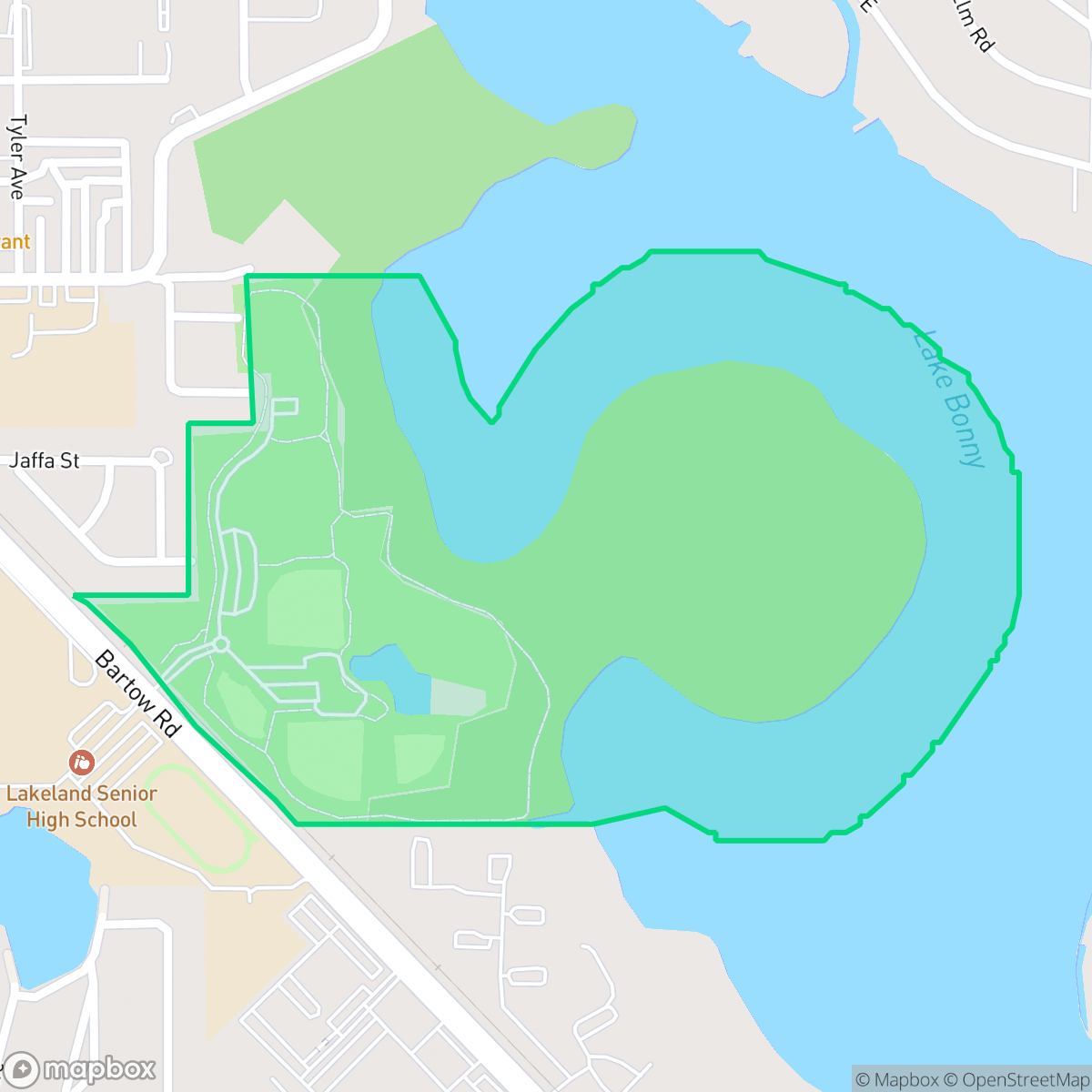
The Lake Bonny neighborhood, located about a mile east of downtown Lakeland, is named for pioneer settler David J. Washington Boney, who acquired land in the area in 1860. The neighborhood features a diverse architectural stock with homes built between 1910 and the 1960s, including Dutch colonial, Spanish, and Craftsman styles, alongside historic Sears kit houses. The area is anchored by the 113-acre Fletcher Park at Lake Bonny, a central recreational hub renamed in 2015 to honor former Lakeland Mayor Ralph “Buddy” Fletcher. Historically shaped by the region’s phosphate-rich 'Bone Valley' geology, the neighborhood’s landscape was further defined in the mid-1920s when canals were constructed to connect Lake Bonny with Little Lake Bonny, integrating the water bodies into the city's broader drainage and recreational system.
The area provides a tranquil living environment that balances a semi-rural feel with proximity to urban amenities. With a lack of heavy industry and high air quality, the neighborhood maintains a peaceful atmosphere. According to iHuus data, the visual appeal is defined by expansive lots and well-maintained landscaping, which contributes to a sense of privacy and comfort for those living in the area. The community maintains a steady, low-key pace that stands out from more dense urban sections of the city.
Prospective residents should note that while the neighborhood is moderately walkable, some traffic noise from nearby streets is present. The area features a diverse demographic profile and leans politically conservative. Families should consider the broader Polk County school landscape, which offers high-performing magnet and charter options alongside traditional zoned schools. While the area is generally stable, property owners should account for moderate flood risk when evaluating real estate options in this zone.
Neighborhood Scores Across 15 Qualities
Housing density remains moderate with varying spacing between properties, offering more separation between neighbors than the typical Lakeland area. According to iHuus data, residents can expect some level of buffering from adjacent homes.
Sidewalks are available on one side of the streets and crossings are considered safe. According to iHuus data, pedestrian accessibility in this area is notably higher than the Lakeland average.
Large homes and frequent upscale amenities create a visually pleasing environment that is notably more attractive than the Lakeland average. According to iHuus data, residents can expect spacious driveways and well-maintained landscapes throughout the area.
Connected green spaces and wide, traffic-safe paths make this an ideal area for pet owners. According to iHuus data, the level of dog friendliness here is significantly higher than the Lakeland average.
Open landscapes and scattered homes amidst woodlands characterize this area, providing a more rural feel than the typical Lakeland environment according to iHuus data.
Local activity is subdued with sparse commercial presence, though the area offers more engagement than the typical Lakeland neighborhood. While much of the area feels semi-rural and quiet, certain pockets provide accessible dining and independent retail options.
Steady sounds from nearby busy streets are present, though levels are more tranquil than the typical Lakeland average according to iHuus data.
Air quality remains consistently high with minimal health concerns, significantly surpassing the average found throughout Lakeland according to iHuus data.
Residential streets and green spaces remain free from warehouses or heavy industrial facilities, making this area significantly more secluded than the Lakeland average. According to iHuus data, the neighborhood contains only light commercial services like restaurants and retail stores.
Health insurance access among residents is notably higher than the Lakeland average, according to iHuus data.
Conservative voters form a majority in this area, representing a more conservative leaning than the average Lakeland resident according to iHuus data.
Residents of all life stages are represented here, as the area features a demographic spread that is very similar to the broader Lakeland population.
Flood risk in this area is slightly higher than the Lakeland average, though official FEMA studies for this specific zone remain incomplete. According to iHuus data, the level of uncertainty regarding potential flooding requires careful consideration for property owners.
Address-Level Insights for Lake Bonny Park


iHuus Neighborhood Intelligence Insights
Get address-level neighborhood insights for Lake Bonny Park
- Street-level scores — see how individual blocks compare, not just neighborhood averages
- Micro-zone boundaries — identify quiet pockets, flood boundaries, and walkable clusters before you visit
- 15 dimensions in full — walkability, noise, air quality, school quality, insurance coverage, population age profile, urban/rural index, and more
- Boundary risk alerts — know if your address sits near a block boundary where scores drop, the kind of detail no listing will ever mention
- School insights — individual school ratings and insights, not just district-level data
- Compare before you commit — side-by-side data across neighborhoods, down to block precision
No credit card required
Compare with Any Neighborhood
| Dimension | Lake Bonny Park | Beacon Hill |
|---|---|---|
| 🚶 Walkabilityavg 5.03 | ||
| 🔊 Acoustic Comfortavg 3.5 | ||
| 🤫 Privacy Indexavg 5.3 | ||
| 🎨 Visual Appealavg 5.07 | ||
| 🐕 Dog Friendlinessavg 5.42 | ||
| 🗺️ Urban-Rural Indexavg 6.53 | ||
| ✨ Neighborhood Vibeavg 2.18 | ||
| 🏥 Health Insurance Coverageavg 5.4 | ||
| 🌿 Air Qualityavg 7.09 | ||
| 🏭 Industrial Proximityavg 5.58 | ||
| 🌊 Flood Safetyavg 5.2 | ||
| 🗳️ Ideological Leanavg 2.17 | ||
| 👥 Population Age Profileavg 4.38 | ||
| 🔥 Fire Safety | ||
| 🏫 School Quality |
Lake Bonny Park Rankings
School Districts Serving Lake Bonny Park
School Insights for Lake Bonny Park
Below average outcomes; significant attendance and academic challenges.
School Insights
See what's really behind every school rating near Lake Bonny Park
- Individual school ratings — each school's own score with outcome context, not just a district average
- Enrollment & class size data — student-to-teacher ratio and how it compares to the state average
- Full demographics breakdown — ethnicity and gender composition for every school in the enrollment zone
- Every school in the district — all schools within the enrollment boundary ranked by rating, not just the closest one
- Grade levels & benchmarks — elementary through high school, with below/above state-average flags
No credit card required