John Cox, Lakeland
Updated · 340 residents
John Cox is a vibrant, highly walkable neighborhood in Lakeland known for its energetic dining and civic scene near Henley Field. While residents enjoy excellent air quality and a diverse community atmosphere, the area experiences noticeable noise from nearby railroad tracks and traffic.
Key Highlights
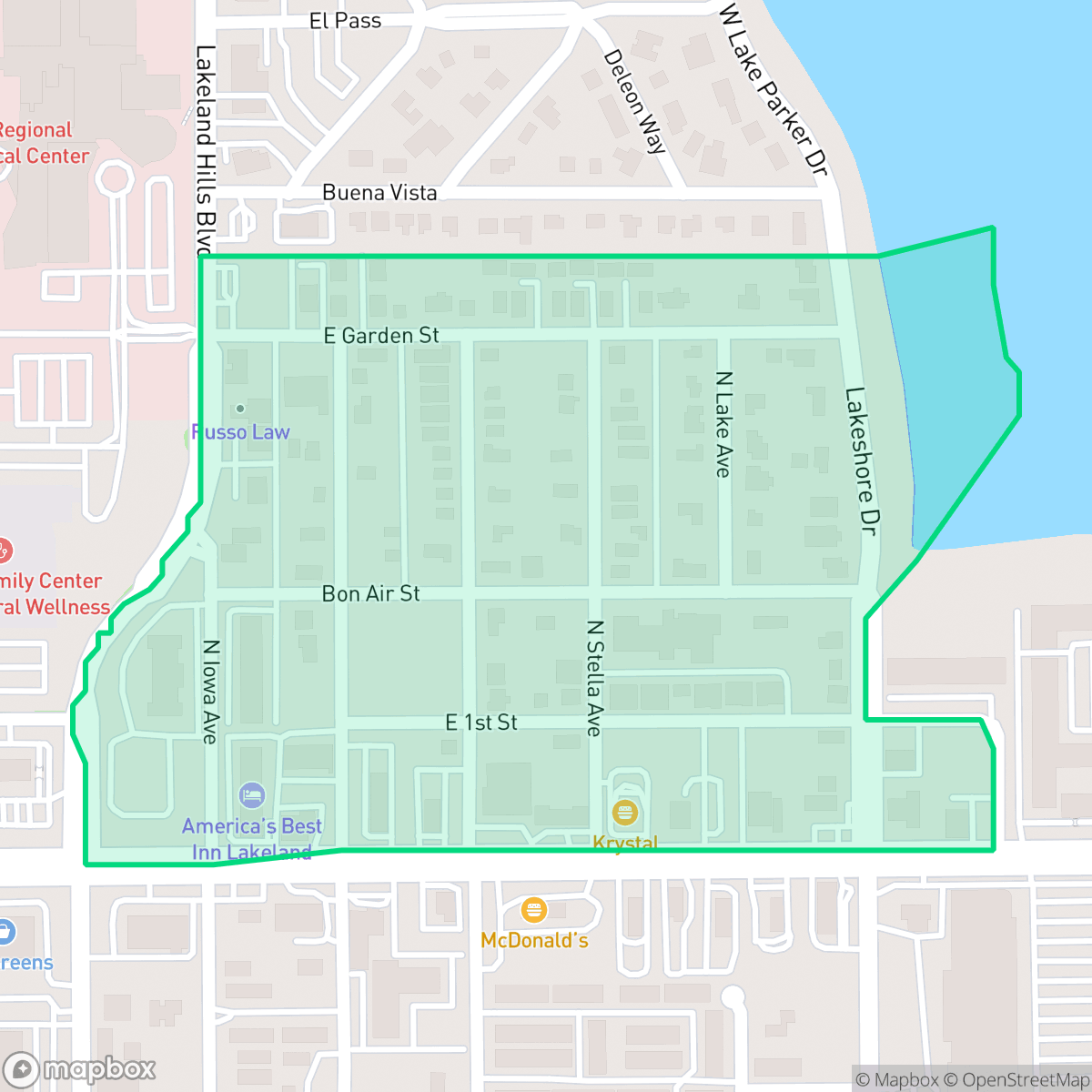
About John Cox
John Cox serves as a lively hub within Lakeland, characterized by a semi-rural feel that blends open fields and woodlands with a surprisingly active local culture. Residents benefit from a high degree of walkability, allowing for easy access to various wellness services, local eateries, and civic institutions situated near Henley Field. The neighborhood maintains a diverse demographic mix, fostering a community that leans toward progressive political views and enjoys a notable level of separation from heavy industrial zones. While the area offers significant advantages in air quality and community access, prospective residents should consider the trade-offs. The neighborhood is subject to frequent noise disturbances from nearby railroad tracks and heavy traffic, and the flood risk remains somewhat uncertain due to a lack of finalized federal studies. Though the housing consists of standard suburban tract designs, the overall environment provides a balanced experience for families and individuals who prioritize walkability and community energy over absolute quiet.
Neighborhood Scores Across 15 Qualities
Residential spacing provides a moderate level of separation between homes, offering more personal buffer than the typical Lakeland neighborhood according to iHuus data.
Pedestrian access is well-supported by sidewalks and safe crossings, providing much better walkability than the Lakeland average. According to iHuus data, many daily errands can be completed on foot within this area.
Residential streetscapes consist of traditional tract housing with modest yards and uniform rooflines. This level of visual variety is slightly higher than the average found across Lakeland.
Access to public parks and wide green verges provides decent opportunities for pet owners. This area offers slightly better amenities for dogs than the average Lakeland neighborhood, according to iHuus data.
Scattered homes sit among open fields and woodlands, matching the typical balance of developed and undeveloped land found throughout Lakeland.
High levels of activity and a diverse array of dining, educational, and civic institutions make this area significantly more energetic than the Lakeland average. Residents have access to a bustling mix of local eateries and wellness services near Henley Field and surrounding campuses.
Frequent disturbances from nearby railroad tracks and heavy traffic are common in this area. According to iHuus data, acoustic comfort levels here are roughly in line with the rest of Lakeland.
Air quality remains consistently high with very little pollution, significantly exceeding the Lakeland average according to iHuus data.
Residential areas are largely free of heavy industry, though occasional light commercial sites like gas stations and hotels introduce some transit traffic. This level of industrial separation is notably higher than the Lakeland average, according to iHuus data.
Health insurance accessibility is notably higher in this area than the Lakeland average, according to iHuus data.
Political leanings in this area trend significantly more liberal than the Lakeland average, according to iHuus data.
Residents experience a varied demographic mix of young adults, families, and seniors. This age distribution is more balanced than the average found across Lakeland.
Flood vulnerability in this area remains difficult to assess because detailed federal studies have not been finalized for this specific location. According to iHuus data, the level of risk appears slightly higher than the average seen across Lakeland.
Address-Level Insights for John Cox


iHuus Neighborhood Intelligence Insights
Get address-level neighborhood insights for John Cox
- Street-level scores — see how individual blocks compare, not just neighborhood averages
- Micro-zone boundaries — identify quiet pockets, flood boundaries, and walkable clusters before you visit
- 15 dimensions in full — walkability, noise, air quality, school quality, insurance coverage, population age profile, urban/rural index, and more
- Boundary risk alerts — know if your address sits near a block boundary where scores drop, the kind of detail no listing will ever mention
- School insights — individual school ratings and insights, not just district-level data
- Compare before you commit — side-by-side data across neighborhoods, down to block precision
No credit card required
Compare with Any Neighborhood
| Dimension | John Cox | Beacon Hill |
|---|---|---|
| 🚶 Walkabilityavg 5.03 | ||
| 🔊 Acoustic Comfortavg 3.5 | ||
| 🤫 Privacy Indexavg 5.3 | ||
| 🎨 Visual Appealavg 5.07 | ||
| 🐕 Dog Friendlinessavg 5.42 | ||
| 🗺️ Urban-Rural Indexavg 6.53 | ||
| ✨ Neighborhood Vibeavg 2.18 | ||
| 🏥 Health Insurance Coverageavg 5.4 | ||
| 🌿 Air Qualityavg 7.09 | ||
| 🏭 Industrial Proximityavg 5.58 | ||
| 🌊 Flood Safetyavg 5.2 | ||
| 🗳️ Ideological Leanavg 2.17 | ||
| 👥 Population Age Profileavg 4.38 | ||
| 🔥 Fire Safety | ||
| 🏫 School Quality |
John Cox Rankings
School Districts Serving John Cox
School Insights for John Cox
Below average outcomes; significant attendance and academic challenges.
School Insights
See what's really behind every school rating near John Cox
- Individual school ratings — each school's own score with outcome context, not just a district average
- Enrollment & class size data — student-to-teacher ratio and how it compares to the state average
- Full demographics breakdown — ethnicity and gender composition for every school in the enrollment zone
- Every school in the district — all schools within the enrollment boundary ranked by rating, not just the closest one
- Grade levels & benchmarks — elementary through high school, with below/above state-average flags
No credit card required