Dixieland, Lakeland
Updated · 2,832 residents
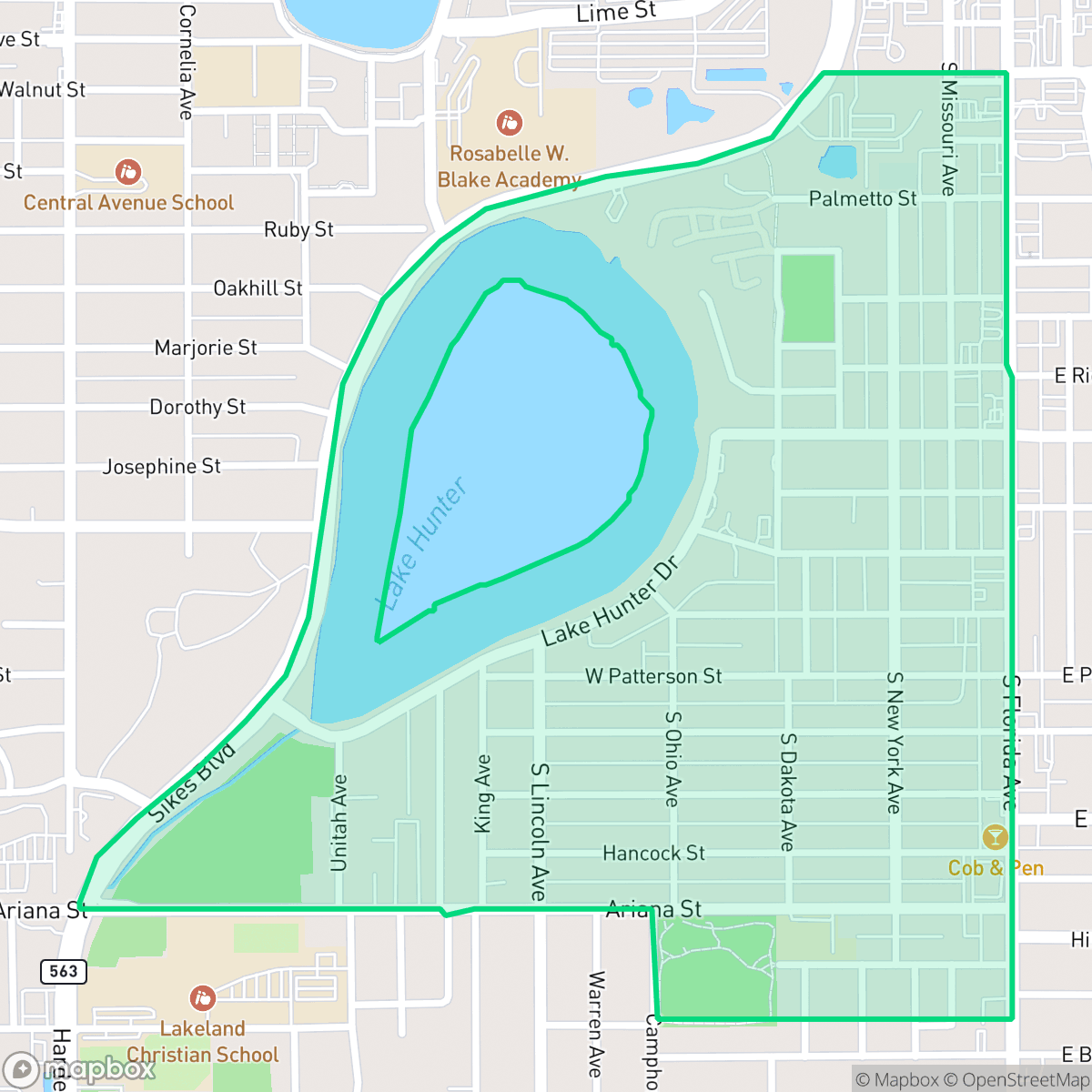
Dixieland is a highly walkable neighborhood known for its vibrant commercial corridor along South Florida Avenue and its eclectic, historic character. Residents benefit from excellent air quality and a pet-friendly environment, while enjoying a diverse community atmosphere that balances active local businesses with quiet, established residential streets.
Key Highlights
About Dixieland
The Dixieland Historic District in Lakeland, Florida, originated in 1907 when developers Henry B. Carter and C. W. Deen purchased 160 acres south of the city's downtown core. Marketed as a "fashionable suburb," the area saw significant residential growth during the building booms of the 1920s and 1940s. The neighborhood is characterized by its collection of over 500 historic structures, predominantly Craftsman-style bungalows. In 1994, the area was officially designated a U.S. historic district and listed on the National Register of Historic Places. Today, Dixieland is recognized for its architectural preservation, walkability, and an eclectic mix of local businesses along South Florida Avenue that contribute to its distinct, nostalgic character.
The area functions as an active suburban hub, characterized by a grid-based street network that makes daily errands and local exploration convenient for pedestrians. Beyond its historic appeal, the neighborhood offers a balanced feel where open land and institutional structures intersperse with residential blocks. The local commercial scene provides a steady stream of activity, supported by a mix of dining and retail options that cater to a varied demographic of young professionals, families, and retirees.
Prospective residents should consider the trade-offs of living in a central, established district, including moderate traffic noise and the presence of nearby light industrial activity. While the area maintains high levels of health insurance coverage and clean air, those sensitive to environmental factors should note the proximity to a designated EPA site. Families may find the local school district offers significant educational opportunities through magnet and charter programs, though access often relies on navigating a competitive choice lottery system rather than traditional neighborhood zoning.
Neighborhood Scores Across 15 Qualities
Residential spacing varies throughout the area, ranging from standard suburban yards to highly dense mobile home sections. According to iHuus data, this level of privacy and separation is slightly higher than the typical Lakeland average.
Pedestrian movement is easy due to a grid-based street network and continuous sidewalks near lakes and schools. This area offers significantly better walkability than the Lakeland average.
Standard tract housing and high-density residential layouts define the area, though the visual variety sits slightly above the Lakeland average. Most properties feature consistent rooflines and tidy but small yards characteristic of a functional suburban profile.
Abundant green spaces, lakeside trails, and wide grass verges provide excellent environments for pets. According to iHuus data, these features make the area significantly more dog friendly than the Lakeland average.
A blend of open land and scattered residential pockets creates a landscape that matches the city average for urban density. According to iHuus data, residents will find a mix of suburban grids, mobile home parks, and significant institutional or commercial structures.
Vibrant pockets of dining, retail, and local landmarks provide a level of activity significantly higher than the Lakeland average. Residents can enjoy a mix of energetic commercial blocks and more subdued, walkable residential streets near local parks and colleges.
Steady traffic sounds from nearby busy streets are a common feature, though the level of acoustic disturbance remains more moderate than the typical experience found throughout Lakeland.
Air quality in this area is exceptionally high with minimal pollutants. According to iHuus data, air cleanliness significantly exceeds the Lakeland average.
Light industrial and commercial activities, such as a brewery and printing services, introduce intermittent operational noise and transit traffic to the area. This level of industrial proximity is slightly higher than the Lakeland average, and residents should note the presence of a nearby EPA Superfund site with potential environmental implications for soil and groundwater.
Health insurance access among residents is notably higher than the Lakeland average, according to iHuus data.
Political perspectives in this area are split fairly evenly between conservative and liberal leanings. This represents a more balanced ideological landscape than the city average, according to iHuus data.
Residents will find a balanced mix of young adults, families, and seniors. This age distribution is more varied than the typical profile found across Lakeland.
Residual flood risks exist within this area as it sits inside a 500-year floodplain, though safety levels remain notably higher than the Lakeland average according to iHuus data.
Address-Level Insights for Dixieland


iHuus Neighborhood Intelligence Insights
Get address-level neighborhood insights for Dixieland
- Street-level scores — see how individual blocks compare, not just neighborhood averages
- Micro-zone boundaries — identify quiet pockets, flood boundaries, and walkable clusters before you visit
- 15 dimensions in full — walkability, noise, air quality, school quality, insurance coverage, population age profile, urban/rural index, and more
- Boundary risk alerts — know if your address sits near a block boundary where scores drop, the kind of detail no listing will ever mention
- School insights — individual school ratings and insights, not just district-level data
- Compare before you commit — side-by-side data across neighborhoods, down to block precision
No credit card required
Compare with Any Neighborhood
| Dimension | Dixieland | Beacon Hill |
|---|---|---|
| 🚶 Walkabilityavg 5.03 | ||
| 🔊 Acoustic Comfortavg 3.5 | ||
| 🤫 Privacy Indexavg 5.3 | ||
| 🎨 Visual Appealavg 5.07 | ||
| 🐕 Dog Friendlinessavg 5.42 | ||
| 🗺️ Urban-Rural Indexavg 6.53 | ||
| ✨ Neighborhood Vibeavg 2.18 | ||
| 🏥 Health Insurance Coverageavg 5.4 | ||
| 🌿 Air Qualityavg 7.09 | ||
| 🏭 Industrial Proximityavg 5.58 | ||
| 🌊 Flood Safetyavg 5.2 | ||
| 🗳️ Ideological Leanavg 2.17 | ||
| 👥 Population Age Profileavg 4.38 | ||
| 🔥 Fire Safety | ||
| 🏫 School Quality |
Dixieland Rankings
School Districts Serving Dixieland
School Insights for Dixieland
Below average outcomes; significant attendance and academic challenges.
School Insights
See what's really behind every school rating near Dixieland
- Individual school ratings — each school's own score with outcome context, not just a district average
- Enrollment & class size data — student-to-teacher ratio and how it compares to the state average
- Full demographics breakdown — ethnicity and gender composition for every school in the enrollment zone
- Every school in the district — all schools within the enrollment boundary ranked by rating, not just the closest one
- Grade levels & benchmarks — elementary through high school, with below/above state-average flags
No credit card required