North Lincoln Heights, Gainesville
Updated · 366 residents
North Lincoln Heights is a quiet, semi-rural community in East Gainesville characterized by open woodland and well-maintained tract housing. Residents enjoy clean air and a peaceful street environment, though the area is subject to occasional noise from nearby railroad tracks and major roads.
Key Highlights
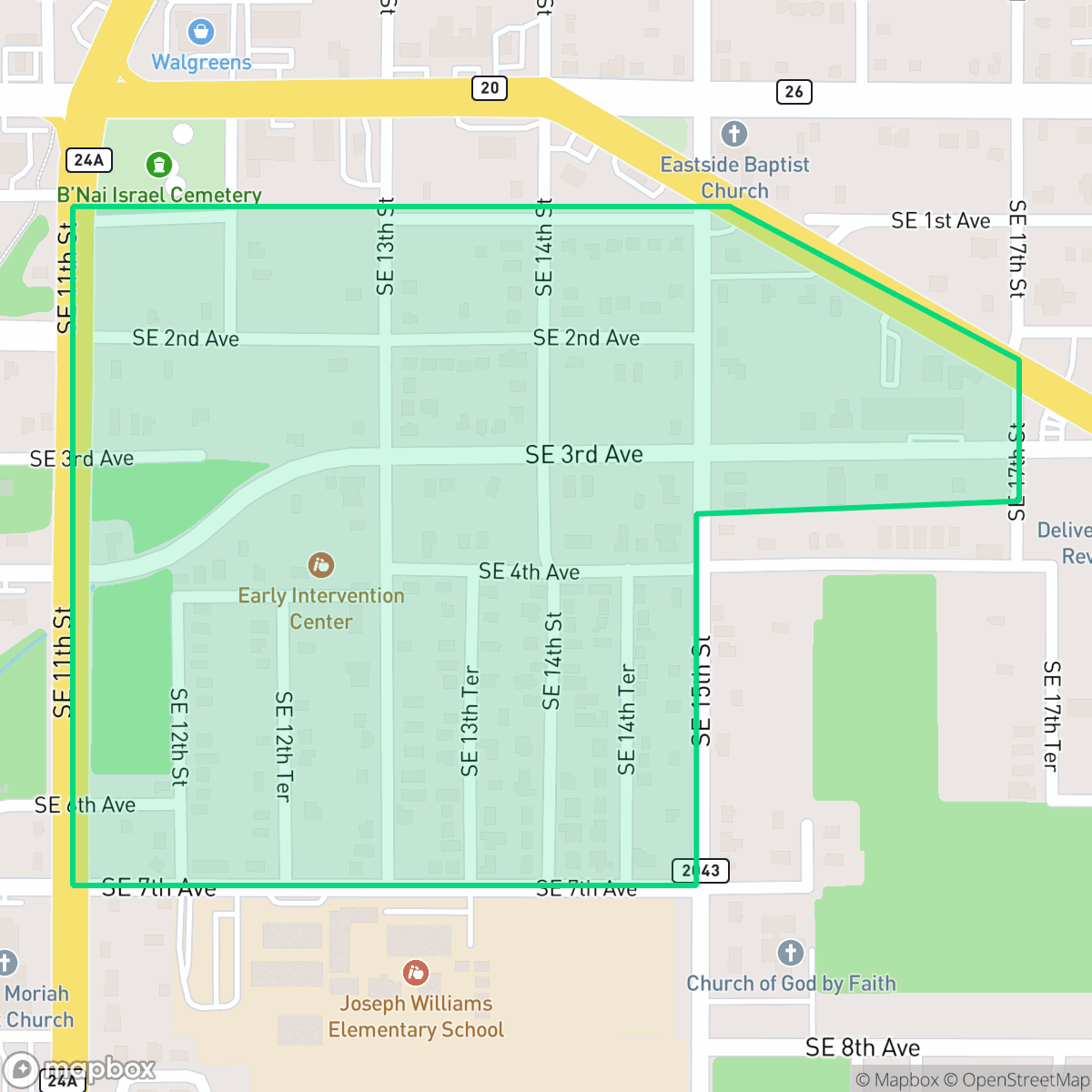
About North Lincoln Heights
North Lincoln Heights is a historically marginalized neighborhood located in East Gainesville, Florida. It is formally recognized in local city planning and development records, particularly through the Gainesville Community Reinvestment Area (GCRA), which designates the area as a priority for housing, infrastructure, and urban infill initiatives. The neighborhood is deeply intertwined with the broader history of segregation and civil rights activism in East Gainesville, serving as a formative setting for local leaders like Cora P. Roberson. In recent years, the area has been a focal point for city-led revitalization programs aimed at addressing historical disinvestment and promoting affordable homeownership, reflecting its ongoing transition within the city's urban landscape.
The area offers a distinct semi-rural character, defined by scattered homes, open green spaces, and a lack of heavy industrial presence. The neighborhood maintains a balanced atmosphere, blending quiet residential streets with convenient access to nearby commercial hubs and civic services. According to iHuus data, the visual landscape consists of uniform residential housing with modest, well-kept yards that provide a sense of order and moderate privacy for residents.
Prospective residents should note that while the streets are quiet for walking, the absence of sidewalks and the presence of nearby rail and traffic noise are notable trade-offs. The community appeals to a diverse age demographic looking for a relaxed, liberal-leaning environment. Families should be aware that while the local school district contains high-performing institutions, it currently faces significant administrative and financial challenges that may impact long-term planning.
Neighborhood Scores Across 15 Qualities
Residential spacing offers a balanced mix of proximity and distance between neighbors. According to iHuus data, the level of separation is slightly higher than the Gainesville average.
Low traffic volumes and quiet streets allow for easy pedestrian movement, even though sidewalks are absent. According to iHuus data, the walkability in this area is slightly higher than the Gainesville average.
Typical tract housing defines the area with uniform rooflines and modest, well-maintained yards. This level of visual variety is slightly higher than the Gainesville average, according to iHuus data.
Connected green spaces and wide paths provide safe, low-traffic areas for walking pets. According to iHuus data, the level of dog friendliness in this area is consistent with the Gainesville average.
Frequent open land and scattered homes amid woodland define the area, offering a more semi-rural feel than the Gainesville average according to iHuus data.
Local activity levels are notably higher than the Gainesville average, offering a mix of quiet suburban stretches and energetic pockets near dining hubs and civic institutions. Residents can experience a steady rhythm of services ranging from subdued parklands to vibrant cafe districts according to iHuus data.
Frequent disturbances from nearby railroad tracks and major thoroughfares characterize the area. This level of acoustic activity is slightly higher than the average for Gainesville, according to iHuus data.
Air quality remains consistently high with very few instances of poor pollution levels. This area offers significantly cleaner air than the Gainesville average, according to iHuus data.
Quiet streets and open green spaces define this area, which lacks heavy industry and maintains a much lower industrial density than the Gainesville average. According to iHuus data, the landscape is predominantly residential with only occasional light commercial uses like convenience stores or restaurants.
Health insurance coverage among residents is slightly below the Gainesville average, according to iHuus data. This indicates a moderate level of access to employer-sponsored or private medical plans within the area.
Voting patterns and census indicators reflect a much more liberal leaning than the Gainesville average, according to iHuus data.
Residents will find a more varied age distribution here than is typically seen across Gainesville. This demographic spread includes a balance of young adults, families, and older individuals according to iHuus data.
Flood safety levels in this area are roughly comparable to the Gainesville average. According to iHuus data, a lack of detailed FEMA studies means the specific risk level remains undetermined.
Address-Level Insights for North Lincoln Heights


iHuus Neighborhood Intelligence Insights
Get address-level neighborhood insights for North Lincoln Heights
- Street-level scores — see how individual blocks compare, not just neighborhood averages
- Micro-zone boundaries — identify quiet pockets, flood boundaries, and walkable clusters before you visit
- 15 dimensions in full — walkability, noise, air quality, school quality, insurance coverage, population age profile, urban/rural index, and more
- Boundary risk alerts — know if your address sits near a block boundary where scores drop, the kind of detail no listing will ever mention
- School insights — individual school ratings and insights, not just district-level data
- Compare before you commit — side-by-side data across neighborhoods, down to block precision
No credit card required
Compare with Any Neighborhood
| Dimension | North Lincoln Heights | Ashton |
|---|---|---|
| 🚶 Walkabilityavg 5.49 | ||
| 🔊 Acoustic Comfortavg 3.45 | ||
| 🤫 Privacy Indexavg 5.77 | ||
| 🎨 Visual Appealavg 5.61 | ||
| 🐕 Dog Friendlinessavg 6.73 | ||
| 🗺️ Urban-Rural Indexavg 7.16 | ||
| ✨ Neighborhood Vibeavg 2.63 | ||
| 🏥 Health Insurance Coverageavg 6.36 | ||
| 🌿 Air Qualityavg 6.49 | ||
| 🏭 Industrial Proximityavg 6.6 | ||
| 🌊 Flood Safetyavg 4.63 | ||
| 🗳️ Ideological Leanavg 7.36 | ||
| 👥 Population Age Profileavg 4.16 | ||
| 🔥 Fire Safety | ||
| 🏫 School Quality |
North Lincoln Heights Rankings
School Districts Serving North Lincoln Heights
School Insights for North Lincoln Heights
Below average outcomes; significant attendance and academic challenges.
School Insights
See what's really behind every school rating near North Lincoln Heights
- Individual school ratings — each school's own score with outcome context, not just a district average
- Enrollment & class size data — student-to-teacher ratio and how it compares to the state average
- Full demographics breakdown — ethnicity and gender composition for every school in the enrollment zone
- Every school in the district — all schools within the enrollment boundary ranked by rating, not just the closest one
- Grade levels & benchmarks — elementary through high school, with below/above state-average flags
No credit card required