Dean Park Historic District, Fort Myers
Updated · 194 residents
Dean Park is a historically significant neighborhood known for its diverse architectural styles, including Craftsman bungalows and Mediterranean revivals. While the area offers a vibrant, walkable atmosphere with convenient access to downtown, residents should be aware of high noise levels from nearby transit and significant flood risks.
Key Highlights
About Dean Park Historic District
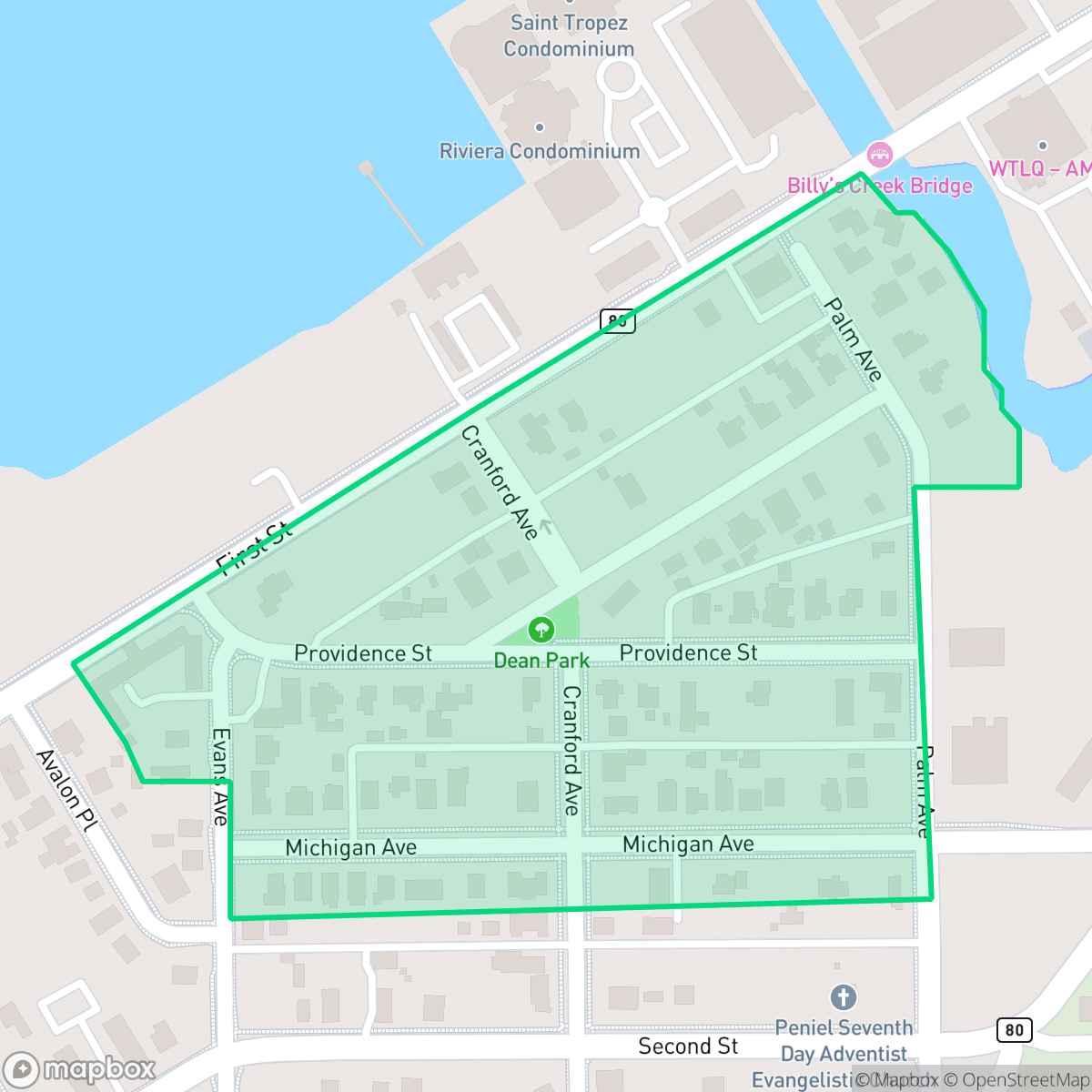
Developed by Rhode Island businessman John Morgan Dean, the Dean Park Historic District in Fort Myers was established on 37 acres of land purchased in 1902. To realize his vision of an upscale residential community, Dean undertook a massive land reclamation project in 1915, dredging 150,000 cubic yards of sand from the Caloosahatchee River to raise the swampy terrain. The subdivision, officially mapped in 1920, became a social hub for the city’s founding families. The neighborhood is celebrated for its diverse architectural heritage, featuring a high concentration of Craftsman bungalows alongside Spanish, Mediterranean, English Tudor, and Colonial Revival homes. Designated a local historic district in 1997 and added to the National Register of Historic Places in 2013, the area is defined by its signature palm-lined streets, the central 'Triangle' park, and its proximity to the historic downtown riverfront.
The area functions as a vibrant suburban hub, characterized by a semi-rural feel that belies its proximity to the active downtown riverfront. Residents benefit from a diverse, balanced age demographic and a walkable environment that supports local cafes and civic institutions. The neighborhood maintains a distinct identity through its varied residential architecture, providing a sense of community that is notably more liberal in its political leanings than other parts of the city. Prospective residents should carefully weigh several practical trade-offs. The location sits within a designated floodplain, necessitating attention to insurance requirements, and the proximity to major transit corridors results in frequent noise from traffic and rail lines. Additionally, families should monitor the local school district, which is currently navigating significant fiscal challenges and budgetary adjustments. Despite these considerations, the area remains a central, active choice for those prioritizing access to local amenities over absolute quiet or environmental seclusion.
Neighborhood Scores Across 15 Qualities
Residential spacing provides a reasonable buffer between neighbors, offering slightly more separation than the Fort Myers average. According to iHuus data, the neighborhood features mixed density with some visible distance between properties.
Sidewalks and safe crossings are available along many streets, making this area more walkable than the typical Fort Myers neighborhood according to iHuus data.
Standard tract housing with tidy but modest yards defines the local landscape. According to iHuus data, the area presents slightly less visual variety than the Fort Myers average.
Nearby parks and wide verges provide decent space for pet walking, offering a slightly better environment for dogs than the Fort Myers average according to iHuus data.
Frequent open land and scattered homes amidst greenery provide a semi-rural feel, though this level of openness is slightly lower than the Fort Myers average according to iHuus data.
Active local amenities and dining options provide a much higher level of energy than the Fort Myers city average. Residents can find a variety of cafes, civic institutions, and scenic outdoor spaces within walking distance.
Frequent traffic and transit sounds are common in this area due to its proximity to a major freeway and railroad. According to iHuus data, acoustic comfort levels in Dean Park are slightly lower than the Fort Myers average.
Air quality levels in this area fluctuate between acceptable and unhealthy, though conditions remain slightly better than the Fort Myers average. Sensitive groups should monitor local reports for occasional periods of concern.
Primarily residential in character, this area lacks heavy industry but contains occasional light commercial elements like a gas station and local eateries. According to iHuus data, the level of industrial proximity is slightly lower than the Fort Myers average.
Health insurance coverage among residents is below the Fort Myers average, according to iHuus data. This indicates a higher proportion of uninsured individuals compared to other parts of the city.
Political leanings in this district are notably more liberal than the Fort Myers average, according to iHuus data.
Residents live in an area with a diverse age distribution, featuring a spread of young adults, families, and older residents. This demographic variety is slightly lower than the Fort Myers city average.
Property locations within this district are situated inside a designated floodplain, representing a much higher risk of flooding than the Fort Myers average. According to iHuus data, residents should prepare for potential flood insurance requirements due to this vulnerability.
Address-Level Insights for Dean Park Historic District


iHuus Neighborhood Intelligence Insights
Get address-level neighborhood insights for Dean Park Historic District
- Street-level scores — see how individual blocks compare, not just neighborhood averages
- Micro-zone boundaries — identify quiet pockets, flood boundaries, and walkable clusters before you visit
- 15 dimensions in full — walkability, noise, air quality, school quality, insurance coverage, population age profile, urban/rural index, and more
- Boundary risk alerts — know if your address sits near a block boundary where scores drop, the kind of detail no listing will ever mention
- School insights — individual school ratings and insights, not just district-level data
- Compare before you commit — side-by-side data across neighborhoods, down to block precision
No credit card required
Compare with Any Neighborhood
| Dimension | Dean Park Historic District | Bowling Green |
|---|---|---|
| 🚶 Walkabilityavg 6.32 | ||
| 🔊 Acoustic Comfortavg 3.27 | ||
| 🤫 Privacy Indexavg 5.75 | ||
| 🎨 Visual Appealavg 6.48 | ||
| 🐕 Dog Friendlinessavg 5.85 | ||
| 🗺️ Urban-Rural Indexavg 6.87 | ||
| ✨ Neighborhood Vibeavg 2.85 | ||
| 🏥 Health Insurance Coverageavg 5.41 | ||
| 🌿 Air Qualityavg 5.73 | ||
| 🏭 Industrial Proximityavg 7.26 | ||
| 🌊 Flood Safetyavg 5.01 | ||
| 🗳️ Ideological Leanavg 3.37 | ||
| 👥 Population Age Profileavg 5.39 | ||
| 🔥 Fire Safety | ||
| 🏫 School Quality |
Dean Park Historic District Rankings
School Districts Serving Dean Park Historic District
School Insights for Dean Park Historic District
Below average outcomes; significant attendance and academic challenges.
School Insights
See what's really behind every school rating near Dean Park Historic District
- Individual school ratings — each school's own score with outcome context, not just a district average
- Enrollment & class size data — student-to-teacher ratio and how it compares to the state average
- Full demographics breakdown — ethnicity and gender composition for every school in the enrollment zone
- Every school in the district — all schools within the enrollment boundary ranked by rating, not just the closest one
- Grade levels & benchmarks — elementary through high school, with below/above state-average flags
No credit card required