Lauderdale Isles, Fort Lauderdale
Updated · 1,346 residents
Lauderdale Isles is a quiet, waterfront community defined by its canal-front homes and suburban, open atmosphere. While the area offers a peaceful residential setting with upscale aesthetic appeal, residents experience higher noise levels due to nearby transit and limited walkability.
Key Highlights
About Lauderdale Isles
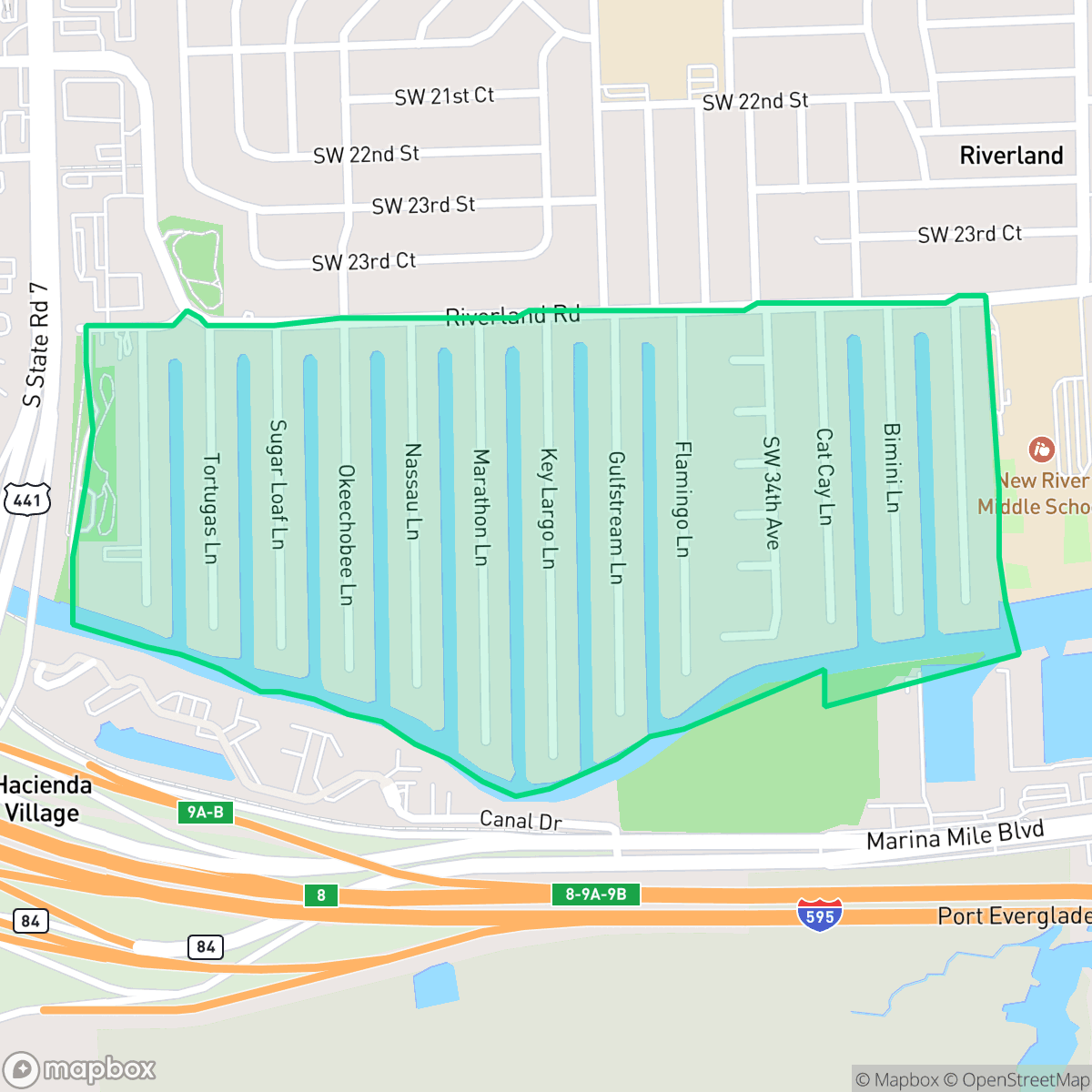
Lauderdale Isles emerged during the post-World War II real estate boom, with its official platting and initial development beginning in 1947. Originally characterized by low-lying mangroves and wetlands, the area was transformed through extensive dredging to create a residential enclave defined by its signature finger-like canals. This engineering effort provided over two miles of navigable waterfront with direct access to the New River and the Atlantic Ocean. The neighborhood’s name reflects this archipelago-inspired layout, which was marketed to attract postwar residents seeking a boating-centric lifestyle. The community’s architectural character is primarily defined by mid-century bungalow-style homes, often featuring cypress beams and terrazzo floors, which remain a hallmark of the neighborhood’s historic aesthetic and connection to the mid-century Florida coastal identity.
The neighborhood functions as a tranquil enclave, characterized by its suburban openness and significant tree cover. It is primarily residential, offering a distinct visual appeal through well-maintained estates and private boat docks that cater to a boating-centric lifestyle. The area maintains a politically diverse population with a balanced mix of age groups, fostering a community that feels less dense than many other parts of the city. Prospective residents should note that the area is car-dependent, as the lack of consistent sidewalks and nearby transit infrastructure limits pedestrian mobility. While the air quality is notably clean, the neighborhood faces acoustic challenges from nearby flight paths and highway traffic. Additionally, those considering the area should be aware of moderate flood risk and the presence of a nearby Superfund site, which may influence local environmental considerations according to iHuus data.
Neighborhood Scores Across 15 Qualities
Residential spacing provides a moderate level of separation, sitting slightly above the Fort Lauderdale average. While many homes are clustered closely along canal fronts, backyard vegetation often provides an additional buffer between neighbors.
Low-traffic streets and wide cul-de-sacs offer safe routes for pedestrians, although the lack of consistent sidewalks in some areas makes it less walkable than much of Fort Lauderdale. While major highway interchanges nearby lack pedestrian infrastructure, many residential pockets remain navigable for those preferring a quiet stroll.
Large, well-maintained homes with private pools and canal-front boat docks characterize much of the area; this level of aesthetic quality sits above the Fort Lauderdale average. While most streets feature affluent estates, some sections include more standard suburban housing and a mobile home park.
Private backyards and residential streets offer decent walking spaces for pets, but the area lacks large public parks. According to iHuus data, access to dedicated green space is slightly below the Fort Lauderdale average.
Characterized by a semi-rural feel, this area features frequent open land and scattered homes amidst significant tree cover. This layout provides a more spacious atmosphere than the typical Fort Lauderdale urban density according to iHuus data.
Primarily composed of established housing blocks and canal properties, this area offers a calm atmosphere with significantly less commercial activity than the Fort Lauderdale average. Most residents will find the landscape subdued and car-dependent, though occasional local dining and greenery like Riverland Woods Park provide limited points of interest.
Frequent disturbances from nearby transit infrastructure, such as busy freeways or flight paths, make this area noisier than the Fort Lauderdale average. According to iHuus data, residents may experience consistent acoustic disruption throughout the day.
Air quality remains consistently high with rare instances of elevated readings. This level of air purity is notably better than the Fort Lauderdale average, according to iHuus data.
Primarily residential in character, this area lacks heavy industrial zones but features occasional light commercial structures and a nearby storage facility that generates some freight traffic. Residents should be aware of a nearby Superfund site which may impact local environmental discussions regarding groundwater or soil.
Health insurance accessibility in Lauderdale Isles aligns with the Fort Lauderdale average. According to iHuus data, coverage levels among residents are moderate.
Political leanings in this area are relatively balanced between conservative and liberal perspectives, which is notably less partisan than the city average according to iHuus data.
Residents live alongside a balanced mix of young adults, families, and older populations. This age distribution is largely consistent with the broader Fort Lauderdale area, according to iHuus data.
Flood risk in this area is slightly higher than the Fort Lauderdale average, as official FEMA studies for this specific zone remain incomplete. Residents should account for moderate uncertainty regarding localized flood vulnerabilities according to iHuus data.
Address-Level Insights for Lauderdale Isles


iHuus Neighborhood Intelligence Insights
Get address-level neighborhood insights for Lauderdale Isles
- Street-level scores — see how individual blocks compare, not just neighborhood averages
- Micro-zone boundaries — identify quiet pockets, flood boundaries, and walkable clusters before you visit
- 15 dimensions in full — walkability, noise, air quality, school quality, insurance coverage, population age profile, urban/rural index, and more
- Boundary risk alerts — know if your address sits near a block boundary where scores drop, the kind of detail no listing will ever mention
- School insights — individual school ratings and insights, not just district-level data
- Compare before you commit — side-by-side data across neighborhoods, down to block precision
No credit card required
Compare with Any Neighborhood
| Dimension | Lauderdale Isles | Bal Harbour |
|---|---|---|
| 🚶 Walkabilityavg 6.6 | ||
| 🔊 Acoustic Comfortavg 3.24 | ||
| 🤫 Privacy Indexavg 5.33 | ||
| 🎨 Visual Appealavg 6.66 | ||
| 🐕 Dog Friendlinessavg 4.88 | ||
| 🗺️ Urban-Rural Indexavg 6.04 | ||
| ✨ Neighborhood Vibeavg 4.63 | ||
| 🏥 Health Insurance Coverageavg 6.16 | ||
| 🌿 Air Qualityavg 6.61 | ||
| 🏭 Industrial Proximityavg 6.49 | ||
| 🌊 Flood Safetyavg 3.54 | ||
| 🗳️ Ideological Leanavg 6.3 | ||
| 👥 Population Age Profileavg 5.2 | ||
| 🔥 Fire Safety | ||
| 🏫 School Quality |
Lauderdale Isles Rankings
School Districts Serving Lauderdale Isles
School Insights for Lauderdale Isles
Below average outcomes; significant attendance and academic challenges.
School Insights
See what's really behind every school rating near Lauderdale Isles
- Individual school ratings — each school's own score with outcome context, not just a district average
- Enrollment & class size data — student-to-teacher ratio and how it compares to the state average
- Full demographics breakdown — ethnicity and gender composition for every school in the enrollment zone
- Every school in the district — all schools within the enrollment boundary ranked by rating, not just the closest one
- Grade levels & benchmarks — elementary through high school, with below/above state-average flags
No credit card required