Lauderdale Harbours, Fort Lauderdale
Updated · 985 residents
Lauderdale Harbours is a quiet, upscale waterfront enclave defined by its deep-water canals and direct ocean access. The neighborhood offers a highly walkable environment with a mix of mid-century and contemporary estates, though residents should be prepared for high flood risks and notable noise from nearby transit routes.
Key Highlights
About Lauderdale Harbours
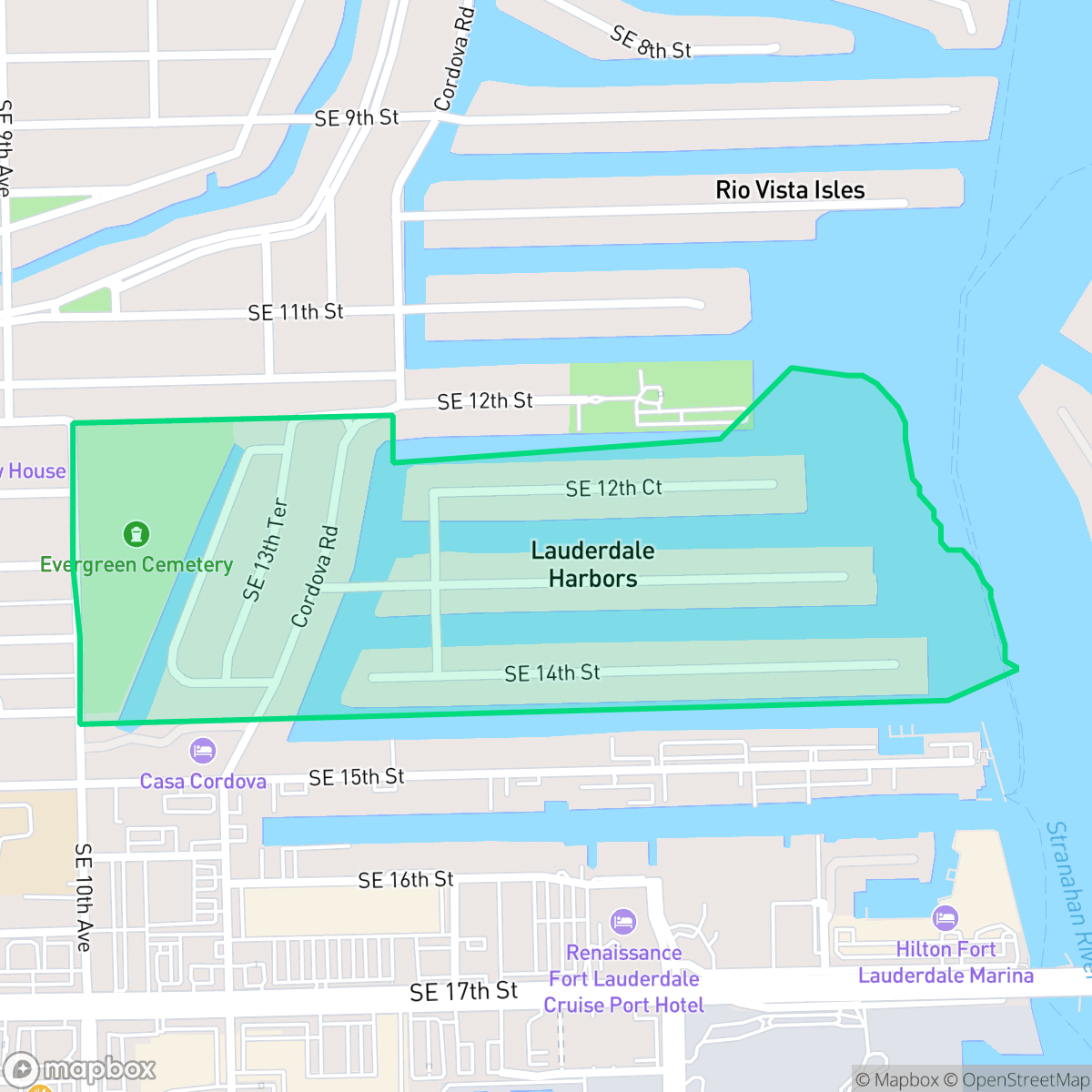
Lauderdale Harbours is a distinctive waterfront neighborhood in Fort Lauderdale, defined by its network of finger islands and deep-water canals. Originally undeveloped mangrove land, the area remained largely vacant following the 1926 Florida land boom until the post-World War II era. Its transformation into a premier boating enclave was catalyzed by its strategic proximity to Port Everglades and the 1948 establishment of the Lauderdale Marina, which served as a key nautical landmark. Today, the neighborhood is recognized for its direct ocean access without fixed bridges, attracting a maritime-focused community. The architectural character reflects a transition from mid-century Florida ranch-style homes to contemporary waterfront estates, maintaining a reputation as a quiet, residential enclave nestled near the city's bustling port and downtown districts.
The neighborhood is characterized by a dense network of finger islands and private docks that cater to a maritime-focused lifestyle. The landscape is primarily residential, featuring a blend of spacious waterfront estates and multi-story buildings that create a suburban feel without the presence of industrial facilities. Residents benefit from high levels of health insurance coverage and a diverse age demographic, fostering a stable community atmosphere that lacks the commercial density of the broader city.
While the area provides a scenic and walkable environment for daily errands, prospective residents should consider specific livability trade-offs. The neighborhood faces significant flood risks, requiring careful attention to insurance and property elevation. Additionally, the proximity to major transit corridors and flight paths results in elevated noise levels, and the high density of canal-front properties offers limited green space for pet owners. It is best suited for boaters and those who prioritize waterfront access over absolute quiet or extensive parkland.
Neighborhood Scores Across 15 Qualities
Residential spacing varies between dense apartment structures and detached homes with canal buffers. According to iHuus data, this neighborhood offers slightly more separation between neighbors than the Fort Lauderdale average.
Sidewalk networks and safe crossings are consistently available, making the area more walkable than much of Fort Lauderdale. While western arterial roads experience heavy traffic, many local errands can be completed on foot through well-defined paths.
Waterfront properties featuring private docks, yachts, and large pools provide a highly scenic environment that is notably more visually impressive than the Fort Lauderdale average. According to iHuus data, the area is characterized by spacious estates and premium amenities.
Canal-side housing density often leaves little sidewalk grass for pets, making the area slightly less dog friendly than the Fort Lauderdale average. While some residential verges and a central wooded park are available, much of the neighborhood is dominated by pavement and private lots.
A combination of waterfront properties and denser multi-story buildings creates a more developed landscape than the typical semi-rural character found elsewhere in Fort Lauderdale. According to iHuus data, the area features significant paved coverage and a dense mix of residential and commercial corridors.
Activity levels are slightly below the city average due to a primarily calm and residential landscape with limited commercial density. While some waterfront pockets offer walkable dining and hospitality, much of the area is characterized by low-key suburban streets and sparse local amenities.
Frequent noise disturbances occur due to the proximity of major transit routes and flight paths. According to iHuus data, acoustic comfort in this area is lower than the city average.
Air quality remains generally clear with infrequent periods of elevated readings, performing slightly better than the Fort Lauderdale average according to iHuus data.
Industrial presence is virtually nonexistent in this area, providing a much cleaner environment than the Fort Lauderdale average. According to iHuus data, there are no detected warehouses or heavy industrial facilities within the neighborhood boundaries.
Health insurance access is exceptionally high among residents, significantly outpacing the Fort Lauderdale average according to iHuus data.
Political leanings in this area trend more conservative than the Fort Lauderdale average, according to iHuus data.
A varied demographic of young professionals, families, and seniors resides here, representing a more even age distribution than the Fort Lauderdale average. According to iHuus data, this creates a balanced residential environment without a single dominant age group.
Located within a designated floodplain, this area faces significant flood risks that are slightly higher than the Fort Lauderdale average. Residents should expect requirements for flood insurance due to the susceptibility of the terrain.
Address-Level Insights for Lauderdale Harbours


iHuus Neighborhood Intelligence Insights
Get address-level neighborhood insights for Lauderdale Harbours
- Street-level scores — see how individual blocks compare, not just neighborhood averages
- Micro-zone boundaries — identify quiet pockets, flood boundaries, and walkable clusters before you visit
- 15 dimensions in full — walkability, noise, air quality, school quality, insurance coverage, population age profile, urban/rural index, and more
- Boundary risk alerts — know if your address sits near a block boundary where scores drop, the kind of detail no listing will ever mention
- School insights — individual school ratings and insights, not just district-level data
- Compare before you commit — side-by-side data across neighborhoods, down to block precision
No credit card required
Compare with Any Neighborhood
| Dimension | Lauderdale Harbours | Bal Harbour |
|---|---|---|
| 🚶 Walkabilityavg 6.6 | ||
| 🔊 Acoustic Comfortavg 3.24 | ||
| 🤫 Privacy Indexavg 5.33 | ||
| 🎨 Visual Appealavg 6.66 | ||
| 🐕 Dog Friendlinessavg 4.88 | ||
| 🗺️ Urban-Rural Indexavg 6.04 | ||
| ✨ Neighborhood Vibeavg 4.63 | ||
| 🏥 Health Insurance Coverageavg 6.16 | ||
| 🌿 Air Qualityavg 6.61 | ||
| 🏭 Industrial Proximityavg 6.49 | ||
| 🌊 Flood Safetyavg 3.54 | ||
| 🗳️ Ideological Leanavg 6.3 | ||
| 👥 Population Age Profileavg 5.2 | ||
| 🔥 Fire Safety | ||
| 🏫 School Quality |
Lauderdale Harbours Rankings
School Districts Serving Lauderdale Harbours
School Insights for Lauderdale Harbours
Below average outcomes; significant attendance and academic challenges.
School Insights
See what's really behind every school rating near Lauderdale Harbours
- Individual school ratings — each school's own score with outcome context, not just a district average
- Enrollment & class size data — student-to-teacher ratio and how it compares to the state average
- Full demographics breakdown — ethnicity and gender composition for every school in the enrollment zone
- Every school in the district — all schools within the enrollment boundary ranked by rating, not just the closest one
- Grade levels & benchmarks — elementary through high school, with below/above state-average flags
No credit card required