Lauderdale Beach, Fort Lauderdale
Updated · 765 residents
Lauderdale Beach is a quiet, residential enclave known for its luxurious coastal architecture and highly walkable streets. The area offers a secluded atmosphere with easy access to the beach, making it a desirable destination for those seeking a peaceful, mature community.
Key Highlights
About Lauderdale Beach
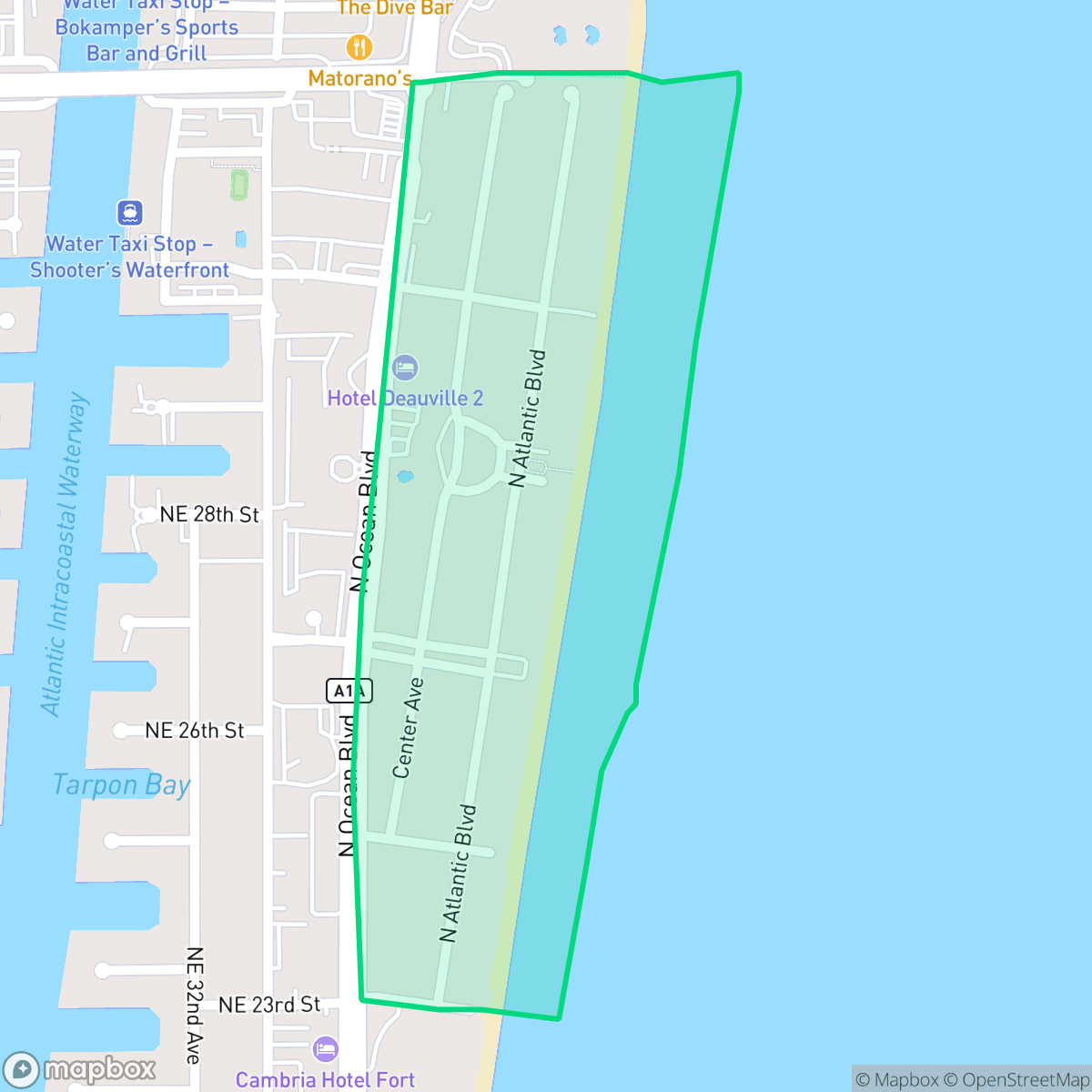
Lauderdale Beach is a distinct residential enclave located in Fort Lauderdale, situated north of the city's primary tourist-heavy beach district and south of Lauderdale-by-the-Sea. Unlike the commercialized central beach area, Lauderdale Beach is defined by its quiet, private character, consisting primarily of single-family homes and low-density residential development. The neighborhood serves as a coastal barrier island community that maintains a more secluded atmosphere compared to the broader Fort Lauderdale coastline. While the surrounding region experienced intense development during the 1920s land boom and subsequent mid-century tourism surges, Lauderdale Beach has largely preserved its identity as a residential-focused shoreline. It remains a notable example of the transition from the high-energy, hotel-dominated southern beach sections to the more intimate, small-scale coastal communities found further north along the Broward County coast.
This coastal district is defined by its low density and absence of heavy industry, providing a purely residential environment that contrasts with the busier sections of Fort Lauderdale. Residents enjoy exceptional pedestrian infrastructure, allowing for convenient navigation through the neighborhood grid and direct access to the shoreline. The visual appeal is marked by high-end waterfront estates and well-maintained green spaces, which contribute to a refined, scenic setting. While the area is generally quiet, it experiences occasional traffic noise from nearby thoroughfares, and the community maintains a balanced, politically diverse population. According to iHuus data, the neighborhood is well-suited for those who prioritize a mature, stable environment with high levels of health insurance coverage and a focus on private, coastal living. While the school district faces systemic challenges, the area remains an attractive option for homeowners looking for a balance between seclusion and access to regional amenities.
Neighborhood Scores Across 15 Qualities
Residential spacing varies between closely packed canal houses and high-rise towers, providing slightly more separation than the Fort Lauderdale average. According to iHuus data, this mix of single-family homes and vertical density creates a varied buffer between neighbors.
Pedestrian infrastructure is exceptional in this area, featuring a dense grid of streets with consistent sidewalks and ample crossings. This level of connectivity for walking and beach access is significantly higher than the Fort Lauderdale average.
High-end coastal architecture and private waterfront estates provide a highly scenic environment that is significantly more visually impressive than the Fort Lauderdale average. According to iHuus data, the area features premium amenities including private docks and large pools nestled among lush privacy buffers.
Landscaped verges and direct beach access provide reliable opportunities for dog walking, making the area more pet-friendly than the Fort Lauderdale average. While private yards are common, residents may find fewer large public parks within the immediate vicinity.
Primarily composed of coastal condos and canal-front homes, this area features much more open space and greenery than the denser urban core of Fort Lauderdale. According to iHuus data, the landscape lacks the continuous multi-storey development seen elsewhere in the city.
Concentrated dining, hotels, and parks create a lively atmosphere that is significantly more active than the Fort Lauderdale average. This high-density area offers easy access to social hubs and scenic outdoor spaces near the beach.
A steady hum of local traffic originates from a nearby busy street. According to iHuus data, acoustic comfort in this area is notably higher than the Fort Lauderdale city average.
Air quality levels fluctuate between acceptable and unhealthy periods, sitting slightly below the Fort Lauderdale average. Sensitive groups may experience occasional concern during certain days according to iHuus data.
No warehouses, heavy industry, or hazardous facilities are present within this coastal district. According to iHuus data, the area remains strictly residential and recreational, significantly lower in industrial presence than the Fort Lauderdale average.
Health insurance access among residents is exceptionally high, significantly outpacing the Fort Lauderdale average according to iHuus data.
Political views in this area are split relatively evenly between conservative and liberal leanings, making it less politically skewed than the Fort Lauderdale average.
Demographics lean toward older adults with a smaller population of younger residents, representing a higher concentration of mature adults than the Fort Lauderdale average. This age profile is reflected in local census data analyzed by iHuus.
Flood safety levels in this area are slightly above the Fort Lauderdale average, though official FEMA studies for this specific location remain incomplete. According to iHuus data, residents should remain cautious as the precise level of risk is currently undetermined.
Address-Level Insights for Lauderdale Beach


iHuus Neighborhood Intelligence Insights
Get address-level neighborhood insights for Lauderdale Beach
- Street-level scores — see how individual blocks compare, not just neighborhood averages
- Micro-zone boundaries — identify quiet pockets, flood boundaries, and walkable clusters before you visit
- 15 dimensions in full — walkability, noise, air quality, school quality, insurance coverage, population age profile, urban/rural index, and more
- Boundary risk alerts — know if your address sits near a block boundary where scores drop, the kind of detail no listing will ever mention
- School insights — individual school ratings and insights, not just district-level data
- Compare before you commit — side-by-side data across neighborhoods, down to block precision
No credit card required
Compare with Any Neighborhood
| Dimension | Lauderdale Beach | Bal Harbour |
|---|---|---|
| 🚶 Walkabilityavg 6.6 | ||
| 🔊 Acoustic Comfortavg 3.24 | ||
| 🤫 Privacy Indexavg 5.33 | ||
| 🎨 Visual Appealavg 6.66 | ||
| 🐕 Dog Friendlinessavg 4.88 | ||
| 🗺️ Urban-Rural Indexavg 6.04 | ||
| ✨ Neighborhood Vibeavg 4.63 | ||
| 🏥 Health Insurance Coverageavg 6.16 | ||
| 🌿 Air Qualityavg 6.61 | ||
| 🏭 Industrial Proximityavg 6.49 | ||
| 🌊 Flood Safetyavg 3.54 | ||
| 🗳️ Ideological Leanavg 6.3 | ||
| 👥 Population Age Profileavg 5.2 | ||
| 🔥 Fire Safety | ||
| 🏫 School Quality |
Lauderdale Beach Rankings
School Districts Serving Lauderdale Beach
School Insights for Lauderdale Beach
Below average outcomes; significant attendance and academic challenges.
School Insights
See what's really behind every school rating near Lauderdale Beach
- Individual school ratings — each school's own score with outcome context, not just a district average
- Enrollment & class size data — student-to-teacher ratio and how it compares to the state average
- Full demographics breakdown — ethnicity and gender composition for every school in the enrollment zone
- Every school in the district — all schools within the enrollment boundary ranked by rating, not just the closest one
- Grade levels & benchmarks — elementary through high school, with below/above state-average flags
No credit card required