Home Beautiful Park, Fort Lauderdale
Updated · 821 residents
Home Beautiful Park is a quiet, mid-century enclave characterized by its grid-based street layout and accessible pedestrian environment. While it offers a relatively peaceful atmosphere with fresh air quality, residents should be aware of the higher vulnerability to flooding and limited private outdoor space.
Key Highlights
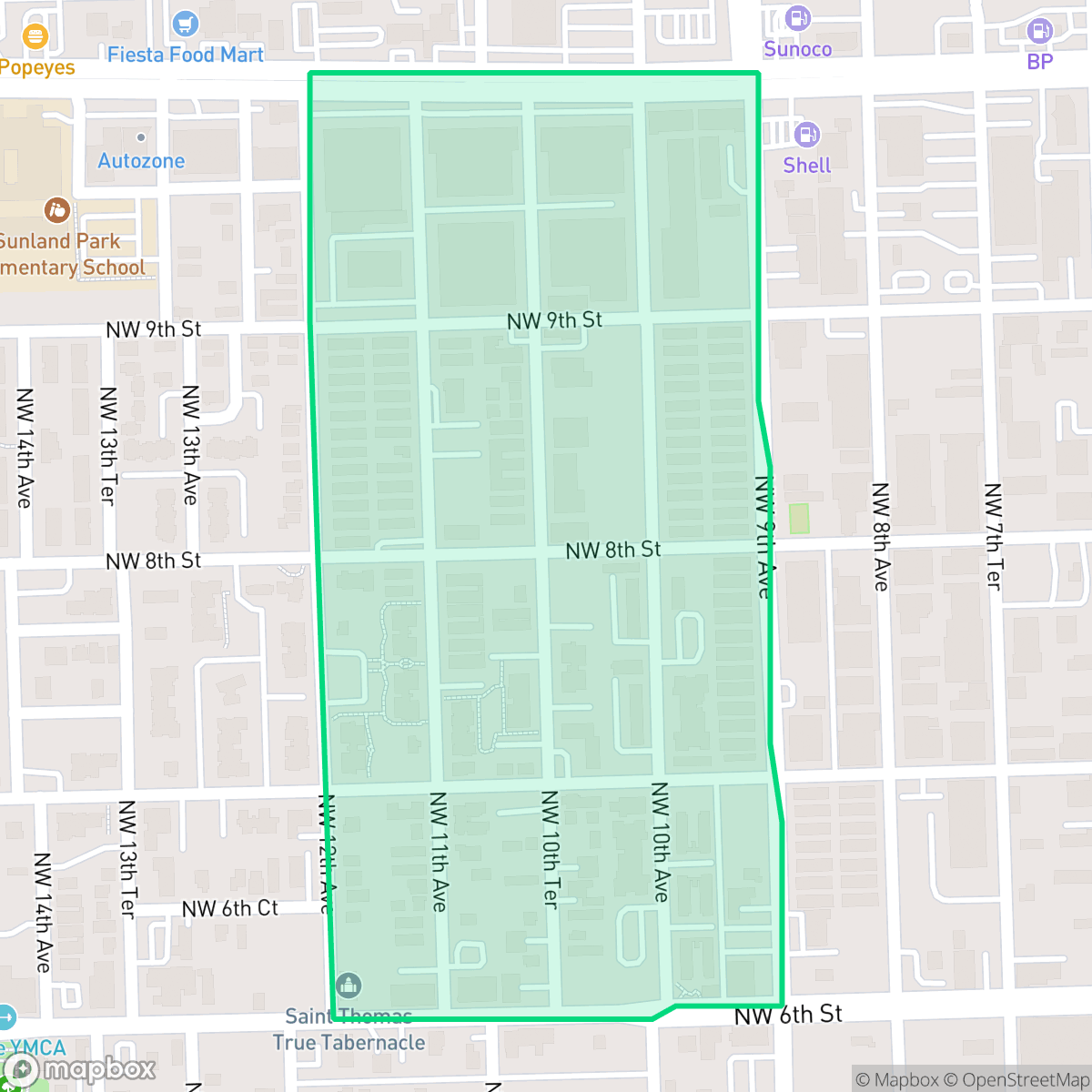
About Home Beautiful Park
Home Beautiful Park is an established, mid-century residential neighborhood in Fort Lauderdale, characterized by its collection of ranch-style homes primarily constructed between 1955 and 1970. The community is defined by its tree-lined streets and a namesake green space that serves as a central hub for local gatherings and recreation. While the neighborhood maintains a quiet, suburban atmosphere, it is noted for its strategic location near major transportation corridors, providing residents with access to the city's downtown and coastal amenities. The area is recognized for its stable, family-oriented character and consistent owner-occupancy, distinguishing it as a mature residential enclave within the broader Fort Lauderdale landscape.
The area functions as a stable residential pocket that blends suburban tranquility with proximity to major transit corridors. Residents benefit from a walkable street grid that facilitates local movement, while the surrounding environment remains notably quieter than the broader Fort Lauderdale average. The community maintains a distinctively liberal political leaning, reflecting a diverse demographic mix that includes young professionals and families. Prospective residents should consider specific trade-offs, particularly regarding property maintenance and environmental factors. The neighborhood faces a higher risk of flooding, which typically necessitates flood insurance, and the density of the housing stock results in limited personal privacy compared to other parts of the city. Additionally, while the area is generally accessible on foot, pet owners may find the lack of dedicated public green spaces and narrow sidewalks restrictive for daily dog walking. It is best suited for those prioritizing a central location and a quiet, consistent residential environment over expansive private grounds.
Neighborhood Scores Across 15 Qualities
Close proximity between structures and shared walls in multi-family areas limit personal seclusion. According to iHuus data, this neighborhood offers less privacy than the Fort Lauderdale average due to more densely packed residential clusters.
A grid-based street layout with sidewalks and safe crossings makes most trips on foot feasible. According to iHuus data, pedestrian accessibility in this area is slightly higher than the Fort Lauderdale average.
Visual landscapes consist of standard tract housing, apartment complexes, and industrial warehouses. This area offers less greenery and more dense development than the Fort Lauderdale average according to iHuus data.
Walking routes for dogs are limited by narrow sidewalks and a lack of accessible public parks. Most greenery in this area consists of private residential yards, making it less dog-friendly than much of Fort Lauderdale according to iHuus data.
Open land and scattered greenery provide a more spacious atmosphere than the typical Fort Lauderdale urban core. This area features a mix of low-density residential pockets and multi-unit complexes, offering a slightly less dense environment than the city average according to iHuus data.
This area offers a higher level of activity than the Fort Lauderdale average, featuring a mix of suburban residential pockets and lively commercial corridors with diverse dining options. According to iHuus data, residents can find a steady presence of local restaurants and amenities near community centers and transit hubs.
Acoustic levels are notably lower than the Fort Lauderdale average, characterized primarily by infrequent distant traffic or train sounds. According to iHuus data, residents can expect a relatively peaceful atmosphere with minimal local noise disruption.
Air quality remains consistently fresh with rare instances of poor ventilation, performing notably better than the Fort Lauderdale average according to iHuus data.
Primarily residential character with only minor light commercial activity. Some northern areas contain warehouses and electrical substations, though industrial density remains lower than the Fort Lauderdale average according to iHuus data.
Health insurance accessibility is lower than the Fort Lauderdale average. According to iHuus data, a smaller portion of the resident population possesses comprehensive health coverage compared to most other areas in the city.
Voting patterns and census indicators in this area reflect a much more liberal leaning than the Fort Lauderdale average, according to iHuus data.
Residents live alongside a varied mix of young professionals, families, and seniors. This demographic spread is slightly lower than the Fort Lauderdale average according to iHuus data.
Properties within the 100-year floodplain face significant inundation risks, which typically necessitates flood insurance. According to iHuus data, this area presents a higher vulnerability to flooding than the Fort Lauderdale average.
Address-Level Insights for Home Beautiful Park


iHuus Neighborhood Intelligence Insights
Get address-level neighborhood insights for Home Beautiful Park
- Street-level scores — see how individual blocks compare, not just neighborhood averages
- Micro-zone boundaries — identify quiet pockets, flood boundaries, and walkable clusters before you visit
- 15 dimensions in full — walkability, noise, air quality, school quality, insurance coverage, population age profile, urban/rural index, and more
- Boundary risk alerts — know if your address sits near a block boundary where scores drop, the kind of detail no listing will ever mention
- School insights — individual school ratings and insights, not just district-level data
- Compare before you commit — side-by-side data across neighborhoods, down to block precision
No credit card required
Compare with Any Neighborhood
| Dimension | Home Beautiful Park | Bal Harbour |
|---|---|---|
| 🚶 Walkabilityavg 6.6 | ||
| 🔊 Acoustic Comfortavg 3.24 | ||
| 🤫 Privacy Indexavg 5.33 | ||
| 🎨 Visual Appealavg 6.66 | ||
| 🐕 Dog Friendlinessavg 4.88 | ||
| 🗺️ Urban-Rural Indexavg 6.04 | ||
| ✨ Neighborhood Vibeavg 4.63 | ||
| 🏥 Health Insurance Coverageavg 6.16 | ||
| 🌿 Air Qualityavg 6.61 | ||
| 🏭 Industrial Proximityavg 6.49 | ||
| 🌊 Flood Safetyavg 3.54 | ||
| 🗳️ Ideological Leanavg 6.3 | ||
| 👥 Population Age Profileavg 5.2 | ||
| 🔥 Fire Safety | ||
| 🏫 School Quality |
Home Beautiful Park Rankings
School Districts Serving Home Beautiful Park
School Insights for Home Beautiful Park
Below average outcomes; significant attendance and academic challenges.
School Insights
See what's really behind every school rating near Home Beautiful Park
- Individual school ratings — each school's own score with outcome context, not just a district average
- Enrollment & class size data — student-to-teacher ratio and how it compares to the state average
- Full demographics breakdown — ethnicity and gender composition for every school in the enrollment zone
- Every school in the district — all schools within the enrollment boundary ranked by rating, not just the closest one
- Grade levels & benchmarks — elementary through high school, with below/above state-average flags
No credit card required