Golden Heights, Fort Lauderdale
Updated · 250 residents
Golden Heights is a historically significant neighborhood in northwest Fort Lauderdale defined by its strong community heritage and mid-century residential character. The area offers a semi-rural atmosphere with cleaner air than the city average and moderate walkability, though residents should be aware of nearby industrial activity and rail corridors.
Key Highlights
About Golden Heights
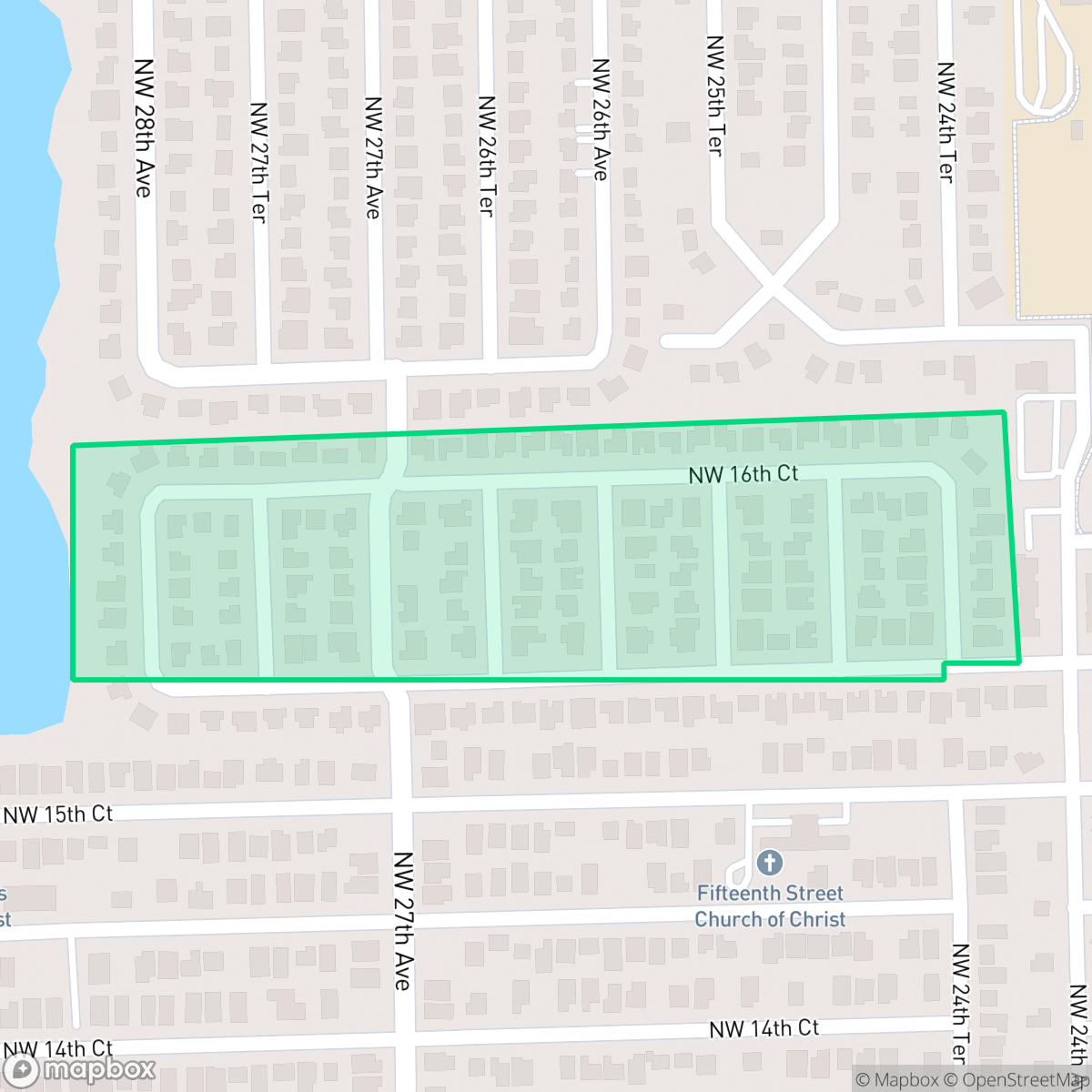
Golden Heights is a historically Black residential neighborhood in northwest Fort Lauderdale, characterized by its deep-rooted community heritage and working-class origins. Developed primarily between the 1940s and 1980s, the area features single-family homes that reflect mid-century Florida residential architecture. The neighborhood has long served as a center for community activism and cultural identity, maintaining a strong bond among its long-term residents. Its history is closely intertwined with the development of west Fort Lauderdale, often facing challenges related to industrial encroachment and land use. Today, Golden Heights remains a distinct, officially recognized neighborhood known for its resilience, active neighborhood association, and its ongoing role as a hub for Caribbean and Southern culinary traditions that define the local character.
The neighborhood maintains a quiet and functional atmosphere, characterized by a grid of single-family homes and scattered green spaces that provide a more spacious feel than many other parts of the city. While it is known for its strong civic engagement and cultural identity, the landscape is largely defined by modest residential architecture and limited commercial development. Residents benefit from higher air quality compared to the regional average, contributing to a tranquil environment despite the presence of nearby major transit routes.
Prospective residents should consider the proximity to industrial sites, which introduces considerations regarding environmental quality and heavy freight traffic. While the area offers a generally quiet lifestyle with a liberal ideological leaning, it is best suited for those who prioritize community-focused living over high-density urban amenities. The neighborhood provides a functional, steady environment, though access to certain public services and health insurance coverage remains a factor for families to evaluate when considering the local school district context.
Neighborhood Scores Across 15 Qualities
Residential spacing is consistent with the city average, offering a balance of density and neighborly buffers. Houses are primarily arranged in an urban grid with varying distances between structures according to iHuus data.
Residential streets offer safe pedestrian access, although the presence of a major highway and rail corridor makes walking slightly more challenging than in other parts of Fort Lauderdale. Sidewalk availability varies across the area, but low traffic on certain side streets allows for easy movement according to iHuus data.
Standard tract housing with uniform rooflines and small yards defines the landscape, which presents a slightly less varied visual character than the Fort Lauderdale average. According to iHuus data, homes are closely spaced with limited private pool density.
Access to public greenery for pets varies across the area, as some sections feature large central parks while others consist of dense residential streets with limited sidewalk verges. According to iHuus data, the availability of open space for dogs is higher than the Fort Lauderdale average.
Open land and scattered greenery provide a more spacious, semi-rural atmosphere than much of Fort Lauderdale. According to iHuus data, the area features a mix of residential grids and significant green space that feels less densely developed than the city average.
Commercial activity is sparse and largely centered around local parks and transit corridors. This area offers a subdued atmosphere that is less active than the Fort Lauderdale average.
Steady traffic sounds from nearby thoroughfares are present, though acoustic levels remain more tranquil than the typical experience found elsewhere in Fort Lauderdale according to iHuus data.
Air quality remains consistently high with infrequent periods of poor air circulation. This level of cleanliness is notably better than the Fort Lauderdale average, according to iHuus data.
Heavy freight traffic and loading dock activity from nearby storage facilities are notable features of this area. According to iHuus data, the proximity to a Superfund site also presents potential environmental concerns regarding soil and groundwater quality that are much more significant here than in the rest of Fort Lauderdale.
Health insurance accessibility in Golden Heights is slightly below the Fort Lauderdale average, according to iHuus data.
Voting patterns and census indicators show a significantly more liberal leaning than the Fort Lauderdale average, according to iHuus data.
A varied demographic of young professionals, families, and seniors resides here; this-spread is slightly less concentrated than the Fort Lauderdale average according to iHuus data.
Flood safety levels in Golden Heights are slightly higher than the Fort Lauderdale average, though official FEMA assessments for this specific area remain incomplete.
Address-Level Insights for Golden Heights


iHuus Neighborhood Intelligence Insights
Get address-level neighborhood insights for Golden Heights
- Street-level scores — see how individual blocks compare, not just neighborhood averages
- Micro-zone boundaries — identify quiet pockets, flood boundaries, and walkable clusters before you visit
- 15 dimensions in full — walkability, noise, air quality, school quality, insurance coverage, population age profile, urban/rural index, and more
- Boundary risk alerts — know if your address sits near a block boundary where scores drop, the kind of detail no listing will ever mention
- School insights — individual school ratings and insights, not just district-level data
- Compare before you commit — side-by-side data across neighborhoods, down to block precision
No credit card required
Compare with Any Neighborhood
| Dimension | Golden Heights | Bal Harbour |
|---|---|---|
| 🚶 Walkabilityavg 6.6 | ||
| 🔊 Acoustic Comfortavg 3.24 | ||
| 🤫 Privacy Indexavg 5.33 | ||
| 🎨 Visual Appealavg 6.66 | ||
| 🐕 Dog Friendlinessavg 4.88 | ||
| 🗺️ Urban-Rural Indexavg 6.04 | ||
| ✨ Neighborhood Vibeavg 4.63 | ||
| 🏥 Health Insurance Coverageavg 6.16 | ||
| 🌿 Air Qualityavg 6.61 | ||
| 🏭 Industrial Proximityavg 6.49 | ||
| 🌊 Flood Safetyavg 3.54 | ||
| 🗳️ Ideological Leanavg 6.3 | ||
| 👥 Population Age Profileavg 5.2 | ||
| 🔥 Fire Safety | ||
| 🏫 School Quality |
Golden Heights Rankings
School Districts Serving Golden Heights
School Insights for Golden Heights
Below average outcomes; significant attendance and academic challenges.
School Insights
See what's really behind every school rating near Golden Heights
- Individual school ratings — each school's own score with outcome context, not just a district average
- Enrollment & class size data — student-to-teacher ratio and how it compares to the state average
- Full demographics breakdown — ethnicity and gender composition for every school in the enrollment zone
- Every school in the district — all schools within the enrollment boundary ranked by rating, not just the closest one
- Grade levels & benchmarks — elementary through high school, with below/above state-average flags
No credit card required