Galt Mile, Fort Lauderdale
Updated · 2,772 residents
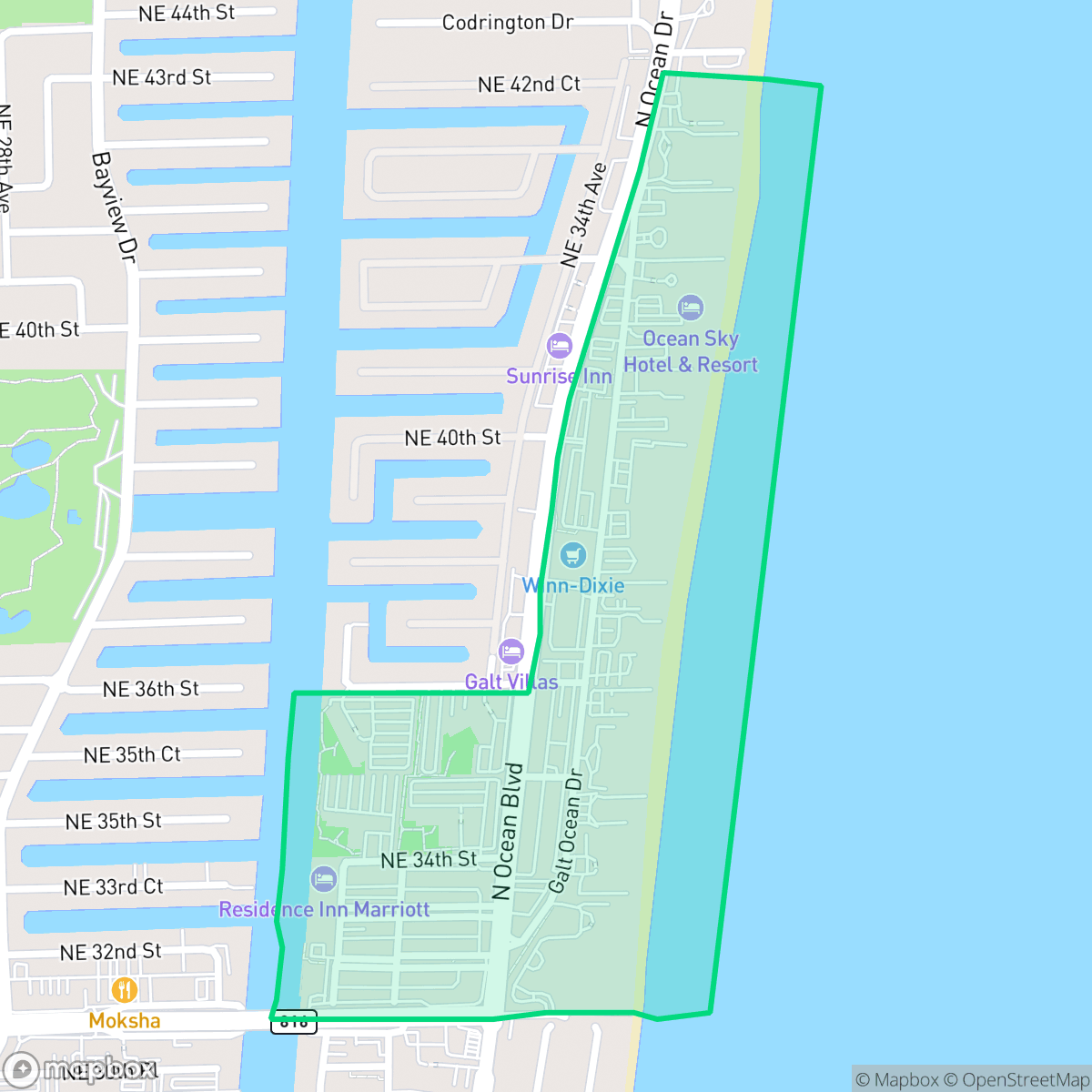
Galt Mile is a dense, high-rise coastal enclave defined by its upscale waterfront aesthetic and high-energy social atmosphere. The neighborhood offers exceptional walkability and immediate access to the Atlantic Ocean, making it a popular choice for those seeking a vibrant, pedestrian-oriented lifestyle.
Key Highlights
About Galt Mile
The Galt Mile neighborhood in Fort Lauderdale originated from a massive tract of land purchased by Arthur Galt in the 1920s. Originally known as the Galt Ocean Mile, the area remained largely undeveloped until the mid-20th century. Following the post-WWII building boom, the neighborhood transformed into a prominent corridor of high-rise luxury condominiums, which define its distinct skyline today. The area is anchored by the Galt Ocean Mile community, a dense residential strip situated between the Atlantic Ocean and the Intracoastal Waterway. It is known for its unique governance through the Galt Mile Community Association, which has played a significant role in local advocacy and neighborhood preservation since its inception in the 1970s. The neighborhood remains a signature example of mid-century coastal urban development in South Florida.
The area is characterized by its vertical skyline of luxury condominiums and a bustling, active streetscape. With no industrial presence, the environment remains focused on residential, commercial, and recreational waterfront use. Residents benefit from extensive sidewalk networks and pedestrian infrastructure that make navigating local dining, bars, and social corridors convenient. The visual environment is polished and affluent, featuring manicured landscapes and direct access to coastal views, according to iHuus data.
The neighborhood is best suited for those who prioritize a walkable, urban coastal lifestyle over expansive private green space. While the area offers high health insurance coverage and a balanced political environment, residents should be aware of moderate traffic noise and occasional air quality fluctuations. The community maintains a mature demographic profile, and while the broader school district faces ongoing structural and budgetary challenges, the area remains a stable hub for those who enjoy a dense, high-energy living environment.
Neighborhood Scores Across 15 Qualities
Residential spacing varies between dense high-rise towers and single-family homes, resulting in a privacy level that is roughly average for Fort Lauderdale. Some waterfront properties and apartment complexes feature minimal separation from neighbors, according to iHuus data.
Extensive sidewalk networks and dedicated pedestrian crossings make navigating the area on foot very easy. This level of walkability is significantly higher than the Fort Lauderdale average, with infrastructure including pedestrian bridges over canals and continuous paths along coastal roads.
Manicured landscapes, luxury high-rises, and private docks with yachts characterize this area. According to iHuus data, the visual environment is notably more polished and affluent than the Fort Lauderdale average.
Dog walking options are primarily restricted to narrow sidewalk verges and the nearby beach, as most greenery consists of private waterfront yards. This level of accessibility for pets is roughly in line with the Fort Lauderdale average according to iHuus data.
High-rise towers and dense building clusters dominate the landscape, creating a much more built-up environment than the Fort Lauderdale average. This area features a concentrated urban feel with significant vertical development and minimal open green space.
Active dining, bars, and waterfront social spaces create a bustling atmosphere that is significantly more lively than the Fort Lauderdale average. Residents can expect a dense concentration of high-activity corridors and walkable coastal hubs according to iHuus data.
Steady traffic sounds from nearby busy streets are a constant presence, though acoustic levels remain notably higher than the Fort Lauderdale city average according to iHuus data.
Occasional periods of unhealthy air may affect sensitive groups, as air quality in this area is slightly lower than the Fort Lauderdale average according to iHuus data.
Industrial facilities and warehouses are entirely absent from this district, which consists solely of residential, commercial, and recreational waterfront areas. This lack of heavy industry makes the area significantly cleaner and more tranquil than the Fort Lauderdale average.
Health insurance accessibility is exceptionally high in this area, significantly outpacing the Fort Lauderdale average. According to iHuus data, nearly all residents maintain comprehensive coverage.
Political perspectives in Galt Mile are roughly evenly split, representing a more moderate landscape than the more liberal leaning average seen across Fort Lauderdale.
Older adults represent the majority of the local population, making this area notably more mature than much of Fort Lauderdale. According to iHuus data, there is only a modest presence of younger residents in the neighborhood.
Flood risk in this area is higher than the Fort Lauderdale average, though official FEMA studies for this specific zone are currently incomplete. Residents should remain aware of potential vulnerabilities despite the lack of a detailed federal flood study.
Address-Level Insights for Galt Mile


iHuus Neighborhood Intelligence Insights
Get address-level neighborhood insights for Galt Mile
- Street-level scores — see how individual blocks compare, not just neighborhood averages
- Micro-zone boundaries — identify quiet pockets, flood boundaries, and walkable clusters before you visit
- 15 dimensions in full — walkability, noise, air quality, school quality, insurance coverage, population age profile, urban/rural index, and more
- Boundary risk alerts — know if your address sits near a block boundary where scores drop, the kind of detail no listing will ever mention
- School insights — individual school ratings and insights, not just district-level data
- Compare before you commit — side-by-side data across neighborhoods, down to block precision
No credit card required
Compare with Any Neighborhood
| Dimension | Galt Mile | Bal Harbour |
|---|---|---|
| 🚶 Walkabilityavg 6.6 | ||
| 🔊 Acoustic Comfortavg 3.24 | ||
| 🤫 Privacy Indexavg 5.33 | ||
| 🎨 Visual Appealavg 6.66 | ||
| 🐕 Dog Friendlinessavg 4.88 | ||
| 🗺️ Urban-Rural Indexavg 6.04 | ||
| ✨ Neighborhood Vibeavg 4.63 | ||
| 🏥 Health Insurance Coverageavg 6.16 | ||
| 🌿 Air Qualityavg 6.61 | ||
| 🏭 Industrial Proximityavg 6.49 | ||
| 🌊 Flood Safetyavg 3.54 | ||
| 🗳️ Ideological Leanavg 6.3 | ||
| 👥 Population Age Profileavg 5.2 | ||
| 🔥 Fire Safety | ||
| 🏫 School Quality |
Galt Mile Rankings
School Districts Serving Galt Mile
School Insights for Galt Mile
Below average outcomes; significant attendance and academic challenges.
School Insights
See what's really behind every school rating near Galt Mile
- Individual school ratings — each school's own score with outcome context, not just a district average
- Enrollment & class size data — student-to-teacher ratio and how it compares to the state average
- Full demographics breakdown — ethnicity and gender composition for every school in the enrollment zone
- Every school in the district — all schools within the enrollment boundary ranked by rating, not just the closest one
- Grade levels & benchmarks — elementary through high school, with below/above state-average flags
No credit card required