Sand Key Civic Association, Clearwater
Updated · 1,014 residents
Sand Key is a quiet, upscale barrier island community characterized by its polished aesthetic and high walkability. While the area offers residents access to connected green spaces and a pet-friendly environment, it remains a tranquil residential enclave with persistent noise from nearby transit infrastructure.
Key Highlights
About Sand Key Civic Association
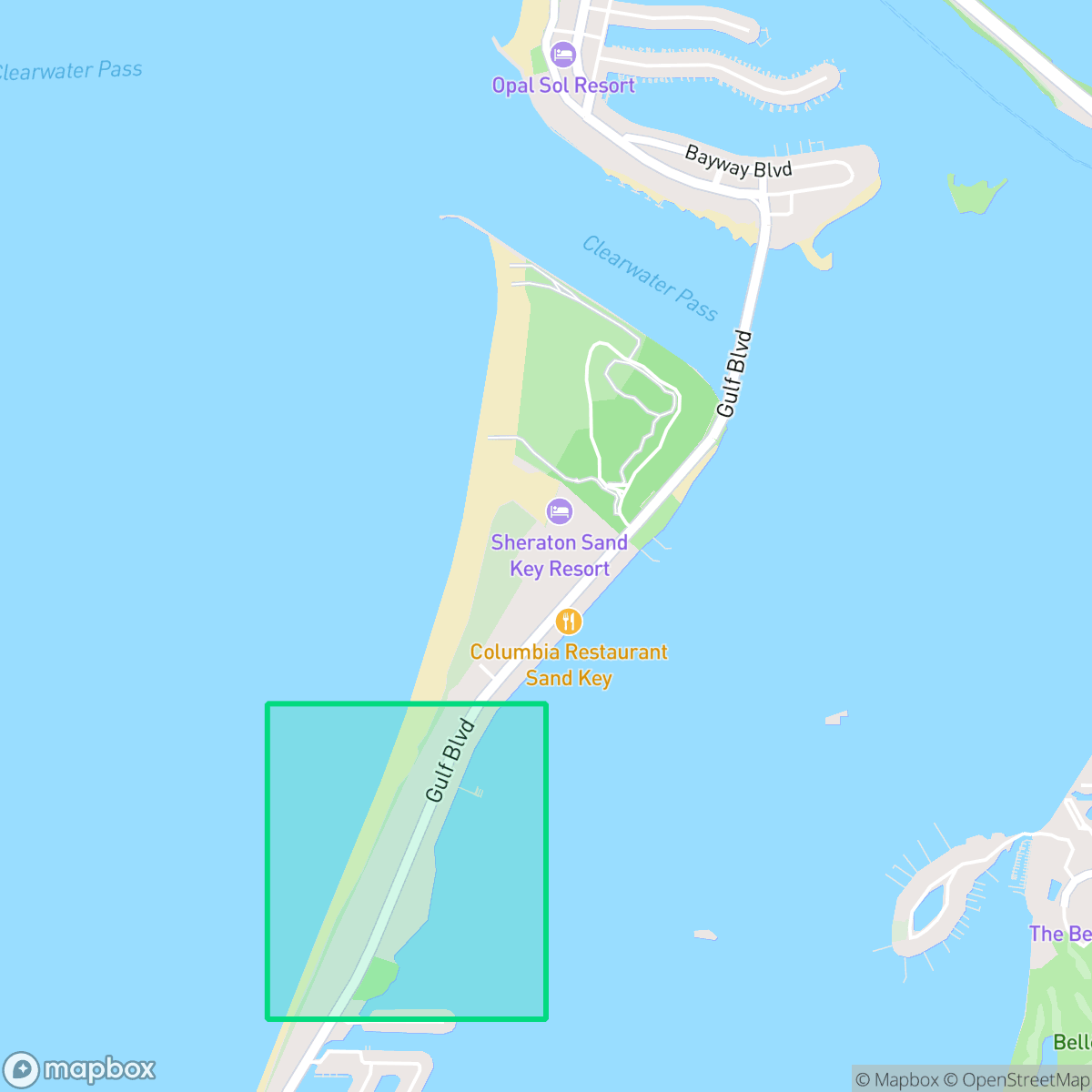
Sand Key, a barrier island in Clearwater, Florida, underwent a dramatic transformation from an undeveloped, sandy retreat into a high-density residential community. Through the 1960s, the island was largely a private haven owned by Ed Wright and a popular, informal destination for local beachgoers. Following the 1969 purchase of 170 acres by U.S. Steel, the landscape shifted toward high-rise condominium development. The Sand Key Civic Association, established in 1991 by Al Lijewski, emerged as a vital advocacy group for the island’s growing population of permanent and seasonal residents. The association has played a significant role in managing the neighborhood’s infrastructure, successfully lobbying for local beach renourishment projects and the development of public amenities, effectively balancing the needs of a modern, upscale coastal community with the island's natural environment.
The neighborhood functions as a peaceful, residential retreat on the Gulf coast, defined by its well-maintained properties and a complete absence of industrial activity. Residents enjoy a highly walkable environment with easy access to coastal parks and pedestrian-friendly paths, which are particularly well-suited for dog owners. The demographic is largely composed of mature adults, contributing to a stable and established community atmosphere that prioritizes quiet living over high-density commercial activity.
Prospective residents should be aware of specific environmental and logistical trade-offs. The area faces significant flood vulnerability due to its location, which typically necessitates careful consideration of insurance requirements. Additionally, while the community is physically serene, it experiences notable acoustic interruptions from nearby transit corridors and flight paths. Air quality can also be a concern for sensitive groups, and those considering the area should weigh these factors against the benefits of the neighborhood's upscale visual appeal and the high standard of local health insurance coverage.
Neighborhood Scores Across 15 Qualities
Residential spacing provides a moderate amount of buffer between neighbors, which is slightly higher than the Clearwater average according to iHuus data.
Sidewalks and safe crossings are readily available, making much of the area accessible on foot. This level of pedestrian infrastructure is significantly higher than the Clearwater average according to iHuus data.
Large residential properties and frequent upscale amenities create a highly polished aesthetic that sits well above the Clearwater average, according to iHuus data.
Connected green spaces and wide, low-traffic paths make this area highly suitable for dog owners. According to iHuus data, the level of dog friendliness here is notably higher than the Clearwater average.
Residential streets and green spaces are distributed in roughly equal measure, providing a suburban character that is less densely developed than the Clearwater average.
Primarily a calm, suburban landscape, this area lacks concentrated commercial activity but offers moderate walkability near coastal parks. The neighborhood's energy levels are slightly below the Clearwater average due to its focus on residential tranquility over urban density.
Frequent disturbances from nearby transit infrastructure, such as busy roadways or flight paths, make this area significantly noisier than the Clearwater average. According to iHuus data, residents should expect persistent acoustic interruptions throughout the day.
Frequent unhealthy air quality levels pose a significant risk to sensitive groups. According to iHuus data, these conditions are typical for this area and match the city average.
Industrial activity and heavy warehouses are absent from this area, which contains only residential zones, light commercial services, and parks. This lack of industrial presence is notably higher than the Clearwater average, according to iHuus data.
Health insurance access among residents is notably higher than the Clearwater average, according to iHuus data.
Conservative residents form the majority of this area, representing a more conservative leaning than the broader Clearwater average. According to iHuus data, there is a modest presence of opposing political viewpoints within the community.
An older adult majority characterizes the area, with a presence of younger residents that is more modest than seen in the wider Clearwater area. According to iHuus data, this demographic profile indicates a more established and less transient community.
Significant flood vulnerability exists due to the neighborhood's location within a designated floodplain. According to iHuus data, this level of risk is considerably higher than the Clearwater average and typically necessitates flood insurance.
Address-Level Insights for Sand Key Civic Association


iHuus Neighborhood Intelligence Insights
Get address-level neighborhood insights for Sand Key Civic Association
- Street-level scores — see how individual blocks compare, not just neighborhood averages
- Micro-zone boundaries — identify quiet pockets, flood boundaries, and walkable clusters before you visit
- 15 dimensions in full — walkability, noise, air quality, school quality, insurance coverage, population age profile, urban/rural index, and more
- Boundary risk alerts — know if your address sits near a block boundary where scores drop, the kind of detail no listing will ever mention
- School insights — individual school ratings and insights, not just district-level data
- Compare before you commit — side-by-side data across neighborhoods, down to block precision
No credit card required
Compare with Any Neighborhood
| Dimension | Sand Key Civic Association | Alcove Homeowners Association, Inc |
|---|---|---|
| 🚶 Walkabilityavg 7.25 | ||
| 🔊 Acoustic Comfortavg 4.07 | ||
| 🤫 Privacy Indexavg 5.66 | ||
| 🎨 Visual Appealavg 6.72 | ||
| 🐕 Dog Friendlinessavg 6.21 | ||
| 🗺️ Urban-Rural Indexavg 6.51 | ||
| ✨ Neighborhood Vibeavg 4.03 | ||
| 🏥 Health Insurance Coverageavg 6.32 | ||
| 🌿 Air Qualityavg 1.98 | ||
| 🏭 Industrial Proximityavg 7.82 | ||
| 🌊 Flood Safetyavg 5.71 | ||
| 🗳️ Ideological Leanavg 3.22 | ||
| 👥 Population Age Profileavg 5.73 | ||
| 🔥 Fire Safety | ||
| 🏫 School Quality |
Sand Key Civic Association Rankings
School Districts Serving Sand Key Civic Association
School Insights for Sand Key Civic Association
Below average outcomes; significant attendance and academic challenges.
School Insights
See what's really behind every school rating near Sand Key Civic Association
- Individual school ratings — each school's own score with outcome context, not just a district average
- Enrollment & class size data — student-to-teacher ratio and how it compares to the state average
- Full demographics breakdown — ethnicity and gender composition for every school in the enrollment zone
- Every school in the district — all schools within the enrollment boundary ranked by rating, not just the closest one
- Grade levels & benchmarks — elementary through high school, with below/above state-average flags
No credit card required