Country Club Estates Homeowners Assoc, Clearwater
Updated · 618 residents
Country Club Estates is a historic enclave defined by its 1920s Craftsman architecture and tree-lined streets. Residents benefit from high walkability and excellent access to green spaces, making it a popular choice for those who prefer a pedestrian-friendly lifestyle.
Key Highlights
About Country Club Estates Homeowners Assoc
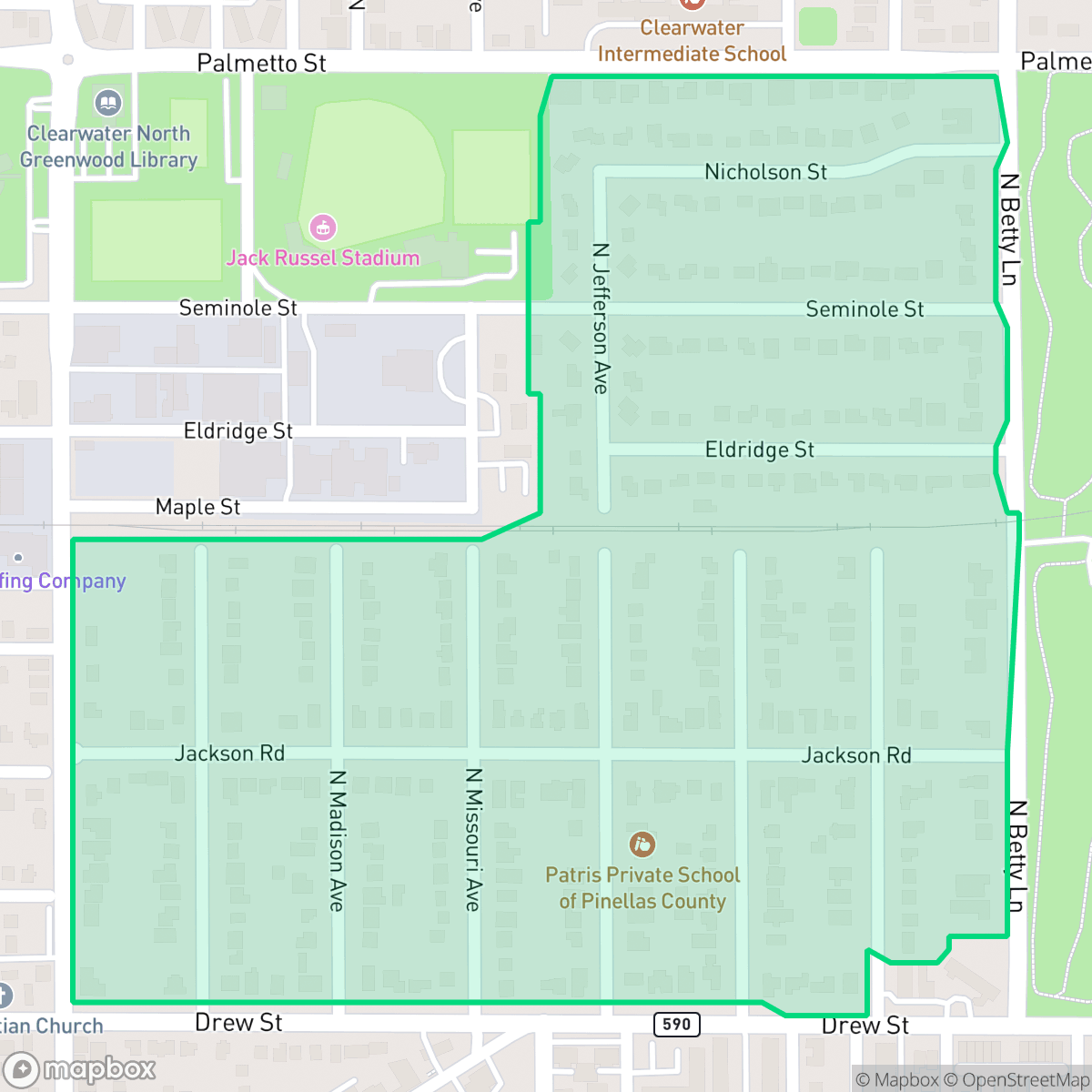
The Country Club Estates neighborhood in Clearwater, Florida, is a historic residential enclave renowned for its collection of early 20th-century architecture, including well-preserved Craftsman bungalows dating back to the 1920s. Situated adjacent to the Clearwater Country Club and within walking distance of downtown, the area is characterized by its mature, tree-lined streets and established historical character. The neighborhood maintains a distinct identity through its concentration of period-specific homes and its long-standing proximity to the Clearwater Country Club, which has served as a central landmark and focal point for the community's development since the early 20th century.
The area maintains a semi-rural feel despite its proximity to downtown, offering a mix of open land and established residential character. The community supports a diverse demographic, balancing families and older residents while fostering a politically varied environment. With a central location near the local country club, the neighborhood provides a moderately lively atmosphere with a variety of dining and cafe options for residents to enjoy.
Prospective residents should consider specific livability trade-offs, including moderate traffic noise from nearby busy streets and a higher potential for flood risk. While the neighborhood offers excellent pedestrian access, it also faces challenges regarding air quality and lower rates of health insurance coverage. Families are served by the Pinellas County School District, which remains a stable institution despite recent efforts to consolidate campuses due to shifting enrollment trends.
Neighborhood Scores Across 15 Qualities
Residential spacing provides a moderate level of seclusion with some buffer between neighbors. According to iHuus data, the density levels are slightly higher than the Clearwater average, featuring a mix of detached homes and more concentrated multi-family units in certain areas.
Pedestrian access is well-supported by a consistent grid pattern of sidewalks and safe crossings throughout much of the community. According to iHuus data, walkability in this area is notably higher than the Clearwater average.
Residential views feature consistent suburban architecture with some private backyard pools. This level of visual character is roughly in line with the Clearwater average, according to iHuus data.
Access to a central park with sports fields and nearby golf course greenery offers superior space for pets. According to iHuus data, this area provides significantly more connected green space than the Clearwater average.
Frequent open land and scattered homes amid woodland characterize this area. This level of openness is consistent with the Clearwater average.
Suburban activity is higher than the Clearwater average, featuring a mix of cultural venues and various dining options. According to iHuus data, residents can find a notable selection of cafes and restaurants throughout the area.
Steady hum from a nearby busy street provides more ambient sound than the Clearwater average. According to iHuus data, this creates a moderately active acoustic environment.
Frequent unhealthy air quality levels present significant risks to sensitive groups. According to iHuus data, these conditions are consistent with the average found throughout Clearwater.
Light commercial activity and a nearby rail line introduce some transit traffic and utility odors, though the area remains primarily residential. This level of industrial presence is slightly higher than the Clearwater average according to iHuus data.
Health insurance access is notably lower in this area than the Clearwater average, according to iHuus data. This lack of coverage represents a significant gap in healthcare security for many residents.
Political leanings within the community are split nearly evenly between conservative and liberal perspectives. This indicates a more politically diverse environment than is typically found in the broader Clearwater area, according to iHuus data.
A varied age distribution exists within the community, featuring a balance of families and older residents. According to iHuus data, this demographic spread is slightly more concentrated toward middle-aged and older populations compared to the Clearwater average.
Flood risk in this area remains undetermined because FEMA has not yet finished a detailed study; according to iHuus data, the potential for flooding is higher than the Clearwater average.
Address-Level Insights for Country Club Estates Homeowners Assoc


iHuus Neighborhood Intelligence Insights
Get address-level neighborhood insights for Country Club Estates Homeowners Assoc
- Street-level scores — see how individual blocks compare, not just neighborhood averages
- Micro-zone boundaries — identify quiet pockets, flood boundaries, and walkable clusters before you visit
- 15 dimensions in full — walkability, noise, air quality, school quality, insurance coverage, population age profile, urban/rural index, and more
- Boundary risk alerts — know if your address sits near a block boundary where scores drop, the kind of detail no listing will ever mention
- School insights — individual school ratings and insights, not just district-level data
- Compare before you commit — side-by-side data across neighborhoods, down to block precision
No credit card required
Compare with Any Neighborhood
| Dimension | Country Club Estates Homeowners Assoc | Alcove Homeowners Association, Inc |
|---|---|---|
| 🚶 Walkabilityavg 7.25 | ||
| 🔊 Acoustic Comfortavg 4.07 | ||
| 🤫 Privacy Indexavg 5.66 | ||
| 🎨 Visual Appealavg 6.72 | ||
| 🐕 Dog Friendlinessavg 6.21 | ||
| 🗺️ Urban-Rural Indexavg 6.51 | ||
| ✨ Neighborhood Vibeavg 4.03 | ||
| 🏥 Health Insurance Coverageavg 6.32 | ||
| 🌿 Air Qualityavg 1.98 | ||
| 🏭 Industrial Proximityavg 7.82 | ||
| 🌊 Flood Safetyavg 5.71 | ||
| 🗳️ Ideological Leanavg 3.22 | ||
| 👥 Population Age Profileavg 5.73 | ||
| 🔥 Fire Safety | ||
| 🏫 School Quality |
Country Club Estates Homeowners Assoc Rankings
School Districts Serving Country Club Estates Homeowners Assoc
School Insights for Country Club Estates Homeowners Assoc
Below average outcomes; significant attendance and academic challenges.
School Insights
See what's really behind every school rating near Country Club Estates Homeowners Assoc
- Individual school ratings — each school's own score with outcome context, not just a district average
- Enrollment & class size data — student-to-teacher ratio and how it compares to the state average
- Full demographics breakdown — ethnicity and gender composition for every school in the enrollment zone
- Every school in the district — all schools within the enrollment boundary ranked by rating, not just the closest one
- Grade levels & benchmarks — elementary through high school, with below/above state-average flags
No credit card required