Coachman Ridge Homeowners Association, Clearwater
Updated · 505 residents
Coachman Ridge is a quiet, semi-rural community in Clearwater characterized by its mature trees and spacious residential lots. Residents benefit from a balanced demographic mix and convenient access to local outdoor recreation, including the nearby Ream Wilson Trail.
Key Highlights
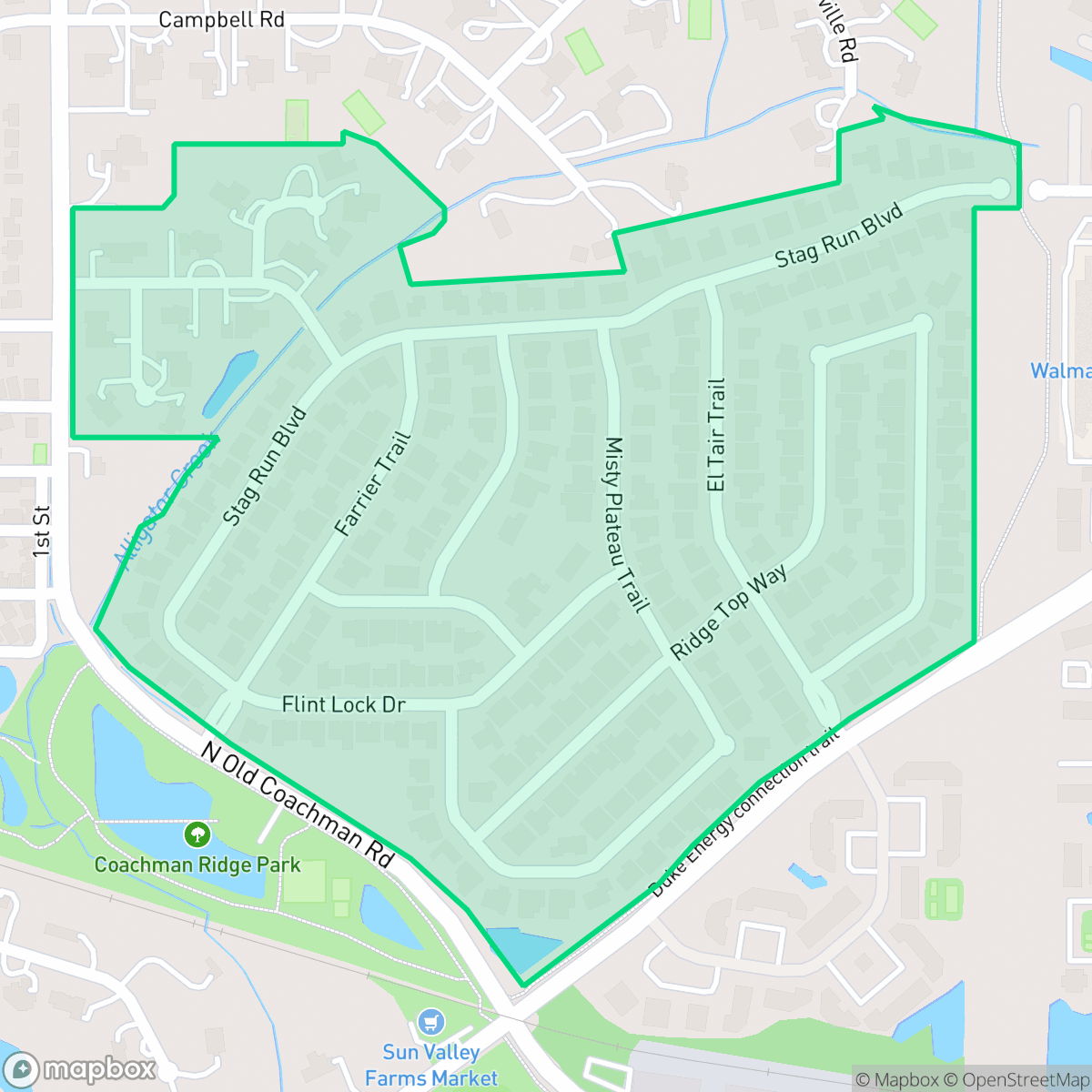
About Coachman Ridge Homeowners Association
Coachman Ridge is an established residential community in Clearwater, Florida, characterized by its mature landscaping and tree-lined streets. In 2001, the neighborhood gained distinct local significance when it successfully implemented a Neighborhood Conservation Overlay District (NCOD) through the City of Clearwater. This initiative, supported by a majority of homeowners, was designed to protect the area's established character, architectural standards, and quality of life. The neighborhood is anchored by the local Coachman Ridge Park, which features tennis and racquetball courts, and is situated near the Ream Wilson Trail, a key recreational corridor. These efforts reflect the community's long-standing commitment to maintaining its suburban identity and development standards amidst the broader growth of the Clearwater area.
This neighborhood offers a distinct suburban lifestyle with a semi-rural feel, defined by open land and woodland surroundings. The streetscape is visually appealing, featuring spacious driveways and a sense of privacy that exceeds the typical Clearwater residential area. The community maintains a quiet, tranquil atmosphere, punctuated by the steady rhythm of residents utilizing local paths for outdoor activity. With a stable demographic mix and a conservative-leaning environment, the area provides a consistent and predictable living experience for its inhabitants.
For those considering a move, the neighborhood is well-suited to families and professionals who value privacy and proximity to quality education provided by the Pinellas County School District. While the area offers a peaceful retreat, prospective residents should be aware of moderate traffic noise and air quality conditions that align with broader regional trends. Despite these factors, the community remains a practical choice for those seeking a balance of established development standards and accessible outdoor amenities.
Neighborhood Scores Across 15 Qualities
Homes feature a mix of spacing with some distance between neighbors. This level of separation is slightly higher than the Clearwater average, according to iHuus data.
Sidewalks are available on one side of the street along with safe crossings. This level of pedestrian access is roughly comparable to the average found throughout Clearwater.
Spacious driveways and premium community amenities contribute to a visual landscape that is slightly more attractive than the Clearwater average, according to iHuus data.
Connected green spaces and wide, traffic-safe paths make this area more suitable for dogs than the typical Clearwater neighborhood. According to iHuus data, the layout supports easy walking and outdoor activity for pets.
Open land and scattered homes amidst woodland characterize this area. The level of openness and low density is consistent with the Clearwater average, according to iHuus data.
Residential life here remains subdued with sparse commercial activity nearby. While the area feels more tranquil than much of Clearwater, local interest points like the Ream Wilson Clearwater Trail provide a steady outdoor rhythm according to iHuus data.
Steady hums from nearby busy streets are present, though acoustic levels remain slightly better than the Clearwater average according to iHuus data.
Frequent unhealthy air quality levels pose a significant risk to sensitive groups. According to iHuus data, these conditions are consistent with the average levels found across Clearwater.
Primarily residential in nature, this area features only scattered local services and a printing service that may cause intermittent loading activity. According to iHuus data, the presence of light commercial activity is slightly higher than the Clearwater average.
Health insurance coverage among residents is high, sitting slightly above the Clearwater average according to iHuus data.
Political leanings in this area trend conservative, representing a slightly more right-leaning community than the Clearwater average according to iHuus data.
A balanced variety of age groups resides here, including young adults, families, and older residents. This demographic distribution remains largely consistent with the average seen across Clearwater.
Residual flood risk exists within this area as it sits inside a 500-year floodplain; however, safety levels remain notably higher than the Clearwater average according to iHuus data.
Address-Level Insights for Coachman Ridge Homeowners Association


iHuus Neighborhood Intelligence Insights
Get address-level neighborhood insights for Coachman Ridge Homeowners Association
- Street-level scores — see how individual blocks compare, not just neighborhood averages
- Micro-zone boundaries — identify quiet pockets, flood boundaries, and walkable clusters before you visit
- 15 dimensions in full — walkability, noise, air quality, school quality, insurance coverage, population age profile, urban/rural index, and more
- Boundary risk alerts — know if your address sits near a block boundary where scores drop, the kind of detail no listing will ever mention
- School insights — individual school ratings and insights, not just district-level data
- Compare before you commit — side-by-side data across neighborhoods, down to block precision
No credit card required
Compare with Any Neighborhood
| Dimension | Coachman Ridge Homeowners Association | Alcove Homeowners Association, Inc |
|---|---|---|
| 🚶 Walkabilityavg 7.25 | ||
| 🔊 Acoustic Comfortavg 4.07 | ||
| 🤫 Privacy Indexavg 5.66 | ||
| 🎨 Visual Appealavg 6.72 | ||
| 🐕 Dog Friendlinessavg 6.21 | ||
| 🗺️ Urban-Rural Indexavg 6.51 | ||
| ✨ Neighborhood Vibeavg 4.03 | ||
| 🏥 Health Insurance Coverageavg 6.32 | ||
| 🌿 Air Qualityavg 1.98 | ||
| 🏭 Industrial Proximityavg 7.82 | ||
| 🌊 Flood Safetyavg 5.71 | ||
| 🗳️ Ideological Leanavg 3.22 | ||
| 👥 Population Age Profileavg 5.73 | ||
| 🔥 Fire Safety | ||
| 🏫 School Quality |
Coachman Ridge Homeowners Association Rankings
School Districts Serving Coachman Ridge Homeowners Association
School Insights for Coachman Ridge Homeowners Association
Below average outcomes; significant attendance and academic challenges.
School Insights
See what's really behind every school rating near Coachman Ridge Homeowners Association
- Individual school ratings — each school's own score with outcome context, not just a district average
- Enrollment & class size data — student-to-teacher ratio and how it compares to the state average
- Full demographics breakdown — ethnicity and gender composition for every school in the enrollment zone
- Every school in the district — all schools within the enrollment boundary ranked by rating, not just the closest one
- Grade levels & benchmarks — elementary through high school, with below/above state-average flags
No credit card required