Southwest Village, West Sacramento
Updated · 5,131 residents
Southwest Village is a quiet, rural-leaning community in West Sacramento defined by expansive agricultural plots and open green space. While the area offers a peaceful environment with high acoustic comfort, it remains a low-density neighborhood with limited local commercial amenities.
Key Highlights
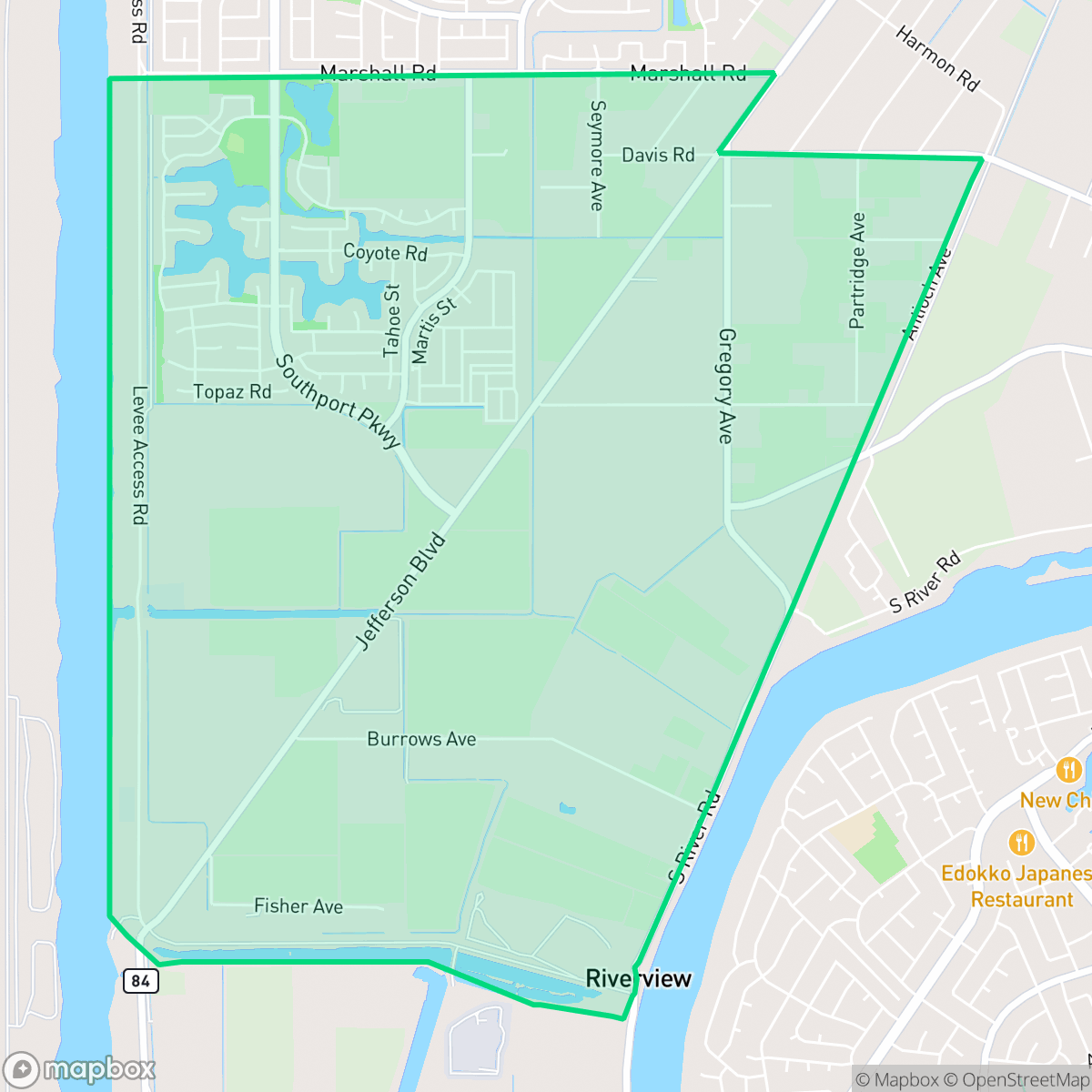
About Southwest Village
Southwest Village is characterized by a predominantly agricultural landscape, featuring vast open fields and irrigation canals that contribute to its distinct rural feel. The neighborhood maintains a low building density, providing residents with significant privacy and a serene atmosphere. According to iHuus data, the area benefits from high acoustic comfort and minimal industrial hazards, making it a stable environment for those seeking a retreat from urban congestion. The neighborhood is well-suited for individuals who value open space and quiet surroundings, though it is important to note the local fire safety profile when considering the area. Potential residents should be aware that the community is largely residential and lacks a robust selection of local businesses or social venues. While the neighborhood is walkable, the sparse distribution of services often necessitates reliance on a vehicle for daily errands. Educational options are provided by the Washington Unified School District, which is known for its specialized career technical education programs despite facing broader academic challenges.
Neighborhood Scores Across 15 Qualities
Residential spacing offers a moderate level of separation between neighbors, providing slightly more personal buffer than the West Sacramento average. According to iHuus data, the area features a mix of density that avoids both extreme overcrowding and total isolation.
Pedestrian access is well-supported by sidewalks and safe crossings, offering a level of walkability that is above the West Sacramento average according to iHuus data.
Large residential properties and frequent high-end amenities contribute to a landscape that is notably more visually polished than the West Sacramento average. According to iHuus data, the area features well-maintained streetscapes with spacious driveways and premium neighborhood features.
Connected green spaces and wide, traffic-safe paths make this area more dog friendly than the West Sacramento average. According to iHuus data, the neighborhood provides ample opportunities for safe, unobstructed walking.
Vast agricultural fields and low building density define this area. According to iHuus data, the landscape is more semi-rural than the West Sacramento average, characterized by large estate lots and wide open spaces.
Primarily composed of low-density residential blocks and open spaces, this area lacks a distinct commercial character. While the neighborhood offers slightly more activity than the West Sacramento average, most residents will find a tranquil setting with limited access to local businesses or restaurants.
Acoustic levels remain low with only occasional sounds from distant traffic or trains. This area is significantly quieter than the West Sacramento average, according to iHuus data.
Air quality in this area fluctuates between acceptable and unhealthy levels, mirroring the overall average for West Sacramento. Sensitive groups should remain aware of occasional periods of concern, according to iHuus data.
Residential and agricultural land use dominates the area with no heavy industrial facilities or warehouses detected. This neighborhood features significantly fewer industrial hazards and manufacturing sites than the West Sacramento average.
Health insurance enrollment is exceptionally high within this area, significantly surpassing the West Sacramento average according to iHuus data.
Political leanings in this area are predominantly liberal, though the concentration is slightly lower than the West Sacramento average.
Residents live alongside a balanced distribution of young adults, families, and older populations. This demographic spread is largely consistent with the broader West Sacramento area according to iHuus data.
Residual flood risk exists within the 500-year floodplain, though safety levels remain slightly above the West Sacramento average according to iHuus data.
Address-Level Insights for Southwest Village


iHuus Neighborhood Intelligence Insights
Get address-level neighborhood insights for Southwest Village
- Street-level scores — see how individual blocks compare, not just neighborhood averages
- Micro-zone boundaries — identify quiet pockets, flood boundaries, and walkable clusters before you visit
- 15 dimensions in full — walkability, noise, air quality, school quality, insurance coverage, population age profile, urban/rural index, and more
- Boundary risk alerts — know if your address sits near a block boundary where scores drop, the kind of detail no listing will ever mention
- School insights — individual school ratings and insights, not just district-level data
- Compare before you commit — side-by-side data across neighborhoods, down to block precision
No credit card required
Compare with Any Neighborhood
| Dimension | Southwest Village | Broderrick/Bryte |
|---|---|---|
| 🚶 Walkabilityavg 8.33 | ||
| 🔊 Acoustic Comfortavg 4.31 | ||
| 🤫 Privacy Indexavg 5.47 | ||
| 🎨 Visual Appealavg 6.52 | ||
| 🐕 Dog Friendlinessavg 7.26 | ||
| 🗺️ Urban-Rural Indexavg 6.86 | ||
| ✨ Neighborhood Vibeavg 3.48 | ||
| 🏥 Health Insurance Coverageavg 7.88 | ||
| 🌿 Air Qualityavg 6.1 | ||
| 🏭 Industrial Proximityavg 7.34 | ||
| 🌊 Flood Safetyavg 7.06 | ||
| 🗳️ Ideological Leanavg 8.96 | ||
| 👥 Population Age Profileavg 4.78 | ||
| 🔥 Fire Safety | ||
| 🏫 School Quality |
Southwest Village Rankings
School Districts Serving Southwest Village
School Insights for Southwest Village
Below average outcomes; significant attendance and academic challenges.
School Insights
See what's really behind every school rating near Southwest Village
- Individual school ratings — each school's own score with outcome context, not just a district average
- Enrollment & class size data — student-to-teacher ratio and how it compares to the state average
- Full demographics breakdown — ethnicity and gender composition for every school in the enrollment zone
- Every school in the district — all schools within the enrollment boundary ranked by rating, not just the closest one
- Grade levels & benchmarks — elementary through high school, with below/above state-average flags
No credit card required