Pioneer Bluff, West Sacramento
Updated · 688 residents
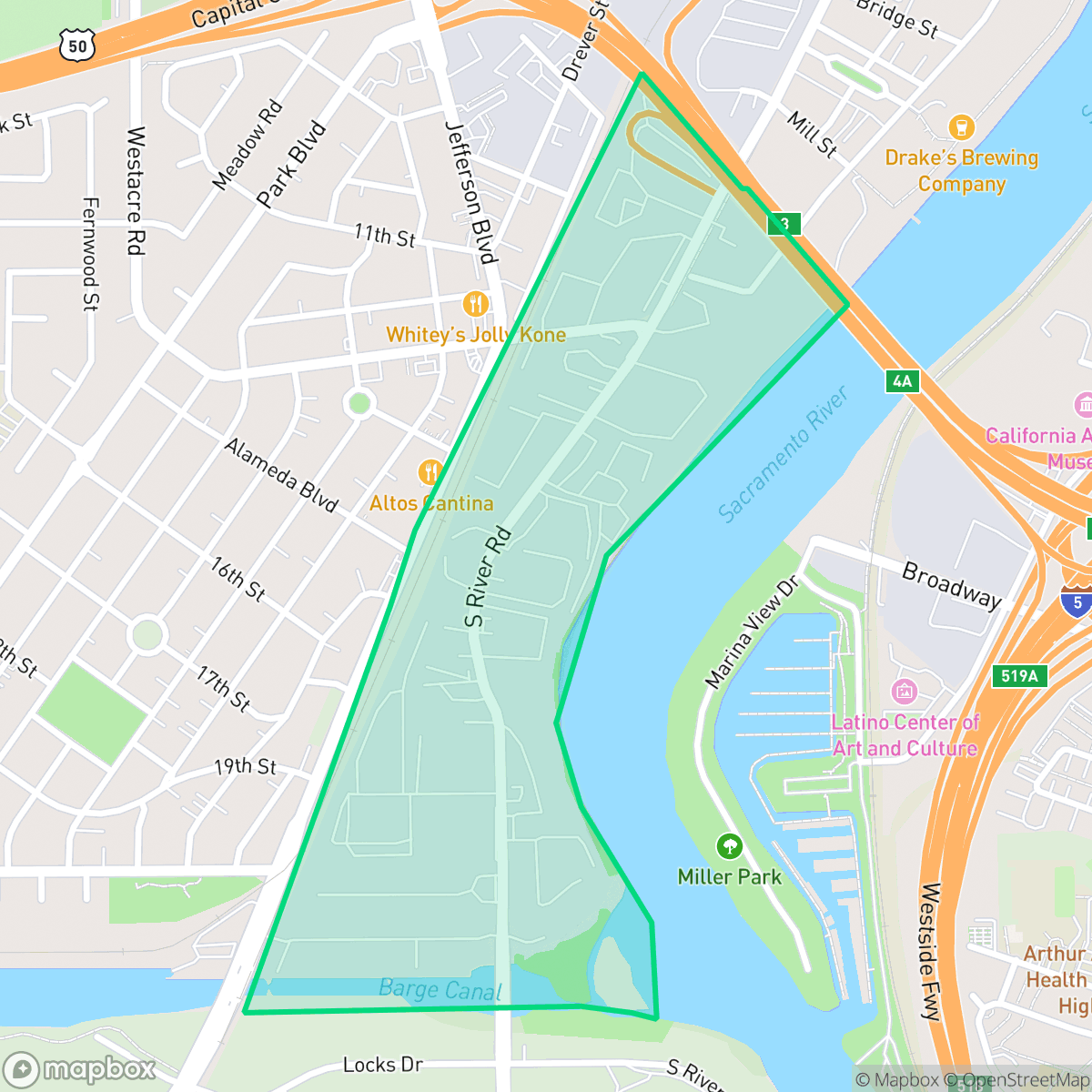
Pioneer Bluff is a transitional riverfront neighborhood in West Sacramento defined by a mix of heavy industrial infrastructure and suburban residential pockets. While the area offers high dog friendliness and moderate air quality, residents experience significant noise from road traffic and proximity to large-scale logistics operations.
Key Highlights
About Pioneer Bluff
Located on the southern riverfront of West Sacramento, Pioneer Bluff historically developed on dredge spoils from the Sacramento River. From the 1950s onward, it served as a major heavy industrial and commercial hub, characterized by petroleum tank farms and massive cement towers critical to the construction of the nearby Port of Sacramento. Key historical features include the Stone Lock, a regulatory lock system on the barge canal, and the iconic mid-century cement silos that dominated the local skyline until their demolition in 2014. In recent years, the neighborhood has undergone a major transformation; under the city’s Pioneer Bluff and Stone Lock Reuse Master Plan, this former industrial zone is being redeveloped into a vibrant, mixed-use waterfront district with parks, trails, and transit-oriented corridors.
The neighborhood is currently in a state of evolution, shifting from its historic industrial roots toward a planned future as a mixed-use district. The local landscape is dominated by large chemical and oil tank farms, which define the visual and industrial profile of the area. Despite the heavy logistics presence, the neighborhood maintains a suburban residential layout, featuring local institutions like the First Baptist Church and neighborhood dining spots such as Cocina Dona Chuyita. This combination of legacy infrastructure and residential space creates a distinct, industrial-adjacent character that is unique within the city.
According to iHuus data, the area presents a challenging acoustic environment, with road traffic serving as the primary source of noise. While it offers a higher level of privacy than the city average, its walkability remains more limited compared to nearby districts. The neighborhood is best suited for those who prioritize proximity to the waterfront and are comfortable with an industrial-adjacent lifestyle, as the area continues its long-term redevelopment process.
Neighborhood Scores Across 15 Qualities
Homes in this area feature mixed spacing with some buffers between neighbors, representing a level of privacy that is slightly above the West Sacramento average according to iHuus data.
Sidewalks are available on one side of the street along with safe crossings, though pedestrian connectivity is slightly lower than the West Sacramento average according to iHuus data.
Standard tract housing features boxy rooflines and tidy but small yards. This landscape is slightly less varied than the West Sacramento average according to iHuus data.
Connected green spaces and wide, traffic-safe paths make this area well-suited for pet owners. According to iHuus data, the availability of walking areas here is notably higher than the West Sacramento average.
Large-scale industrial zones and transportation infrastructure mix with low-density residential pockets and significant green space. This area presents a slightly more urbanized landscape than the typical West Sacramento setting, according to iHuus data.
A quiet, suburban atmosphere prevails due to the presence of light industrial units and proximity to a major highway. Local social activity is limited to a few essential services and dining options, making the area less lively than much of West Sacramento.
Frequent noise from nearby railroad tracks and major freeways makes this area significantly louder than the West Sacramento average. According to iHuus data, the proximity to heavy transit corridors creates a persistent acoustic disturbance for residents.
Air quality levels here fluctuate between acceptable and unhealthy, posing occasional concerns for sensitive groups. According to iHuus data, these conditions are roughly in line with the West Sacramento average.
Heavy industrial infrastructure, including a wastewater treatment plant and large chemical tank farms, borders parts of the neighborhood. According to iHuus data, this proximity to logistics yards and heavy commercial operations is significantly higher than the West Sacramento average.
Health insurance accessibility in this area is high and remains slightly above the West Sacramento average, according to iHuus data.
Voting patterns and census indicators reflect a predominantly liberal political leaning, which is very similar to the broader West Sacramento area according to iHuus data.
Residents live alongside a balanced mix of young adults, families, and older individuals. According to iHuus data, this age distribution is largely consistent with the broader West Sacramento area.
Flood risk in this area is slightly higher than the West Sacramento average due to its location within a 500-year floodplain. According to iHuus data, some residual risk remains despite being in a lower-risk zone.
Address-Level Insights for Pioneer Bluff


iHuus Neighborhood Intelligence Insights
Get address-level neighborhood insights for Pioneer Bluff
- Street-level scores — see how individual blocks compare, not just neighborhood averages
- Micro-zone boundaries — identify quiet pockets, flood boundaries, and walkable clusters before you visit
- 15 dimensions in full — walkability, noise, air quality, school quality, insurance coverage, population age profile, urban/rural index, and more
- Boundary risk alerts — know if your address sits near a block boundary where scores drop, the kind of detail no listing will ever mention
- School insights — individual school ratings and insights, not just district-level data
- Compare before you commit — side-by-side data across neighborhoods, down to block precision
No credit card required
Compare with Any Neighborhood
| Dimension | Pioneer Bluff | Broderrick/Bryte |
|---|---|---|
| 🚶 Walkabilityavg 8.33 | ||
| 🔊 Acoustic Comfortavg 4.31 | ||
| 🤫 Privacy Indexavg 5.47 | ||
| 🎨 Visual Appealavg 6.52 | ||
| 🐕 Dog Friendlinessavg 7.26 | ||
| 🗺️ Urban-Rural Indexavg 6.86 | ||
| ✨ Neighborhood Vibeavg 3.48 | ||
| 🏥 Health Insurance Coverageavg 7.88 | ||
| 🌿 Air Qualityavg 6.1 | ||
| 🏭 Industrial Proximityavg 7.34 | ||
| 🌊 Flood Safetyavg 7.06 | ||
| 🗳️ Ideological Leanavg 8.96 | ||
| 👥 Population Age Profileavg 4.78 | ||
| 🔥 Fire Safety | ||
| 🏫 School Quality |
Pioneer Bluff Rankings
School Districts Serving Pioneer Bluff
School Insights for Pioneer Bluff
Below average outcomes; significant attendance and academic challenges.
School Insights
See what's really behind every school rating near Pioneer Bluff
- Individual school ratings — each school's own score with outcome context, not just a district average
- Enrollment & class size data — student-to-teacher ratio and how it compares to the state average
- Full demographics breakdown — ethnicity and gender composition for every school in the enrollment zone
- Every school in the district — all schools within the enrollment boundary ranked by rating, not just the closest one
- Grade levels & benchmarks — elementary through high school, with below/above state-average flags
No credit card required