Northeast Village, West Sacramento
Updated · 8,511 residents
Northeast Village is a quiet, highly walkable neighborhood in West Sacramento characterized by a mix of residential blocks, open green spaces, and adjacent industrial logistics zones. While the area offers significant access for dog owners and pedestrians, it maintains a remote, low-activity atmosphere with limited local commercial amenities.
Key Highlights
About Northeast Village
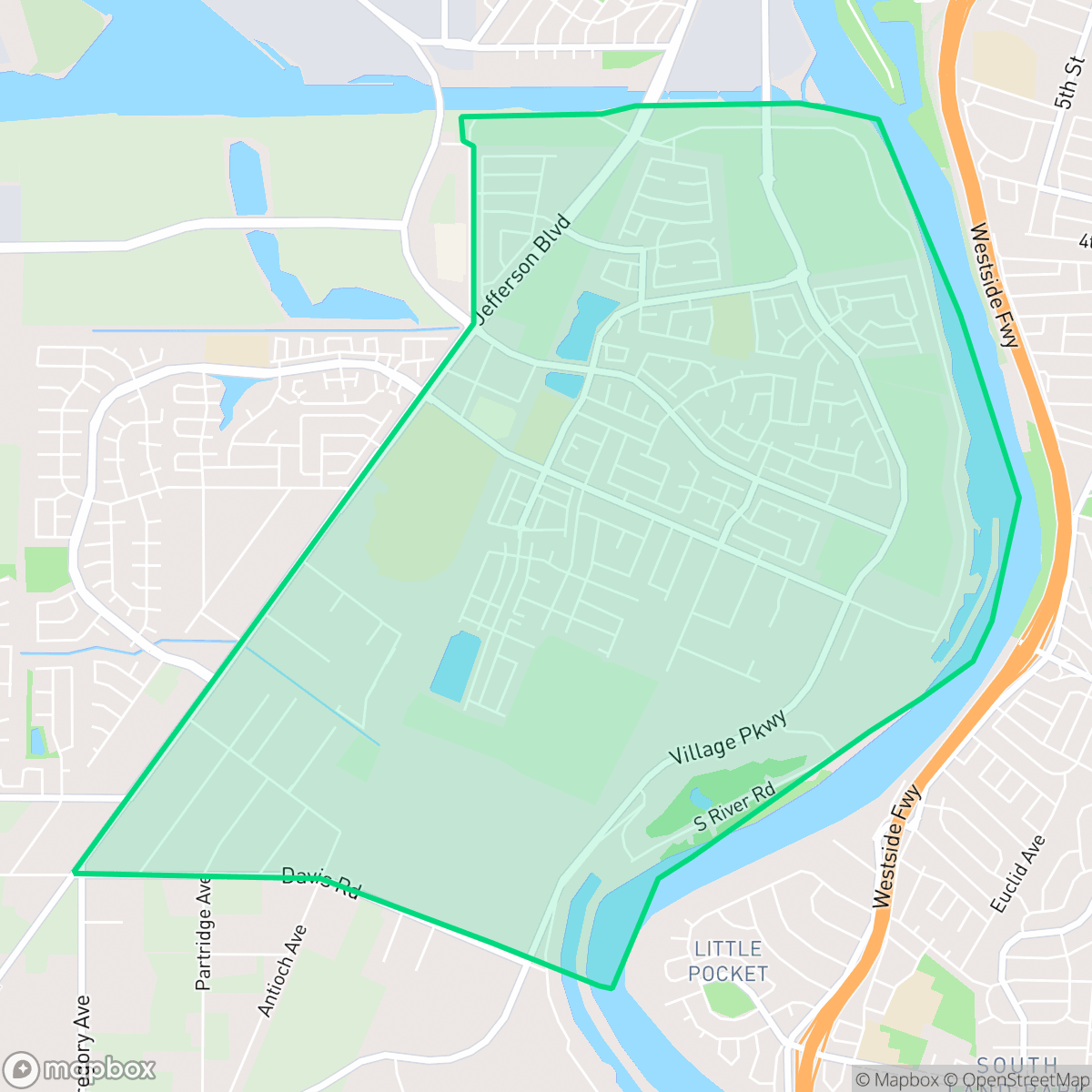
Northeast Village functions as a transition zone between residential living and industrial infrastructure. The area features a blend of quiet streets and green spaces such as Delta Gardens Park and Sam Combs Park, balanced against the presence of large-scale logistics yards and warehouses. According to iHuus data, the neighborhood maintains a high level of walkability and dog friendliness despite its remote character and lack of dense commercial development. Residents in this area experience a serene, low-activity environment, though the proximity to industrial sites and major roadways contributes to a consistent baseline of road traffic noise. The neighborhood is served by the Washington Unified School District, which offers specialized CTE programs alongside neighborhood schools with varying academic performance. It is best suited for those who prioritize quiet, pedestrian-friendly streets and proximity to outdoor space over immediate access to retail centers or urban nightlife.
Neighborhood Scores Across 15 Qualities
Residential buildings feature mixed spacing with some buffer between neighbors, offering slightly more privacy than the West Sacramento average. According to iHuus data, structures within the neighborhood are situated relatively close to one another.
Dense sidewalk networks throughout residential areas make for easy pedestrian movement, though the western highway edge creates a significant barrier for travel. This level of accessibility is slightly above the West Sacramento average, according to iHuus data.
Upscale amenities and spacious residential lots contribute to a visual landscape that is more attractive than the West Sacramento average. While high-density development and apartment complexes are present, frequent backyard pools and larger homes characterize much of the area according to iHuus data.
Abundant green spaces and wide, grassy verges between sidewalks provide ample area for walking pets. According to iHuus data, these connected outdoor areas offer more safety from traffic than the West Sacramento average.
Open land and agricultural fields are frequently interspersed with residential and industrial zones. This area maintains a slightly higher proportion of open space compared to the West Sacramento average, according to iHuus data.
Low-density residential blocks and industrial zones create a tranquil environment with very little commercial activity. According to iHuus data, this area has a lower level of social vibrancy compared to the West Sacramento average.
Local traffic from a nearby busy street creates a consistent level of ambient noise. This acoustic environment is slightly more active than the average for West Sacramento.
Air quality fluctuates between acceptable and unhealthy levels, appearing largely consistent with the broader West Sacramento area. Sensitive groups may experience occasional concern on certain days according to iHuus data.
Residential life remains largely uninterrupted by heavy industry, though some residents near the northern edge may encounter proximity to large warehouses and logistics yards. This level of industrial separation is slightly better than the West Sacramento average, according to iHuus data.
Health insurance access among residents is notably higher than the West Sacramento average, according to iHuus data. This indicates a strong level of healthcare coverage within the community.
Political leanings in this area are predominantly liberal, which is very similar to the broader West Sacramento area according to iHuus data.
Residents live alongside a balanced mix of young professionals, families, and seniors. This demographic spread in Northeast Village aligns closely with the broader West Sacramento average.
Residual flood risk exists within the area as it sits inside a 500-year floodplain, though safety levels remain higher than the West Sacramento average according to iHuus data.
Address-Level Insights for Northeast Village


iHuus Neighborhood Intelligence Insights
Get address-level neighborhood insights for Northeast Village
- Street-level scores — see how individual blocks compare, not just neighborhood averages
- Micro-zone boundaries — identify quiet pockets, flood boundaries, and walkable clusters before you visit
- 15 dimensions in full — walkability, noise, air quality, school quality, insurance coverage, population age profile, urban/rural index, and more
- Boundary risk alerts — know if your address sits near a block boundary where scores drop, the kind of detail no listing will ever mention
- School insights — individual school ratings and insights, not just district-level data
- Compare before you commit — side-by-side data across neighborhoods, down to block precision
No credit card required
Compare with Any Neighborhood
| Dimension | Northeast Village | Broderrick/Bryte |
|---|---|---|
| 🚶 Walkabilityavg 8.33 | ||
| 🔊 Acoustic Comfortavg 4.31 | ||
| 🤫 Privacy Indexavg 5.47 | ||
| 🎨 Visual Appealavg 6.52 | ||
| 🐕 Dog Friendlinessavg 7.26 | ||
| 🗺️ Urban-Rural Indexavg 6.86 | ||
| ✨ Neighborhood Vibeavg 3.48 | ||
| 🏥 Health Insurance Coverageavg 7.88 | ||
| 🌿 Air Qualityavg 6.1 | ||
| 🏭 Industrial Proximityavg 7.34 | ||
| 🌊 Flood Safetyavg 7.06 | ||
| 🗳️ Ideological Leanavg 8.96 | ||
| 👥 Population Age Profileavg 4.78 | ||
| 🔥 Fire Safety | ||
| 🏫 School Quality |
Northeast Village Rankings
School Districts Serving Northeast Village
School Insights for Northeast Village
Below average outcomes; significant attendance and academic challenges.
School Insights
See what's really behind every school rating near Northeast Village
- Individual school ratings — each school's own score with outcome context, not just a district average
- Enrollment & class size data — student-to-teacher ratio and how it compares to the state average
- Full demographics breakdown — ethnicity and gender composition for every school in the enrollment zone
- Every school in the district — all schools within the enrollment boundary ranked by rating, not just the closest one
- Grade levels & benchmarks — elementary through high school, with below/above state-average flags
No credit card required