Heather Farms, Walnut Creek
Updated · 173 residents
Heather Farms is a highly walkable, pet-friendly residential enclave centered on expansive green space and townhome living. While the area offers excellent access to outdoor recreation, residents should be aware of elevated noise levels from nearby highway traffic and significant local fire safety risks.
Key Highlights
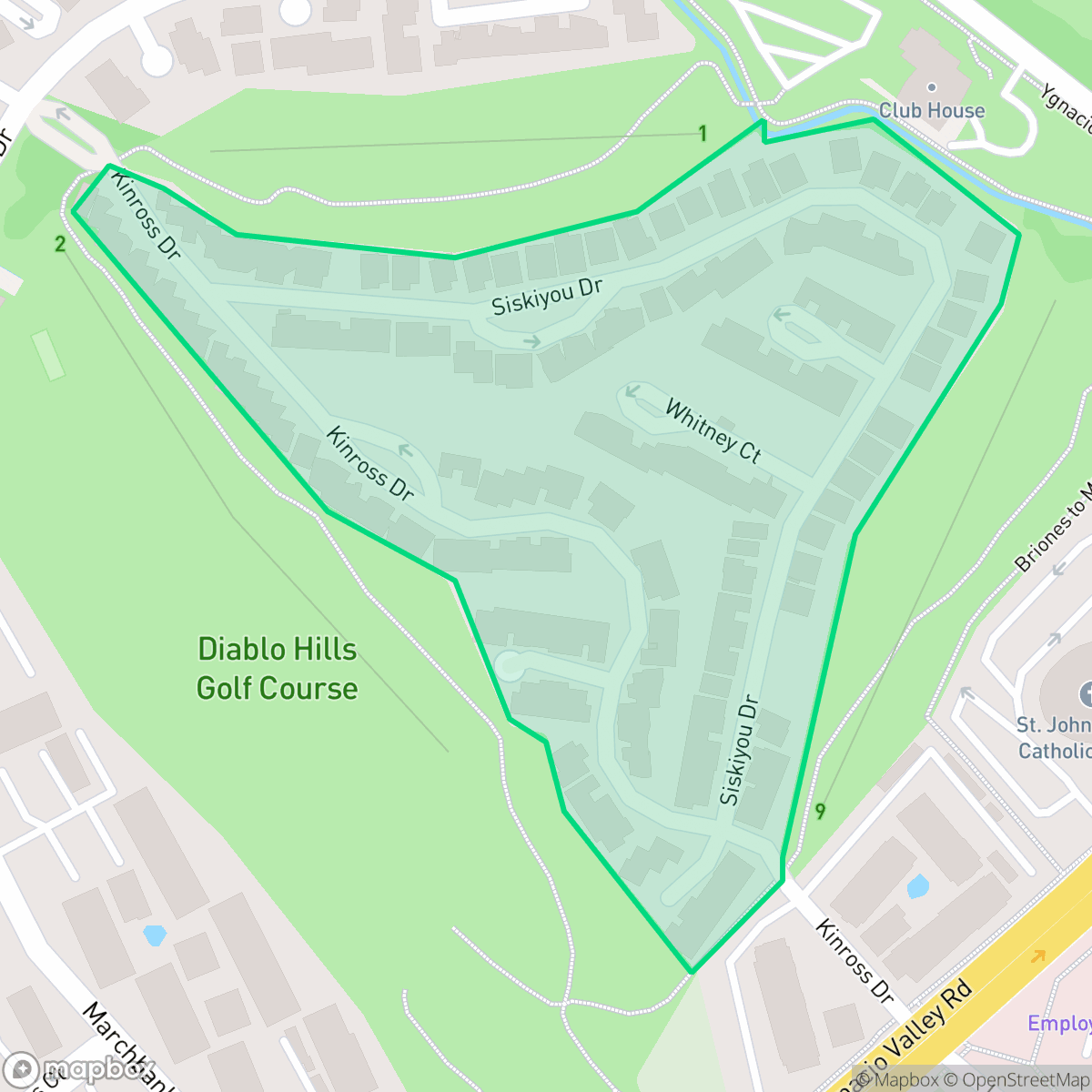
About Heather Farms
The Heather Farm neighborhood in Walnut Creek originated as the 1874 Sulphur Springs Ranch, a 255-acre mineral spa. In 1921, prominent horse breeder John W. Marchbank purchased the property and transformed it into a premier thoroughbred training facility, naming it Heather Farm after his champion stallion, Heather King. It became one of the most significant horse-breeding farms west of the Mississippi and served as a filming location for the 1931 Clark Gable film, *Sporting Blood*. Following a 1965 municipal bond and land donations from local conservationists Philip and Ruth Bancroft, the city acquired the property. In 1970, it opened as the 102-acre Heather Farm Park, which features the six-acre Gardens at Heather Farm. Today, this historic land anchors a vibrant residential community of townhomes and condos integrated alongside the park.
The neighborhood functions as a quiet, suburban residential hub defined by its proximity to expansive parkland and recreational facilities. With high walkability and exceptional dog-friendliness, the area is designed for active lifestyles and frequent outdoor use. According to iHuus data, the community maintains a high level of visual appeal, characterized by well-integrated townhomes and condos that blend into the surrounding landscape. The presence of significant green space provides a distinct character that separates it from more dense urban environments in the city.
Prospective residents should consider the trade-offs of living in this location. The neighborhood experiences notable noise from road traffic, which impacts acoustic comfort. Additionally, while air quality is favorable and the area is largely free from industrial encroachment, the region faces significant fire safety challenges. Families should also note that the area is served by the Mount Diablo Unified School District, which presents a mix of high-achieving campuses and structural budget limitations that may impact long-term facility maintenance.
Neighborhood Scores Across 15 Qualities
Residential spacing offers a balance of proximity and separation between neighbors. This level of density is roughly in line with the typical Walnut Creek experience, according to iHuus data.
Pedestrian infrastructure is exceptional here, featuring wide sidewalks on both sides of streets and ample crossings. According to iHuus data, the area offers significantly better accessibility for walkers than the Walnut Creek average.
Large residences and frequent high-end amenities define the area, providing a visual landscape that is very similar to the Walnut Creek average.
Extensive park systems, walking trails, and open green spaces provide significant opportunities for pet owners. According to iHuus data, the availability of these recreational areas is much higher than the Walnut Creek average.
Manicured green spaces and a mix of residential developments provide a more open feel than the more densely urbanized parts of Walnut Creek. According to iHuus data, this area maintains a semi-rural character with frequent pockets of open land and greenery.
Suburban streets and green spaces define this area, offering a steady but low-key pace of life that is slightly below the Walnut Creek average. While local dining and parks like Heather Farm Park are accessible, the neighborhood lacks the dense commercial activity found in more central parts of the city.
Steady hum from nearby busy streets creates a consistent level of ambient sound. This acoustic profile is slightly more active than the typical experience in other parts of Walnut Creek, according to iHuus data.
Air quality remains consistently high with rare instances of elevated readings. This level of cleanliness is notably better than the average seen across Walnut Creek, according to iHuus data.
Industrial presence is virtually nonexistent here, consisting only of minor utility buffers and retail parking lots. This area maintains a landscape very similar to the rest of Walnut Creek, focusing on residential streets and open green spaces.
Health insurance access is nearly universal among residents, appearing significantly higher than the Walnut Creek average according to iHuus data.
Voting patterns and census indicators reflect a deeply liberal political leaning that is slightly more pronounced than the Walnut Creek average, according to iHuus data.
Residents live alongside a balanced mix of young adults, families, and older populations. This age distribution is largely consistent with the broader Walnut Creek area, according to iHuus data.
Flood risk levels are higher than the Walnut Creek average, though the area currently lacks a detailed federal flood study. According to iHuus data, the risk level remains undetermined.
Address-Level Insights for Heather Farms


iHuus Neighborhood Intelligence Insights
Get address-level neighborhood insights for Heather Farms
- Street-level scores — see how individual blocks compare, not just neighborhood averages
- Micro-zone boundaries — identify quiet pockets, flood boundaries, and walkable clusters before you visit
- 15 dimensions in full — walkability, noise, air quality, school quality, insurance coverage, population age profile, urban/rural index, and more
- Boundary risk alerts — know if your address sits near a block boundary where scores drop, the kind of detail no listing will ever mention
- School insights — individual school ratings and insights, not just district-level data
- Compare before you commit — side-by-side data across neighborhoods, down to block precision
No credit card required
Compare with Any Neighborhood
| Dimension | Heather Farms | Almond-Shuey |
|---|---|---|
| 🚶 Walkabilityavg 7.88 | ||
| 🔊 Acoustic Comfortavg 3.9 | ||
| 🤫 Privacy Indexavg 6.08 | ||
| 🎨 Visual Appealavg 8.11 | ||
| 🐕 Dog Friendlinessavg 7.94 | ||
| 🗺️ Urban-Rural Indexavg 7.23 | ||
| ✨ Neighborhood Vibeavg 4.42 | ||
| 🏥 Health Insurance Coverageavg 8.87 | ||
| 🌿 Air Qualityavg 7.18 | ||
| 🏭 Industrial Proximityavg 9.72 | ||
| 🌊 Flood Safetyavg 4.2 | ||
| 🗳️ Ideological Leanavg 9.4 | ||
| 👥 Population Age Profileavg 5.64 | ||
| 🔥 Fire Safetyavg 0.89 | ||
| 🏫 School Quality |
Heather Farms Rankings
School Districts Serving Heather Farms
School Insights for Heather Farms
Below average outcomes; significant attendance and academic challenges.
School Insights
See what's really behind every school rating near Heather Farms
- Individual school ratings — each school's own score with outcome context, not just a district average
- Enrollment & class size data — student-to-teacher ratio and how it compares to the state average
- Full demographics breakdown — ethnicity and gender composition for every school in the enrollment zone
- Every school in the district — all schools within the enrollment boundary ranked by rating, not just the closest one
- Grade levels & benchmarks — elementary through high school, with below/above state-average flags
No credit card required