Northwest Hillsdale, San Mateo
Updated · 1,856 residents
Northwest Hillsdale is an exceptionally walkable residential enclave in San Mateo known for its quiet streets and mid-century aesthetic. Residents benefit from high acoustic comfort and easy access to local amenities, making it a stable, pedestrian-friendly choice for those seeking a peaceful suburban environment.
Key Highlights
About Northwest Hillsdale
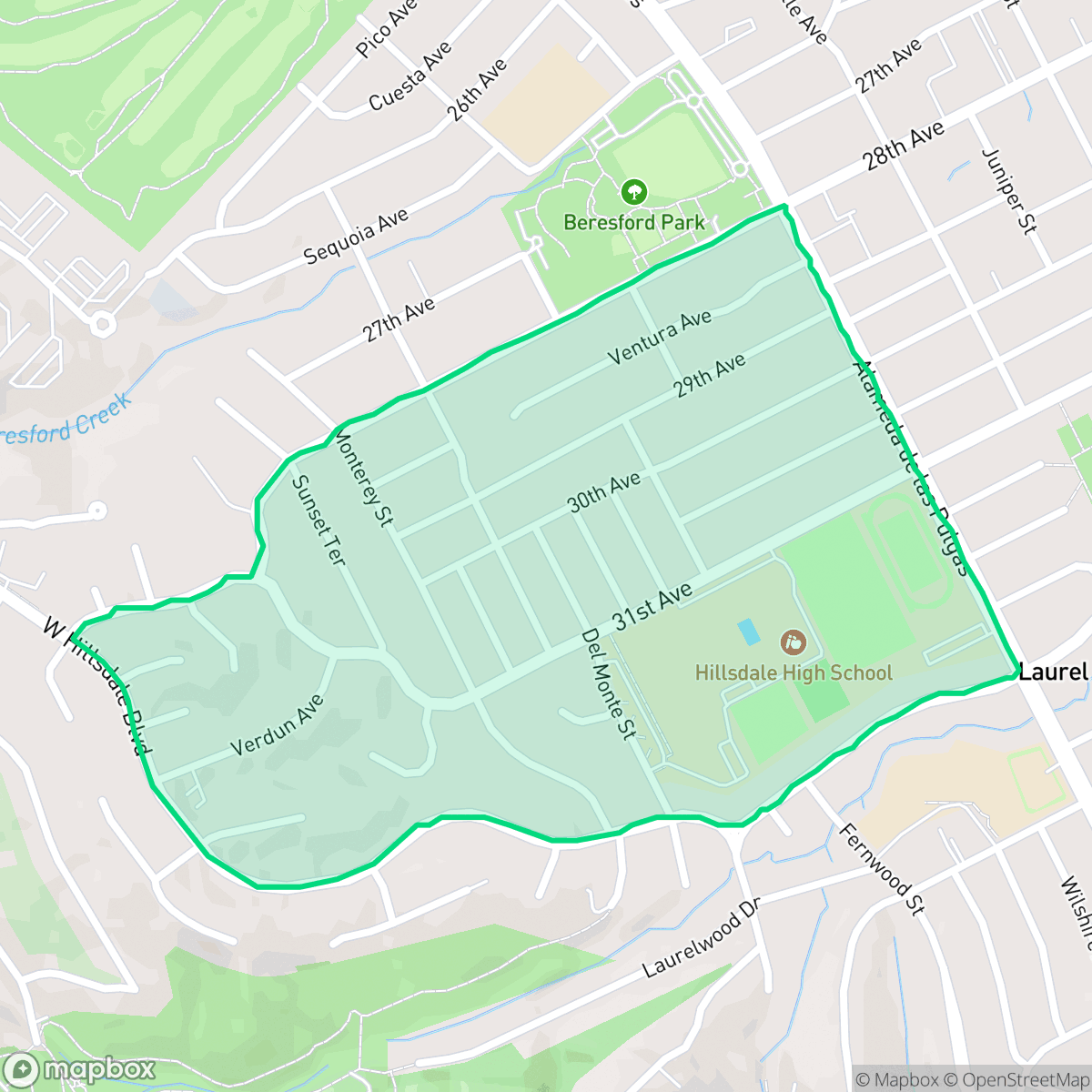
Northwest Hillsdale in San Mateo, California, emerged during the post-World War II suburban boom as part of developer David D. Bohannon’s master-planned Hillsdale community. Developed on former dairy land acquired in the late 1930s, the neighborhood is characterized by mid-century single-family ranch homes, including signature "Bohannon homes" constructed in the early 1950s. A central landmark of the neighborhood is Hillsdale High School, completed in 1955. Designed by architect John Lyon Reid with landscape design by Robert Royston, the school’s pioneering "loft-plan" design featured flexible, movable interior partitions and skylights. This innovative modern architecture earned the American Institute of Architects School Design Award in 1955 and served as a prototype for educational facilities nationwide.
The area maintains a distinct residential character marked by its high walkability and relative acoustic comfort. With a score of 7.5 out of 10 for acoustic comfort, the neighborhood offers a tranquil living experience despite its central location in San Mateo. Streets are primarily residential, featuring open green spaces that contribute to a visual appeal score of 8 out of 10. According to iHuus data, the area provides a balanced environment that integrates suburban quietude with the convenience of a highly accessible urban layout.
Families and professionals often gravitate toward this community for its access to the San Mateo Union High School District, which holds a top-tier rating for academic performance. While the neighborhood offers significant benefits regarding flood safety and walkability, prospective residents should note the localized operational challenges within the elementary school district. The area is well-suited for those who prioritize a quiet, stable environment with strong educational infrastructure and a high degree of pedestrian connectivity.
Neighborhood Scores Across 15 Qualities
Residential spacing provides a moderate level of separation between neighbors, which is slightly higher than the average for San Mateo. Some areas feature denser housing with closer proximity between homes, while other sections offer standard suburban buffers.
Wide sidewalks on both sides of residential streets and frequent crossings make navigating the area on foot easy. This level of accessibility is slightly higher than the San Mateo average, according to iHuus data.
Upscale suburban features like well-maintained yards and private pools characterize this area. According to iHuus data, the visual environment is more polished than the San Mateo average.
Abundant access to large sports fields and public parks provides ample green space for pets. According to iHuus data, the area offers better connectivity to open spaces and wider paths than the San Mateo average.
Residential pockets feature a mix of single-family homes and larger commercial structures, offering a landscape that is very similar to the broader San Mateo area. According to iHuus data, the environment provides a transition between dense suburban layouts and more open, wooded spaces.
Residential streets and green spaces offer a serene atmosphere punctuated by a moderate selection of local dining and community landmarks. This area provides a slightly more tranquil environment than the San Mateo average, characterized by peaceful pockets of nature alongside occasional social hubs.
Steady noise from nearby busy streets is present, though the area remains noticeably quieter than the San Mateo average. According to iHuus data, the acoustic environment is characterized by a consistent hum from local transit.
Air quality in this area fluctuates between acceptable and unhealthy levels, presenting occasional concerns for sensitive groups. This level of air quality is consistent with the city average, according to iHuus data.
Industrial activity is absent from this area, which consists entirely of residential, school, and recreational land use. This lack of warehouses or manufacturing facilities makes the neighborhood slightly more free of industrial proximity than the San Mateo average.
Most residents in this area are covered by health insurance, though the rate is slightly lower than the San Mateo city average according to iHuus data.
Voting patterns and census indicators show a highly liberal leaning that is very similar to the broader San Mateo area. According to iHuus data, the community reflects the same progressive political landscape found across most of the city.
Residents live alongside a balanced distribution of young adults, families, and seniors. This demographic variety is slightly more diverse than the average seen throughout San Mateo, according to iHuus data.
Flood safety in this area is notably higher than the San Mateo average. While some residual risk exists due to its location within a 500-year floodplain, according to iHuus data, the area remains generally secure.
High wildfire danger persists in this area due to extreme environmental hazards; this risk level is notably higher than the San Mateo city average according to iHuus data.
Address-Level Insights for Northwest Hillsdale


iHuus Neighborhood Intelligence Insights
Get address-level neighborhood insights for Northwest Hillsdale
- Street-level scores — see how individual blocks compare, not just neighborhood averages
- Micro-zone boundaries — identify quiet pockets, flood boundaries, and walkable clusters before you visit
- 15 dimensions in full — walkability, noise, air quality, school quality, insurance coverage, population age profile, urban/rural index, and more
- Boundary risk alerts — know if your address sits near a block boundary where scores drop, the kind of detail no listing will ever mention
- School insights — individual school ratings and insights, not just district-level data
- Compare before you commit — side-by-side data across neighborhoods, down to block precision
No credit card required
Compare with Any Neighborhood
| Dimension | Northwest Hillsdale | Aragon |
|---|---|---|
| 🚶 Walkabilityavg 8.95 | ||
| 🔊 Acoustic Comfortavg 3.72 | ||
| 🤫 Privacy Indexavg 5.13 | ||
| 🎨 Visual Appealavg 7.16 | ||
| 🐕 Dog Friendlinessavg 6.92 | ||
| 🗺️ Urban-Rural Indexavg 6.73 | ||
| ✨ Neighborhood Vibeavg 5.61 | ||
| 🏥 Health Insurance Coverageavg 8.75 | ||
| 🌿 Air Qualityavg 6 | ||
| 🏭 Industrial Proximityavg 9.34 | ||
| 🌊 Flood Safetyavg 5.24 | ||
| 🗳️ Ideological Leanavg 9.68 | ||
| 👥 Population Age Profileavg 4.99 | ||
| 🔥 Fire Safetyavg 0.28 | ||
| 🏫 School Quality |
Northwest Hillsdale Rankings
School Districts Serving Northwest Hillsdale
School Insights for Northwest Hillsdale
Below average outcomes; significant attendance and academic challenges.
School Insights
See what's really behind every school rating near Northwest Hillsdale
- Individual school ratings — each school's own score with outcome context, not just a district average
- Enrollment & class size data — student-to-teacher ratio and how it compares to the state average
- Full demographics breakdown — ethnicity and gender composition for every school in the enrollment zone
- Every school in the district — all schools within the enrollment boundary ranked by rating, not just the closest one
- Grade levels & benchmarks — elementary through high school, with below/above state-average flags
No credit card required