Laurelwood, San Mateo
Updated · 3,352 residents
Laurelwood is a quiet, visually appealing residential enclave in western San Mateo known for its ranch-style architecture and proximity to expansive hillside open space. While the area offers excellent access to top-rated schools and natural beauty, residents should be prepared for significant road noise and a slower, suburban pace of life.
Key Highlights
About Laurelwood
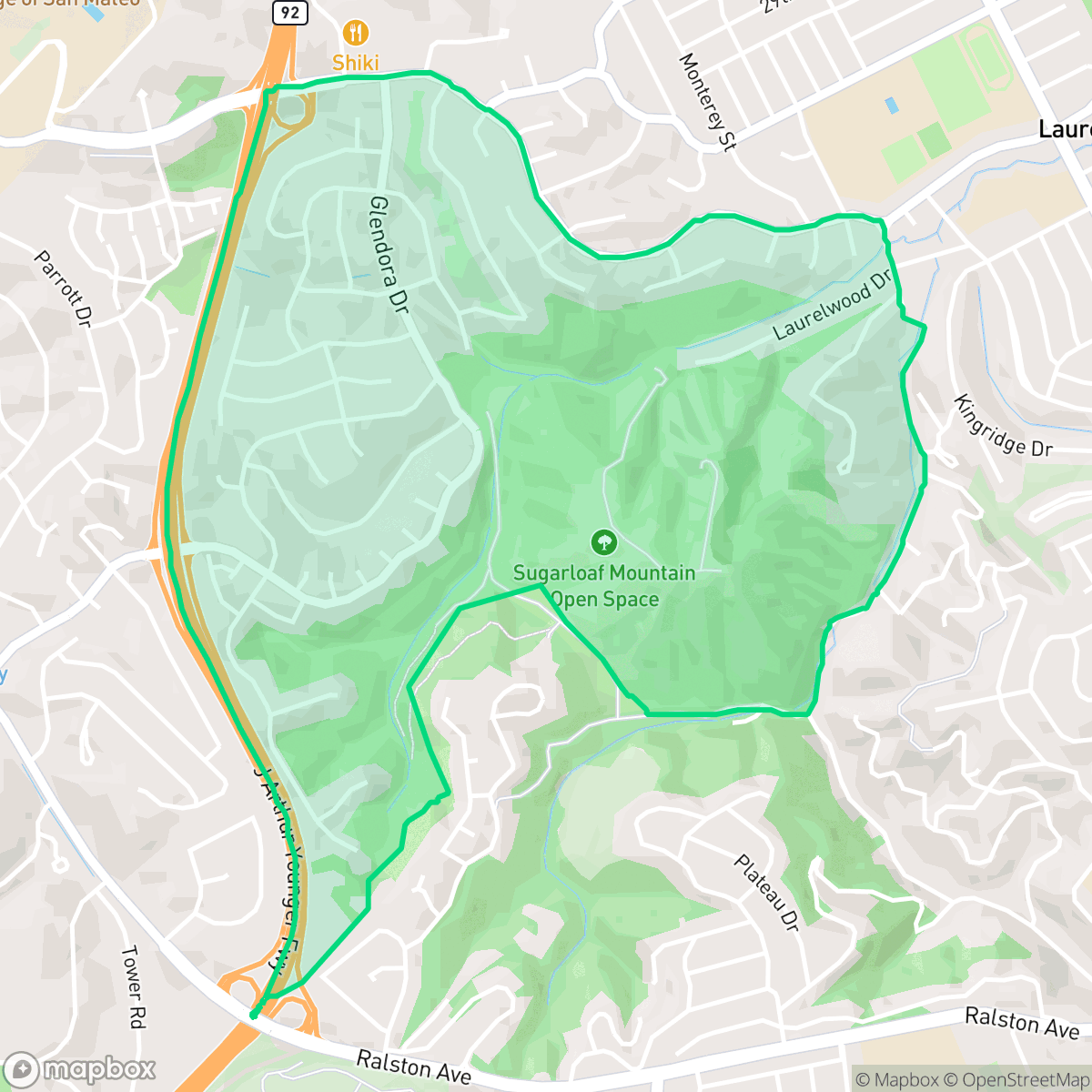
Laurelwood, located in western San Mateo, began developing in 1948. In the early 1900s, the area's open spaces served as flower farms and horse stables. The neighborhood’s modern identity was heavily shaped by environmental activism in 1972, when local preservation groups fought a massive proposal by the Cargus Corporation to develop 40% of the local hillsides into condominiums and office space. Over 7,000 citizens signed a petition to halt the project, prompting the city to scale down development and preserve the natural landscape. This grassroots effort led to the creation of the 225-acre Laurelwood Park and Sugarloaf Mountain open space in 1978. Today, the neighborhood is characterized by its scenic cul-de-sacs, ranch-style homes, and the Laurelwood Shopping Center, which features the long-standing, family-owned Piazza’s Fine Foods Market.
The neighborhood is defined by its scenic cul-de-sacs and a distinct suburban character that balances residential density with immediate access to natural landscapes. Residents enjoy a high level of visual appeal and strong community stability, with nearly universal health insurance coverage among the population. According to iHuus data, the area maintains a peaceful, rural-adjacent atmosphere, though this quietude is frequently interrupted by ambient noise from nearby highway traffic. It remains a highly desirable location for those who prioritize proximity to high-performing educational institutions, including the top-rated Belmont-Redwood Shores and San Mateo Union school districts.
Living in this area requires navigating specific trade-offs, particularly regarding acoustic comfort and fire safety. While the neighborhood is moderately walkable, its layout is sparse, making it best suited for those who rely on vehicles for daily errands. The combination of hilly terrain and environmental factors creates a heightened fire risk, which prospective residents should consider alongside the benefits of local amenities like the Laurelwood Shopping Center. Overall, the community is ideal for families and professionals seeking a stable, well-maintained environment that offers a retreat from the dense urban core of the Peninsula.
Neighborhood Scores Across 15 Qualities
Residential spacing provides a reasonable buffer between neighbors, offering more seclusion than the typical San Mateo street layout according to iHuus data.
Sidewalks are available on one side of the street with safe crossings provided for pedestrians. According to iHuus data, the ease of navigating this area on foot is lower than the San Mateo average.
Large residential properties and high-end amenities provide a more polished aesthetic than the San Mateo average, according to iHuus data.
Wide paths and interconnected green spaces provide an environment that is significantly more dog friendly than the San Mateo average. According to iHuus data, these areas are well-connected and largely separated from heavy traffic.
Open land and scattered homes amid woodland provide a more semi-rural atmosphere than the San Mateo average. Residents will find a mix of dense suburban layouts and single-family homes according to iHuus data.
Primarily a serene and low-density area, this neighborhood offers much more tranquility than the typical San Mateo experience. Local activity is sparse and centered around a few scattered services, making the area feel more remote and car-dependent than the city average.
Local traffic from a nearby busy street creates a consistent background noise. According to iHuus data, this level of acoustic activity is slightly higher than the San Mateo average.
Air quality in Laurelwood fluctuates between acceptable and unhealthy levels. According to iHuus data, the air quality levels in this neighborhood are consistent with the San Mateo average.
Industrial activity is virtually non-existent in this area, as there are no detected warehouses or hazardous sites. According to iHuus data, this neighborhood offers a cleaner environment than the San Mateo average due to its purely residential composition.
Health insurance coverage among residents is high, though it remains slightly below the San Mateo city average according to iHuus data.
Voting patterns and census indicators show a very liberal political leaning, which is largely consistent with the broader San Mateo area.
Residents live alongside a balanced mix of young professionals, families, and seniors. According to iHuus data, this age distribution is slightly more varied than the average across San Mateo.
Flood safety levels in Laurelwood are notably higher than the San Mateo average. While some residual risk exists due to its location within a 500-year floodplain, according to iHuus data, the area remains significantly more secure than many other parts of the city.
Fire hazards in this area are notably higher than the San Mateo average, necessitating increased awareness of local mitigation and safety protocols. According to iHuus data, the neighborhood presents a significant risk level compared to the rest of the city.
Address-Level Insights for Laurelwood


iHuus Neighborhood Intelligence Insights
Get address-level neighborhood insights for Laurelwood
- Street-level scores — see how individual blocks compare, not just neighborhood averages
- Micro-zone boundaries — identify quiet pockets, flood boundaries, and walkable clusters before you visit
- 15 dimensions in full — walkability, noise, air quality, school quality, insurance coverage, population age profile, urban/rural index, and more
- Boundary risk alerts — know if your address sits near a block boundary where scores drop, the kind of detail no listing will ever mention
- School insights — individual school ratings and insights, not just district-level data
- Compare before you commit — side-by-side data across neighborhoods, down to block precision
No credit card required
Compare with Any Neighborhood
| Dimension | Laurelwood | Aragon |
|---|---|---|
| 🚶 Walkabilityavg 8.95 | ||
| 🔊 Acoustic Comfortavg 3.72 | ||
| 🤫 Privacy Indexavg 5.13 | ||
| 🎨 Visual Appealavg 7.16 | ||
| 🐕 Dog Friendlinessavg 6.92 | ||
| 🗺️ Urban-Rural Indexavg 6.73 | ||
| ✨ Neighborhood Vibeavg 5.61 | ||
| 🏥 Health Insurance Coverageavg 8.75 | ||
| 🌿 Air Qualityavg 6 | ||
| 🏭 Industrial Proximityavg 9.34 | ||
| 🌊 Flood Safetyavg 5.24 | ||
| 🗳️ Ideological Leanavg 9.68 | ||
| 👥 Population Age Profileavg 4.99 | ||
| 🔥 Fire Safetyavg 0.28 | ||
| 🏫 School Quality |
Laurelwood Rankings
School Districts Serving Laurelwood
School Insights for Laurelwood
Below average outcomes; significant attendance and academic challenges.
School Insights
See what's really behind every school rating near Laurelwood
- Individual school ratings — each school's own score with outcome context, not just a district average
- Enrollment & class size data — student-to-teacher ratio and how it compares to the state average
- Full demographics breakdown — ethnicity and gender composition for every school in the enrollment zone
- Every school in the district — all schools within the enrollment boundary ranked by rating, not just the closest one
- Grade levels & benchmarks — elementary through high school, with below/above state-average flags
No credit card required