East San Mateo, San Mateo
Updated · 1,572 residents
East San Mateo is a highly walkable, dense suburban neighborhood known for its well-maintained homes and vibrant local dining scene. Residents enjoy proximity to top-tier schools and convenient pedestrian access to daily amenities in a lively, established community.
Key Highlights
About East San Mateo
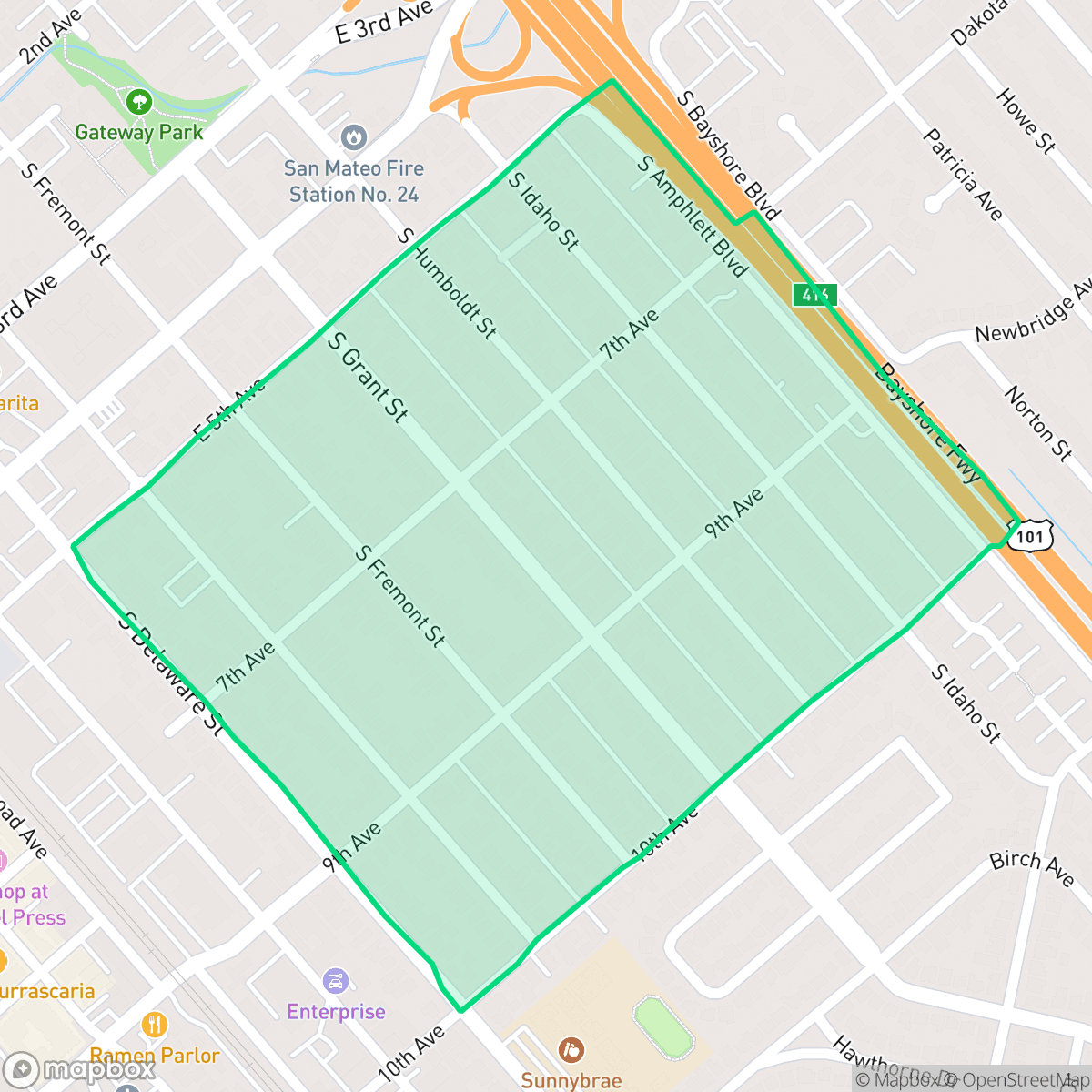
The neighborhood is a pedestrian-friendly enclave characterized by a mix of single-family residences and mid-rise apartment buildings. It maintains a distinct suburban appeal, featuring well-kept properties and a high degree of walkability that allows residents to easily access popular local eateries, including Ramen Dojo and Charlie's Taqueria. The area is supported by the San Mateo Union High School District, which is widely recognized for its elite academic performance and modern educational facilities.
Prospective residents should consider that the neighborhood features tightly packed housing with limited private outdoor space. While the area offers excellent convenience and a high quality of life, the proximity to local railroad lines results in moderate ambient noise levels. This community is particularly well-suited for individuals and families who prioritize walkability and access to high-performing schools over expansive private yards.
Neighborhood Scores Across 15 Qualities
Housing density varies across the area, with some neighbors living in close proximity while others maintain more buffer. According to iHuus data, the level of separation between properties is slightly lower than the San Mateo city average.
Pedestrian-priority infrastructure is a defining feature here, with wide sidewalks on both sides of residential streets and clear crosswalks near commercial hubs. This level of accessibility is notably higher than the San Mateo average according to iHuus data.
Streetscapes vary from standard tract housing with modest yards to more affluent pockets featuring private pools and expansive driveways. According to iHuus data, the overall visual variety in this area is slightly lower than the San Mateo average.
Public green space access and wide grass verges are relatively sparse in this area, making it less dog-friendly than the San Mateo average. While a large public park is accessible in the northern section, much of the neighborhood features narrower sidewalks and mostly private fenced yards according to iHuus data.
Residential layouts consist of a dense suburban mix of single-family homes and apartment blocks. This level of development is very similar to the overall San Mateo average, according to iHuus data.
Local dining options and green spaces provide a more active atmosphere than the San Mateo average. Residents can access a variety of diverse eateries and parks, though some blocks remain quieter and more suburban in character.
Frequent noise from nearby freeway and railroad corridors makes this area significantly louder than the San Mateo average. According to iHuus data, residents can expect consistent acoustic disturbances from heavy transit patterns.
Air quality in this area is consistent with the San Mateo average, presenting a mix of acceptable and unhealthy days that may occasionally affect sensitive groups.
Industrial hazards and large warehouses are absent from this area, which maintains a higher level of residential purity than the San Mateo average. According to iHuus data, the landscape consists of residential and light commercial uses without any heavy industrial facilities.
Health insurance access is widespread among residents, performing in line with the average for San Mateo. According to iHuus data, nearly all members of the community are covered.
Voting patterns and census indicators show a very high concentration of liberal leaning residents, which is slightly above the San Mateo city average according to iHuus data.
Residents live alongside a balanced mix of young adults, families, and older populations. This age distribution is roughly in line with the average seen across San Mateo.
Flood risk is significantly lower than the San Mateo city average, although some residual risk remains due to proximity to the 500 year floodplain. According to iHuus data, the area is generally situated outside of high-risk zones.
Address-Level Insights for East San Mateo


iHuus Neighborhood Intelligence Insights
Get address-level neighborhood insights for East San Mateo
- Street-level scores — see how individual blocks compare, not just neighborhood averages
- Micro-zone boundaries — identify quiet pockets, flood boundaries, and walkable clusters before you visit
- 15 dimensions in full — walkability, noise, air quality, school quality, insurance coverage, population age profile, urban/rural index, and more
- Boundary risk alerts — know if your address sits near a block boundary where scores drop, the kind of detail no listing will ever mention
- School insights — individual school ratings and insights, not just district-level data
- Compare before you commit — side-by-side data across neighborhoods, down to block precision
No credit card required
Compare with Any Neighborhood
| Dimension | East San Mateo | Aragon |
|---|---|---|
| 🚶 Walkabilityavg 8.95 | ||
| 🔊 Acoustic Comfortavg 3.72 | ||
| 🤫 Privacy Indexavg 5.13 | ||
| 🎨 Visual Appealavg 7.16 | ||
| 🐕 Dog Friendlinessavg 6.92 | ||
| 🗺️ Urban-Rural Indexavg 6.73 | ||
| ✨ Neighborhood Vibeavg 5.61 | ||
| 🏥 Health Insurance Coverageavg 8.75 | ||
| 🌿 Air Qualityavg 6 | ||
| 🏭 Industrial Proximityavg 9.34 | ||
| 🌊 Flood Safetyavg 5.24 | ||
| 🗳️ Ideological Leanavg 9.68 | ||
| 👥 Population Age Profileavg 4.99 | ||
| 🔥 Fire Safetyavg 0.28 | ||
| 🏫 School Quality |
East San Mateo Rankings
School Districts Serving East San Mateo
School Insights for East San Mateo
Below average outcomes; significant attendance and academic challenges.
School Insights
See what's really behind every school rating near East San Mateo
- Individual school ratings — each school's own score with outcome context, not just a district average
- Enrollment & class size data — student-to-teacher ratio and how it compares to the state average
- Full demographics breakdown — ethnicity and gender composition for every school in the enrollment zone
- Every school in the district — all schools within the enrollment boundary ranked by rating, not just the closest one
- Grade levels & benchmarks — elementary through high school, with below/above state-average flags
No credit card required