Berryessa, San Jose
Updated · 39,718 residents
Berryessa is a transit-connected residential hub known for its diverse demographic and highly accessible pedestrian paths. While the area offers a quiet, suburban atmosphere with continuous sidewalks, residents should be aware of elevated fire and flood risks in certain zones.
Key Highlights
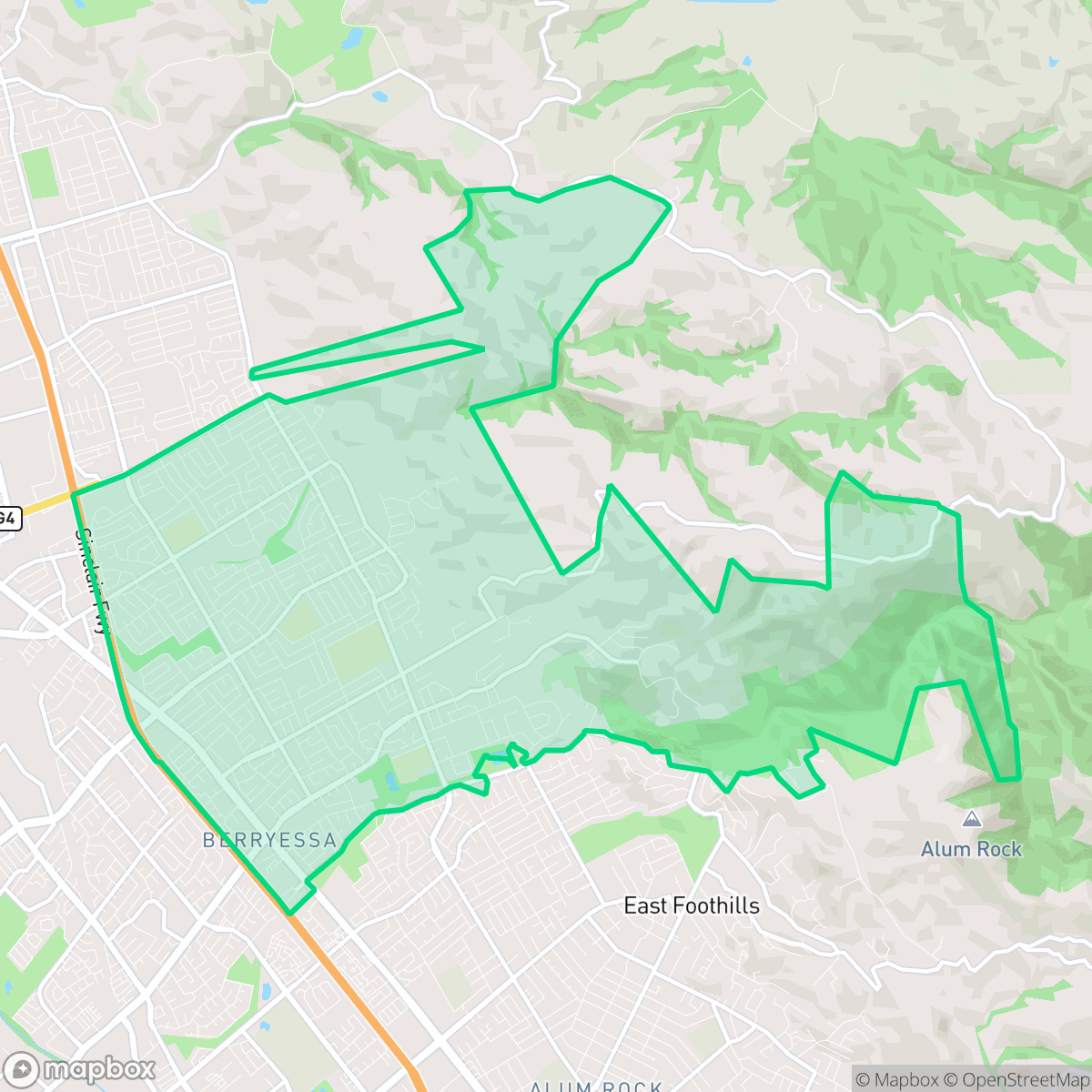
About Berryessa
Named after the prominent Californio Berryessa family, this San Jose neighborhood evolved from a 19th-century agricultural hub renowned for its apricot and prune orchards. The area was once home to the J.F. Flickinger Fruit Packing Company, a significant regional employer. During the 1960s and 1970s, the landscape transitioned from rural farmland into a suburban residential district. Architectural heritage includes structures like the 1927 Spanish Colonial Revival-style Berryessa Elementary School. Today, the neighborhood is defined by landmarks such as the long-standing San Jose Flea Market and the natural corridor of Penitencia Creek. Community identity remains anchored by traditions like the annual Berryessa Art & Wine Festival, reflecting its transition from a quiet farming community to a diverse, transit-connected residential hub in North San Jose.
The neighborhood is characterized by a mix of standard tract housing and more spacious residential pockets, offering a suburban feel that remains well-connected to the broader San Jose region. Its layout prioritizes pedestrian movement, with continuous sidewalks and paths that make navigating the local grid straightforward. Residents benefit from a lack of heavy industrial facilities, contributing to a cleaner environment, though the area experiences a consistent background hum from local traffic. The community maintains a balanced demographic profile, fostering a stable environment for families and professionals alike. Prospective residents should consider the trade-offs associated with living in this part of the city. While the community enjoys high health insurance coverage and a strong sense of civic engagement, the area faces significant environmental challenges, including higher-than-average fire and flood risks that may impact insurance requirements. According to iHuus data, it is best suited for those who value a suburban lifestyle and school access, provided they are prepared for necessary emergency and property precautions.
Neighborhood Scores Across 15 Qualities
Housing density is slightly higher than the San Jose average, with many homes positioned closely together. While some detached houses offer moderate backyard buffers, certain areas feature shared property lines and minimal separation between structures.
Continuous sidewalks and well-connected pedestrian paths exist throughout the residential grid and near commercial intersections. This level of accessibility is on par with the San Jose average, providing safe routes across most streets.
Residential scenery ranges from standard tract housing to more affluent pockets featuring large homes and private backyard pools. This visual variety sits slightly above the San Jose average according to iHuus data.
Abundant public parks, school sports fields, and wide green verges provide ample space for pets to exercise. According to iHuus data, these accessible green corridors make the area more dog friendly than the San Jose average.
Residential clusters and commercial centers are interspersed with pockets of undeveloped greenery and open hillsides. This landscape offers a slightly more open feel than the typical San Jose urban density.
Most daily errands and dining options require a vehicle, as the local business landscape is sparse and largely concentrated near major highways. While some residential blocks offer peaceful scenery, the area lacks the dense commercial activity found elsewhere in San Jose.
Local traffic from nearby busy streets creates a consistent background noise level. According to iHuus data, this area is slightly quieter than the typical San Jose average.
Air quality fluctuates between acceptable and unhealthy levels, presenting occasional concerns for sensitive groups. According to iHuus data, conditions in this area are slightly lower than the San Jose average.
Residential and educational zones dominate the landscape, with no detectable warehouses, factories, or heavy industrial facilities. According to iHuus data, this area offers a cleaner environment than the San Jose average due to the absence of large-scale logistics hubs or hazardous industrial sites.
Health insurance accessibility is strong in this area, sitting slightly above the San Jose average according to iHuus data.
Voting patterns and census indicators show a predominantly liberal leaning, which is very similar to the broader San Jose area according to iHuus data.
Residents live alongside a balanced mix of young professionals, families, and seniors. This demographic spread is largely consistent with the broader San Jose area according to iHuus data.
Properties in this area are located within a designated floodplain, which may necessitate the purchase of flood insurance. This level of risk is slightly higher than the average for San Jose, according to iHuus data.
Extreme fire hazards are present in this area, representing a significantly higher risk level than the San Jose average. Residents should prioritize maximum protection measures and emergency preparedness according to iHuus data.
Address-Level Insights for Berryessa


iHuus Neighborhood Intelligence Insights
Get address-level neighborhood insights for Berryessa
- Street-level scores — see how individual blocks compare, not just neighborhood averages
- Micro-zone boundaries — identify quiet pockets, flood boundaries, and walkable clusters before you visit
- 15 dimensions in full — walkability, noise, air quality, school quality, insurance coverage, population age profile, urban/rural index, and more
- Boundary risk alerts — know if your address sits near a block boundary where scores drop, the kind of detail no listing will ever mention
- School insights — individual school ratings and insights, not just district-level data
- Compare before you commit — side-by-side data across neighborhoods, down to block precision
No credit card required
Compare with Any Neighborhood
| Dimension | Berryessa | Almaden Valley |
|---|---|---|
| 🚶 Walkabilityavg 9.17 | ||
| 🔊 Acoustic Comfortavg 3.12 | ||
| 🤫 Privacy Indexavg 4.96 | ||
| 🎨 Visual Appealavg 6.7 | ||
| 🐕 Dog Friendlinessavg 6.94 | ||
| 🗺️ Urban-Rural Indexavg 6.64 | ||
| ✨ Neighborhood Vibeavg 4.74 | ||
| 🏥 Health Insurance Coverageavg 8.07 | ||
| 🌿 Air Qualityavg 6.07 | ||
| 🏭 Industrial Proximityavg 8.85 | ||
| 🌊 Flood Safetyavg 1.56 | ||
| 🗳️ Ideological Leanavg 9.4 | ||
| 👥 Population Age Profileavg 4.88 | ||
| 🔥 Fire Safetyavg 0.17 | ||
| 🏫 School Quality |
Berryessa Rankings
School Districts Serving Berryessa
School Insights for Berryessa
Below average outcomes; significant attendance and academic challenges.
School Insights
See what's really behind every school rating near Berryessa
- Individual school ratings — each school's own score with outcome context, not just a district average
- Enrollment & class size data — student-to-teacher ratio and how it compares to the state average
- Full demographics breakdown — ethnicity and gender composition for every school in the enrollment zone
- Every school in the district — all schools within the enrollment boundary ranked by rating, not just the closest one
- Grade levels & benchmarks — elementary through high school, with below/above state-average flags
No credit card required