Alviso, San Jose
Updated · 610 residents
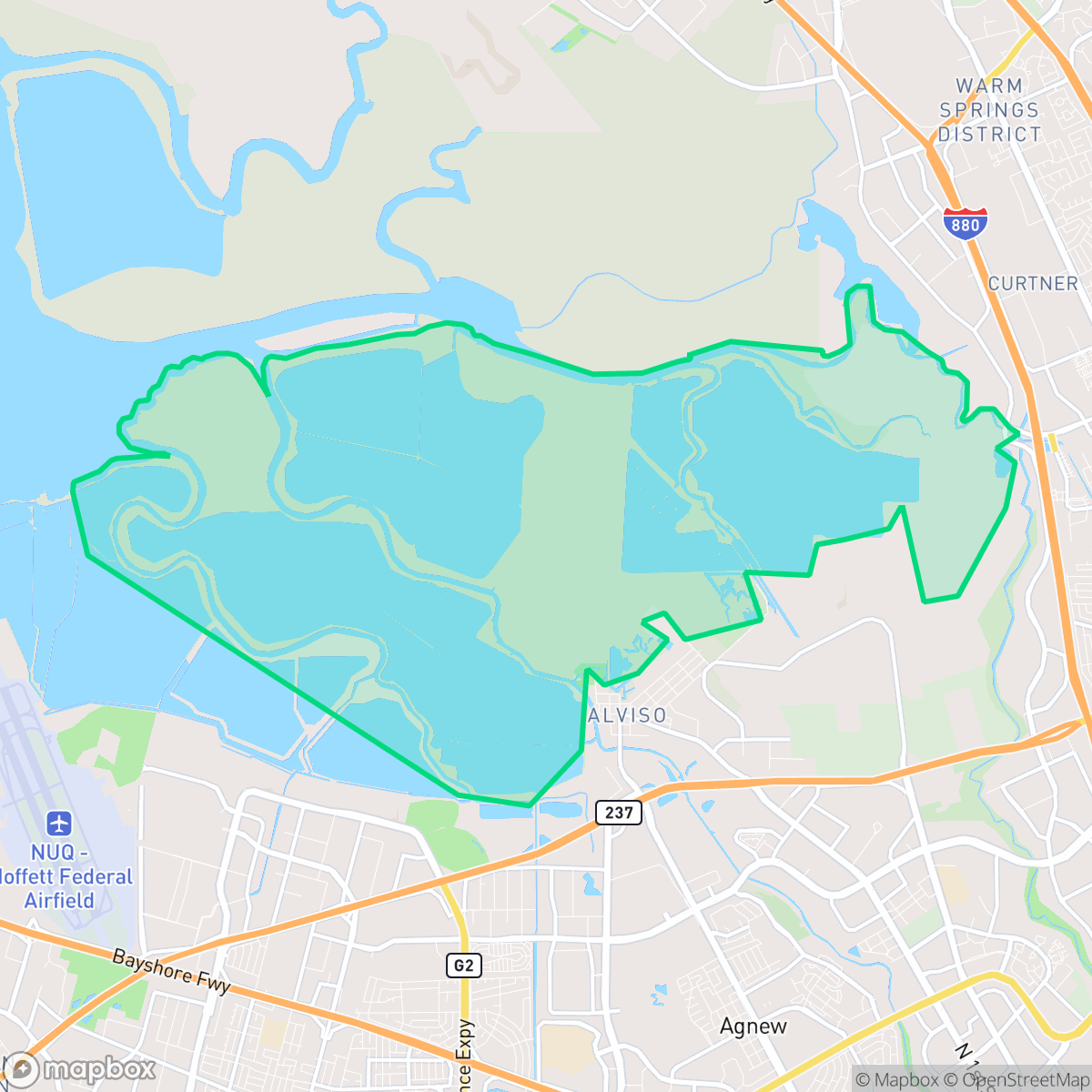
Alviso is a remote, marsh-dominated enclave at the southern tip of the San Francisco Bay, characterized by its expansive wetlands and industrial salt ponds. The area offers minimal walkability and limited infrastructure, with environmental concerns including proximity to an EPA Superfund site.
Key Highlights
About Alviso
Alviso, founded in 1849 by Ignacio Alviso, served as the primary port for San Jose during the mid-19th century, facilitating vital trade between the South Bay and San Francisco. Situated at the southern tip of the San Francisco Bay, its history is deeply tied to the surrounding marshlands and the Guadalupe River. The neighborhood retains a distinct character, marked by its unique blend of historic 19th-century structures and its transition from a bustling maritime hub to a quiet, flood-prone enclave. Following its annexation by San Jose in 1968, Alviso has preserved its identity through landmarks like the Alviso Adobe, one of the oldest buildings in the region, and its proximity to the Don Edwards San Francisco Bay National Wildlife Refuge, which highlights its ongoing relationship with the bay's ecological restoration.
The area functions primarily as a vast, rural landscape of tidal marshes and salt evaporation ponds. Unlike typical Silicon Valley residential zones, it lacks urban density and commercial amenities, resulting in very low walkability and limited daily convenience. The environment is dominated by open water and natural wildlife habitats, which contribute to its isolated character and distinct acoustic profile, where aviation noise remains a primary factor.
Prospective residents should note significant environmental and safety trade-offs. According to iHuus data, the area faces challenges regarding air quality and the presence of an EPA Superfund site, which impacts soil and solid waste safety. Furthermore, the neighborhood lacks standard residential infrastructure, including health insurance coverage and typical urban amenities, making it a highly niche location that is better suited for those prioritizing proximity to the Don Edwards National Wildlife Refuge over traditional suburban comforts.
Neighborhood Scores Across 15 Qualities
Residential lots feature close proximity between structures, with much smaller separation between detached homes than is typical for San Jose. According to iHuus data, this density results in less visual and acoustic buffering between neighbors.
Limited sidewalk infrastructure makes navigating on foot difficult, though the streets remain relatively quiet for short walks. According to iHuus data, the pedestrian accessibility in this area is significantly lower than the San Jose average.
Dense housing developments with small yards and limited greenery define the landscape. According to iHuus data, the area lacks the aesthetic variety and amenities found in much of San Jose.
Limited access to large public parks and wide green verges makes pet walking less convenient here than in the rest of San Jose. According to iHuus data, the area offers fewer dedicated spaces for dogs compared to the city average.
Expansive wetlands, salt ponds, and industrial outskirts create a landscape that is more rural than the San Jose average. Residents will find a low-density environment characterized by significant open space and minimal urban development, according to iHuus data.
Low commercial activity and vast open spaces create a much more subdued atmosphere than the San Jose average. Residents will find a landscape dominated by warehouses, freight corridors, and minimal local business options, according to iHuus data.
Steady traffic sounds from nearby busy streets are present, though the acoustic environment is notably quieter than the San Jose average according to iHuus data.
Air quality in Alviso fluctuates between acceptable and unhealthy levels, appearing slightly lower than the San Jose average according to iHuus data. Sensitive groups may experience occasional concern on certain days.
Heavy industrial presence is significantly lower here than the San Jose average, though the area is bordered by wastewater treatment facilities, salt ponds, and a nearby EPA Superfund site. According to iHuus data, the landscape is characterized more by utility infrastructure and salt evaporation ponds than by dense warehouse districts.
Health insurance access is widespread among residents, sitting slightly above the San Jose average according to iHuus data.
Political leanings in this area are largely liberal, though slightly less so than the San Jose average according to iHuus data.
Residents live alongside a balanced mix of young professionals, families, and seniors. This demographic spread is roughly in line with the broader San Jose area, according to iHuus data.
Located in a coastal high-hazard zone, this area faces significantly higher flood risks than the rest of San Jose. Residents should prepare for potential wave action and expect much higher insurance premiums than the city average.
Address-Level Insights for Alviso


iHuus Neighborhood Intelligence Insights
Get address-level neighborhood insights for Alviso
- Street-level scores — see how individual blocks compare, not just neighborhood averages
- Micro-zone boundaries — identify quiet pockets, flood boundaries, and walkable clusters before you visit
- 15 dimensions in full — walkability, noise, air quality, school quality, insurance coverage, population age profile, urban/rural index, and more
- Boundary risk alerts — know if your address sits near a block boundary where scores drop, the kind of detail no listing will ever mention
- School insights — individual school ratings and insights, not just district-level data
- Compare before you commit — side-by-side data across neighborhoods, down to block precision
No credit card required
Compare with Any Neighborhood
| Dimension | Alviso | Almaden Valley |
|---|---|---|
| 🚶 Walkabilityavg 9.17 | ||
| 🔊 Acoustic Comfortavg 3.12 | ||
| 🤫 Privacy Indexavg 4.96 | ||
| 🎨 Visual Appealavg 6.7 | ||
| 🐕 Dog Friendlinessavg 6.94 | ||
| 🗺️ Urban-Rural Indexavg 6.64 | ||
| ✨ Neighborhood Vibeavg 4.74 | ||
| 🏥 Health Insurance Coverageavg 8.07 | ||
| 🌿 Air Qualityavg 6.07 | ||
| 🏭 Industrial Proximityavg 8.85 | ||
| 🌊 Flood Safetyavg 1.56 | ||
| 🗳️ Ideological Leanavg 9.4 | ||
| 👥 Population Age Profileavg 4.88 | ||
| 🔥 Fire Safetyavg 0.17 | ||
| 🏫 School Quality |
Alviso Rankings
School Districts Serving Alviso
School Insights for Alviso
Below average outcomes; significant attendance and academic challenges.
School Insights
See what's really behind every school rating near Alviso
- Individual school ratings — each school's own score with outcome context, not just a district average
- Enrollment & class size data — student-to-teacher ratio and how it compares to the state average
- Full demographics breakdown — ethnicity and gender composition for every school in the enrollment zone
- Every school in the district — all schools within the enrollment boundary ranked by rating, not just the closest one
- Grade levels & benchmarks — elementary through high school, with below/above state-average flags
No credit card required