Wooded Area, San Diego
Updated · 4,063 residents
The Wooded Area is a suburban neighborhood on the Point Loma peninsula known for its mature tree canopy and well-maintained residential properties. While it offers a quiet, pet-friendly environment with high visual appeal, residents should be aware of significant road noise and proximity to industrial maritime activity.
Key Highlights
About Wooded Area
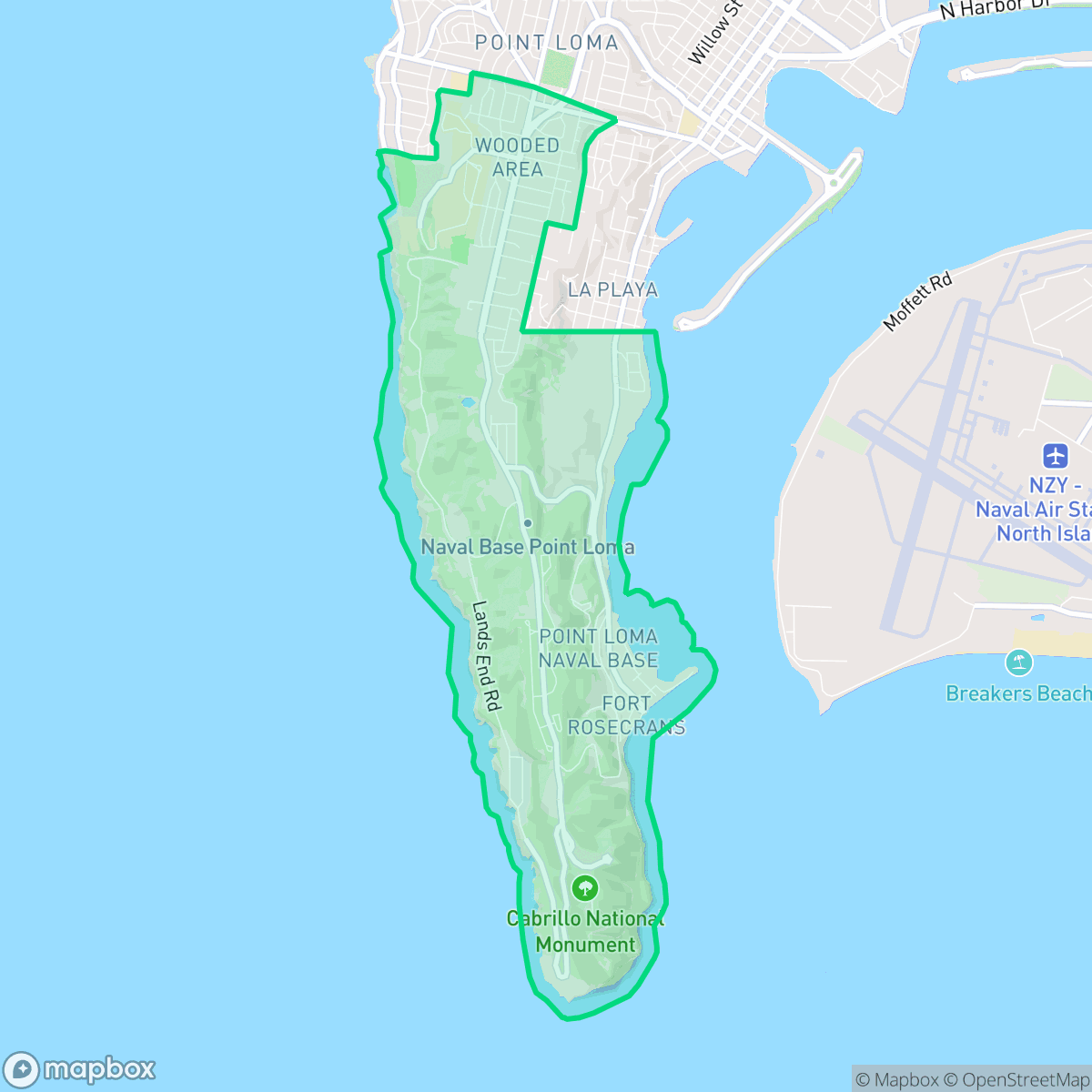
Located on San Diego’s Point Loma peninsula, the Wooded Area neighborhood is defined by its mature canopy of eucalyptus and evergreen trees. Though described as a "well-wooded headland" by Richard Henry Dana Jr. in the 1830s, the area was stripped bare by 1900. Its lush, semi-rural character was restored by Katherine Tingley and her Lomaland Theosophical community, who planted extensive eucalyptus and avocado orchards. Today, the western edge of the neighborhood borders Point Loma Nazarene University, which occupies the historic Lomaland site. The Wooded Area is also home to Rosecroft, a grand 1912 Italian Renaissance estate listed on the National Register of Historic Places. Built for Alfred Robinson—the "Dean of Begonias"—and his wife Marion, the estate once hosted the famed Rosecroft Begonia Gardens, a major local tourist attraction until the 1960s.
This neighborhood serves as a serene residential enclave characterized by single-family homes, private pools, and lush landscaping. The area provides a strong sense of suburban stability, featuring wide, safe streets that are ideal for walking and dog owners. Its aesthetic appeal is defined by the blend of large, well-manicured lots and the natural coastal beauty of the Point Loma peninsula.
Prospective residents should weigh the neighborhood's quiet, low-density atmosphere against its practical trade-offs. The area experiences notable noise levels primarily from road traffic, and its location near active naval and industrial maritime zones impacts the overall acoustic environment. Additionally, the neighborhood faces significant challenges regarding flood and fire safety, which are important considerations for long-term property ownership in this coastal region.
Neighborhood Scores Across 15 Qualities
Spacious lots and significant separation between homes provide a level of privacy that is notably higher than the San Diego average. According to iHuus data, most properties feature fenced yards and moderate density.
Low-traffic loops and continuous sidewalks provide a safe environment for pedestrians, though overall walkability is slightly lower than the San Diego average. According to iHuus data, many residential streets offer reliable crossings and predictable walking paths.
Manicured landscaping and private backyard pools contribute to a visual environment that is notably more polished than the San Diego average. Large homes and well-maintained properties create a highly aesthetic streetscape, according to iHuus data.
Abundant green spaces and wide, traffic-free paths offer a pet-friendly environment that is above the San Diego average. Large public parks and sports fields provide ample space for exercise, according to iHuus data.
Open lands and scattered homes among woodland areas provide a more tranquil environment than the typical San Diego urban landscape. This area features a notable presence of natural canyons and coastal scrubland alongside low-density residential pockets.
Local activity is noticeably more subdued than the San Diego average, characterized by a tranquil environment with minimal commercial density. Residents will find a serene landscape featuring scattered social spots and wellness services, but most daily needs require a drive due to the lack of concentrated business hubs.
Frequent noise from nearby major freeways and transit corridors characterizes this area. According to iHuus data, acoustic comfort is lower than the San Diego average due to proximity to significant traffic and flight paths.
Air quality fluctuates between acceptable and unhealthy levels, posing occasional concerns for sensitive groups. According to iHuus data, the air quality in this area is slightly below the San Diego average.
Industrial presence is negligible here, as the area is almost entirely residential with no detected warehouses or heavy manufacturing. This lack of industrial activity is consistent with the broader San Diego average.
Health insurance coverage among residents is lower than the San Diego average, according to iHuus data. This indicates a higher proportion of uninsured individuals compared to most other areas in the city.
Political leanings in this area are relatively balanced, representing a more moderate split than the more strongly partisan lean found across much of San Diego.
Residents live alongside a wide variety of age demographics, including young professionals, families, and seniors. According to iHuus data, the population is less skewed toward a single age bracket than the San Diego average.
Properties within this area are located inside a designated floodplain, which represents a higher risk of flooding than the San Diego average. According to iHuus data, residents should anticipate that flood insurance will likely be a requirement for most home insurance policies.
High levels of combustible vegetation create an extreme fire hazard that is significantly higher than the San Diego average. Residents should be aware of the intensified wildfire threat and the necessity for maximum protection measures, according to iHuus data.
Address-Level Insights for Wooded Area


iHuus Neighborhood Intelligence Insights
Get address-level neighborhood insights for Wooded Area
- Street-level scores — see how individual blocks compare, not just neighborhood averages
- Micro-zone boundaries — identify quiet pockets, flood boundaries, and walkable clusters before you visit
- 15 dimensions in full — walkability, noise, air quality, school quality, insurance coverage, population age profile, urban/rural index, and more
- Boundary risk alerts — know if your address sits near a block boundary where scores drop, the kind of detail no listing will ever mention
- School insights — individual school ratings and insights, not just district-level data
- Compare before you commit — side-by-side data across neighborhoods, down to block precision
No credit card required
Compare with Any Neighborhood
| Dimension | Wooded Area | Adams North |
|---|---|---|
| 🚶 Walkabilityavg 8.58 | ||
| 🔊 Acoustic Comfortavg 3.33 | ||
| 🤫 Privacy Indexavg 4.87 | ||
| 🎨 Visual Appealavg 6.85 | ||
| 🐕 Dog Friendlinessavg 6.91 | ||
| 🗺️ Urban-Rural Indexavg 6.6 | ||
| ✨ Neighborhood Vibeavg 5.12 | ||
| 🏥 Health Insurance Coverageavg 7.53 | ||
| 🌿 Air Qualityavg 6.36 | ||
| 🏭 Industrial Proximityavg 9.12 | ||
| 🌊 Flood Safetyavg 4.2 | ||
| 🗳️ Ideological Leanavg 8.51 | ||
| 👥 Population Age Profileavg 4.8 | ||
| 🔥 Fire Safetyavg 0.61 | ||
| 🏫 School Quality |
Wooded Area Rankings
School Districts Serving Wooded Area
School Insights for Wooded Area
Below average outcomes; significant attendance and academic challenges.
School Insights
See what's really behind every school rating near Wooded Area
- Individual school ratings — each school's own score with outcome context, not just a district average
- Enrollment & class size data — student-to-teacher ratio and how it compares to the state average
- Full demographics breakdown — ethnicity and gender composition for every school in the enrollment zone
- Every school in the district — all schools within the enrollment boundary ranked by rating, not just the closest one
- Grade levels & benchmarks — elementary through high school, with below/above state-average flags
No credit card required