Marina, San Diego
Updated · 5,639 residents
The Marina is a dense, high-energy waterfront neighborhood defined by its exceptional walkability and modern high-rise architecture. Residents enjoy immediate access to the San Diego Bay, though the area is characterized by frequent urban noise and limited private outdoor space.
Key Highlights
About Marina
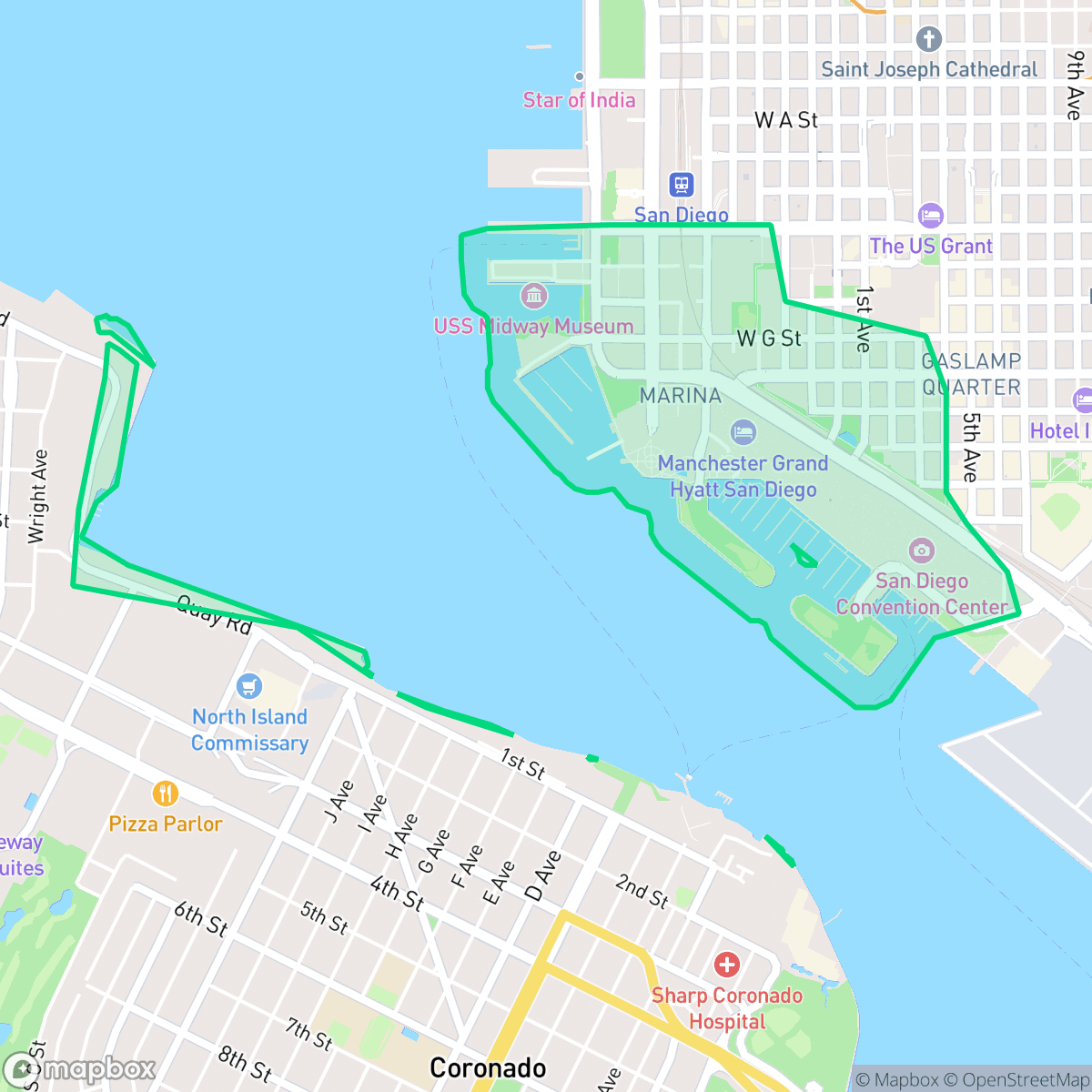
The Marina district in downtown San Diego underwent a significant transformation during the 1970s and 1980s, shifting from a neglected industrial and warehouse area into a premier residential and commercial hub. This revitalization was spearheaded by the Centre City Development Corporation, which prioritized high-density housing and public amenities. The neighborhood is home to Pantoja Park, established in 1850 and recognized as San Diego’s oldest park, serving as a historic anchor amidst modern high-rise developments. Other defining features include the waterfront Seaport Village and the San Diego Convention Center, which reshaped the city’s southern skyline. Once a gritty maritime and rail-adjacent zone, the Marina now serves as a central cultural and residential anchor, defined by its deliberate urban renewal and integration with the San Diego Bay waterfront.
This neighborhood functions as a central hub for urban living, characterized by its vertical density and proximity to major maritime and convention landmarks. It offers a vibrant social atmosphere with a wide array of dining and cultural options, making it a focal point for activity in the city. According to iHuus data, the pedestrian infrastructure is highly developed, allowing for seamless travel between the waterfront and the surrounding commercial districts on foot.
Prospective residents should consider the trade-offs of living in such a high-density environment, which includes notable noise from transit corridors and flight paths alongside a lack of residential privacy due to shared-wall construction. While the area provides access to diverse urban amenities, it features limited green space and a higher proportion of uninsured residents compared to the broader city. It is best suited for those who prioritize immediate access to the downtown core and waterfront over quiet, suburban-style living.
Neighborhood Scores Across 15 Qualities
Dense urban layouts and shared-wall structures create minimal separation between residences. According to iHuus data, this lack of privacy is notably lower than the San Diego average due to tightly packed commercial towers and high-density residential complexes.
Complete sidewalk networks, clear crosswalks, and waterfront promenades make navigating the area on foot exceptionally easy. This level of pedestrian infrastructure is significantly higher than the San Diego average, according to iHuus data.
Waterfront properties and large homes with private pools coexist with standard high-density urban blocks. According to iHuus data, the overall visual quality is slightly below the San Diego average due to the presence of more conventional commercial and residential structures.
Dense urban pavement and concrete grids dominate much of the area, though waterfront access and specific parks provide some relief. According to iHuus data, the availability of accessible parks and walking paths is below the San Diego average.
Highly developed infrastructure and significant vertical density characterize this area, which contains far fewer open green spaces and unpaved grounds than the San Diego average. According to iHuus data, the landscape is dominated by high-rise towers, industrial naval installations, and extensive paved surfaces.
High-density development and diverse dining options create a social atmosphere that is significantly more active than the San Diego average. While some coastal pockets remain quiet and residential, much of the area functions as a high-energy hub with frequent local activity and landmarks.
Frequent disturbances from nearby transit corridors and flight paths characterize this area. According to iHuus data, acoustic comfort is lower than the San Diego average.
Air quality in this area fluctuates between acceptable and unhealthy levels on certain days; according to iHuus data, this is slightly lower than the San Diego average.
Active naval operations and large maritime warehouses introduce significant logistics and ship traffic to the area. According to iHuus data, this level of industrial activity is more pronounced here than in most other San Diego neighborhoods.
Health insurance access among residents is notably lower than the San Diego average, according to iHuus data. This indicates a higher proportion of uninsured individuals living in the area.
Political leanings in this area are predominantly liberal, though the concentration is slightly lower than the San Diego average according to iHuus data.
Residents live alongside a balanced mix of young professionals, families, and seniors. This demographic distribution is slightly more varied than the typical San Diego profile, according to iHuus data.
Flood safety levels are notably higher than the San Diego average, though some residual risk remains within the 500-year floodplain according to iHuus data.
Address-Level Insights for Marina


iHuus Neighborhood Intelligence Insights
Get address-level neighborhood insights for Marina
- Street-level scores — see how individual blocks compare, not just neighborhood averages
- Micro-zone boundaries — identify quiet pockets, flood boundaries, and walkable clusters before you visit
- 15 dimensions in full — walkability, noise, air quality, school quality, insurance coverage, population age profile, urban/rural index, and more
- Boundary risk alerts — know if your address sits near a block boundary where scores drop, the kind of detail no listing will ever mention
- School insights — individual school ratings and insights, not just district-level data
- Compare before you commit — side-by-side data across neighborhoods, down to block precision
No credit card required
Compare with Any Neighborhood
| Dimension | Marina | Adams North |
|---|---|---|
| 🚶 Walkabilityavg 8.58 | ||
| 🔊 Acoustic Comfortavg 3.33 | ||
| 🤫 Privacy Indexavg 4.87 | ||
| 🎨 Visual Appealavg 6.85 | ||
| 🐕 Dog Friendlinessavg 6.91 | ||
| 🗺️ Urban-Rural Indexavg 6.6 | ||
| ✨ Neighborhood Vibeavg 5.12 | ||
| 🏥 Health Insurance Coverageavg 7.53 | ||
| 🌿 Air Qualityavg 6.36 | ||
| 🏭 Industrial Proximityavg 9.12 | ||
| 🌊 Flood Safetyavg 4.2 | ||
| 🗳️ Ideological Leanavg 8.51 | ||
| 👥 Population Age Profileavg 4.8 | ||
| 🔥 Fire Safetyavg 0.61 | ||
| 🏫 School Quality |
Marina Rankings
School Districts Serving Marina
School Insights for Marina
Below average outcomes; significant attendance and academic challenges.
School Insights
See what's really behind every school rating near Marina
- Individual school ratings — each school's own score with outcome context, not just a district average
- Enrollment & class size data — student-to-teacher ratio and how it compares to the state average
- Full demographics breakdown — ethnicity and gender composition for every school in the enrollment zone
- Every school in the district — all schools within the enrollment boundary ranked by rating, not just the closest one
- Grade levels & benchmarks — elementary through high school, with below/above state-average flags
No credit card required